Voyager -for a ‘poem bowl’ by Rupert Spira – and all four digital poems!

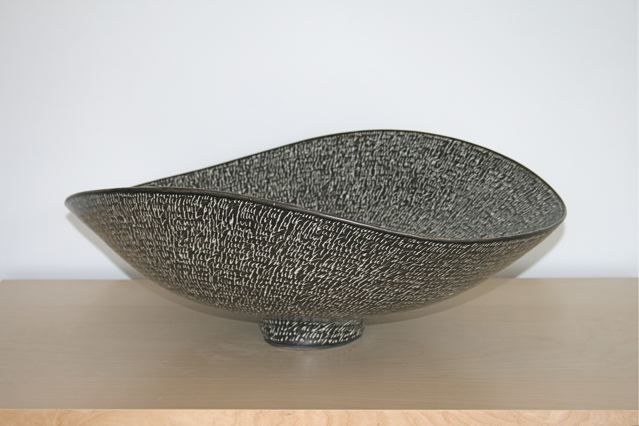
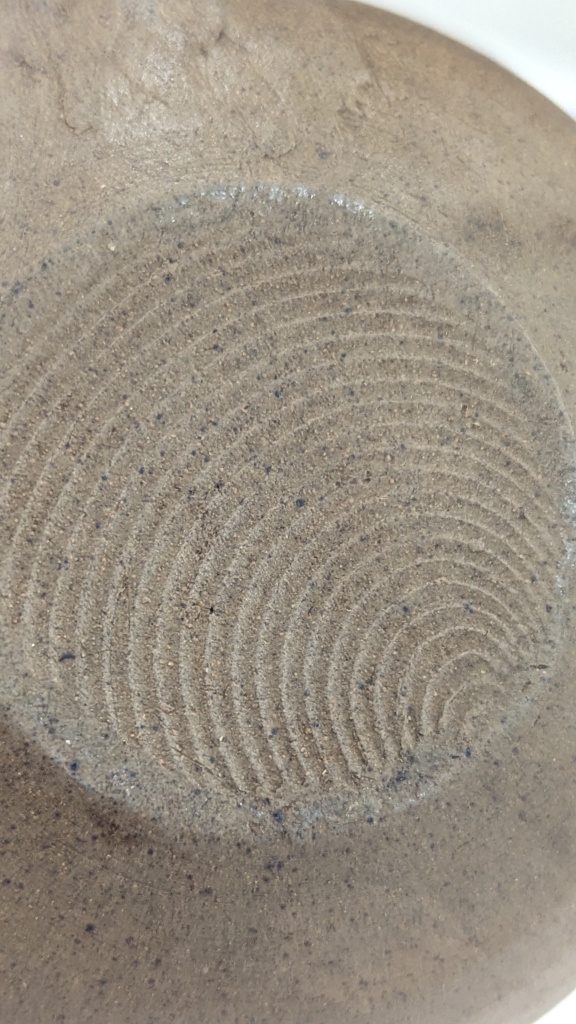
The fourth and final digital poem I made for my MIMA/Tees Women Poets residency was Voyager, written for Poem Bowl by potter, writer and philosopher Rupert Spira (b.1960). A vast black dish, it is decorated inside and out with a mostly illegible hand-written text that has been incised through the black glaze. Certain words can be made out, and these have been incorporated into the poem.

My inspirations for the imagery in the poem comes from the way the dish reminded me of both a warped vinyl record and a radio dish. Combined with the only partial legibility of the decoration, it led me to play with ideas of decaying signals and transmissions through space. The audio accompanying the digital poem features a short sample from “I’ll Be Seeing You” by Billie Holliday, which was the last message sent by NASA to the Mars Rover Opportunity before it ‘died’ in 2019.

The sound track for this poem was the most complicated, featuring free samples of for example vinyl record clicks and Cold War numbers stations alongside my own voice pushed through echo and distortion effects, and the poem text run through AI voice generators. All of this was put together using free Audacity software, which also allows you to create blocks of static interference.

The digital poem was also the most complex in terms of the kinetic typography, even though it was made in Canva in exactly the same way at 79AD and Origin Story. Drawing on the circular nature of the bowl, and all the images of records, radio dishes etc that are in the poem, I made the typography follow arcing pathways. The sections of text overlap and ‘degrade’, just like the audio. To make the effect of degradation I reduced the transparency of the text by degrees, sometimes in arcs that were offset so the faded echoes can still be read; and once in a fully-aligned circle with text blacked out except for certain selected letters.

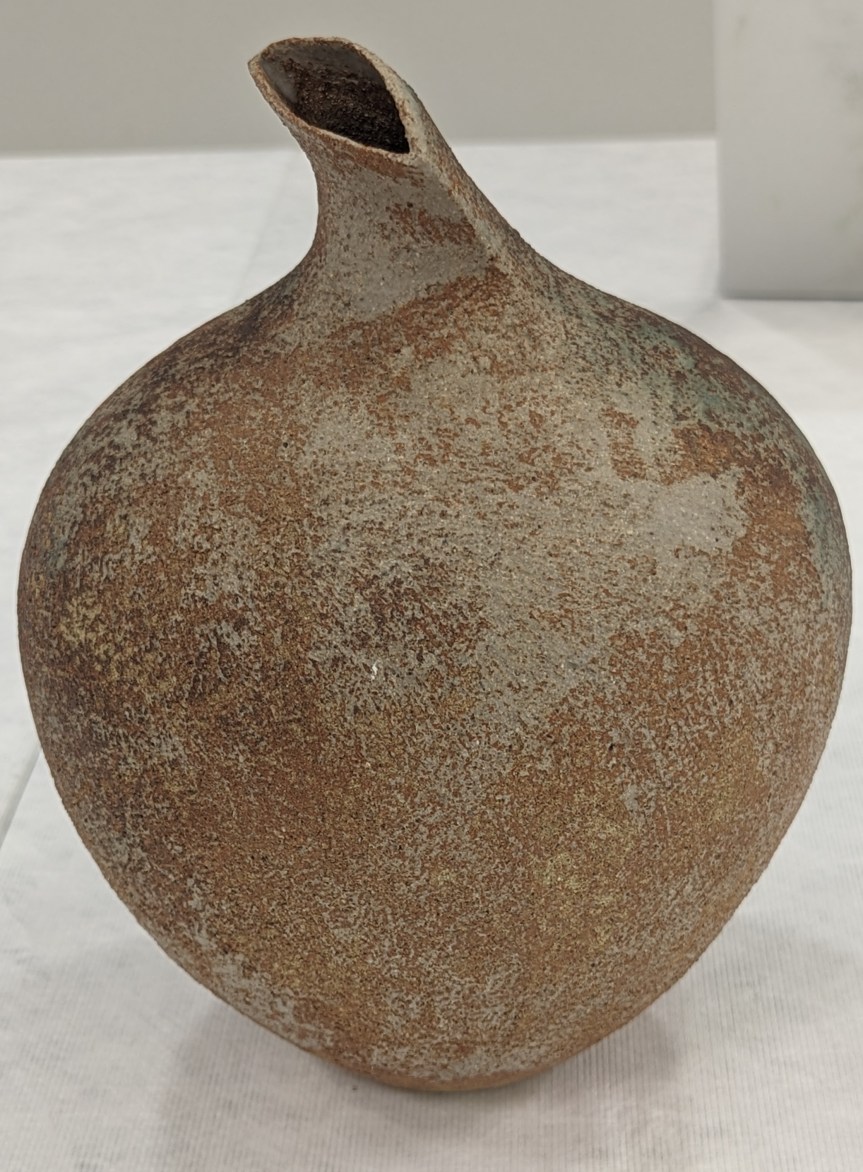
I’m really proud of these digital poems! Here’s a reminder of the ceramics that inspired them – a leaning neck vase by Betty Blandino (Origin Story); a tazza by Annette Fuchs (79AD); a bowl by Deirdre Burnett (Egg Fiction); and a poem bowl by Rupert Spira (Voyager).

  • A rough and rusty-looking vase with a neck that is bent to the left.

And here are the finished digital poems in the loop as it appeared at MIMA. Headphones on!

For those that are interested in the sounds, here’s a list of all the sound clips I used – see if you can tell which poems they appeared in!

  • Volcano lava
  • Dripping cave
  • Message 4
  • Chickens
  • Seagull flock
  • Vinyl scratch skip loop
  • Cave music
  • Chucks Egg classic arcade game
  • Little chicken
  • Needle drop
  • Numbers station 332241
  • Seagull short
  • Vinyl scraped
  • Vinyl crackle 33rpm
Origin Story – for a Betty Blandino vase

Now that my digital poems have finished their run at MIMA, I’m bringing you all four of them with some info on my process.

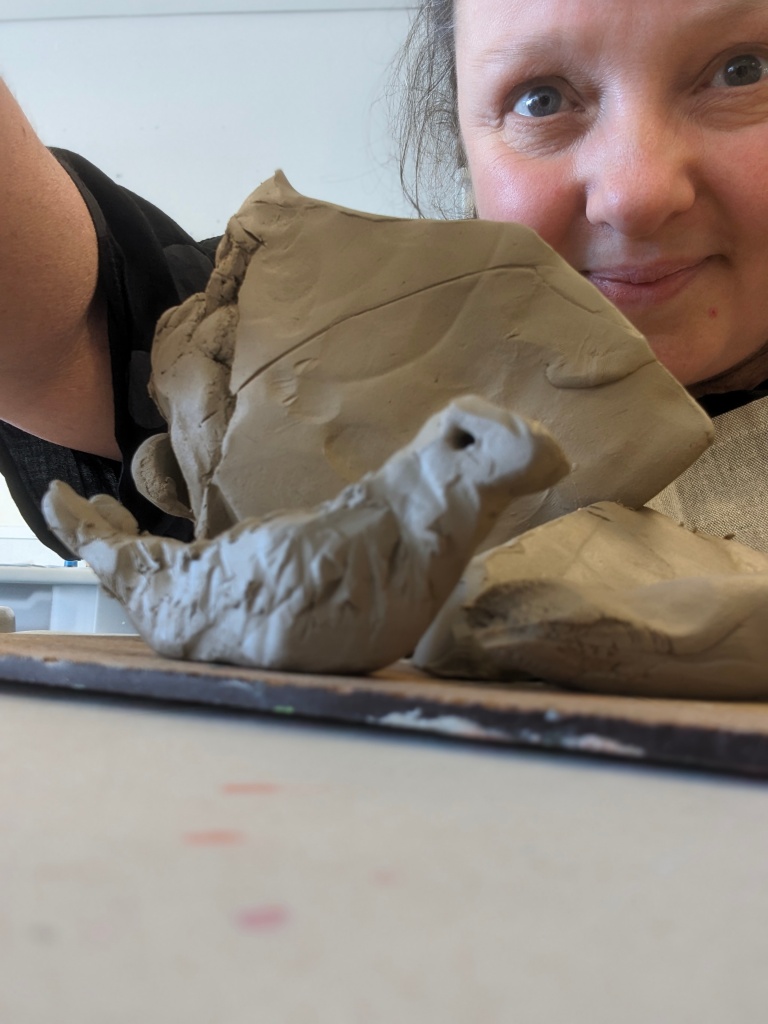
This first poem was written for a “leaning-neck vase” by Betty Blandino (1927-2011). As the poem states, the piece is made of coiled stoneware and is unexpectedly light when picked up – the rough finish makes it look like a natural stone, so the expectation of weight was there, and I did literally start talking to this pot when I held it.

My first step was to handle the pot, feel my responses, write notes, draw the vase to get its shape into my muscles…(and later use it for some gelli plate experiments, like you do)

Next step was to go away and write a poem from it. After a few edits, this poem then became a short film using a Canva video template (specifically, the Black White Minimalist the End template). I chose it because it features moving, soft focus lights with reddish-orange hues that made me think of the vase’s rusty-orange surface.

It also seemed to fit with an atmosphere of fairy stories/origin stories/when you were just a twinkle in my eye – the feelings of the poem, if not the specific details of the words. I changed the Canva template’s typefaces and text positioning, and played with how and where the text should arrive on each slide, changed the tempo to suit, and downloaded.

So far, everything I’ve used has been free and easily accessible. This was the result.

Now, that is not the final version of the digital poem – all four poems had soundtracks added before they were shown at MIMA, but you’ll have to wait because I’m going to talk about that, and show you the final looped installation, in a few blogs’ time! You could subscribe, if you like, then you won’t mis any of them?

But I will show you the last iteration of the poem right now, which is as a concrete poem. This was printed in the programme that accompanied the screening, with the following artist’s statement:

Origin Story was written for a coiled stoneware vase with a ‘leaning neck’ made by Betty Blandino (1927-2011). Handling this pot was a sensory overload for me, as it looks like a stone, feels like weathered rust, and is unexpectedly weightless. The shape is reminiscent of an amphora, a pot made specifically to store foodstuffs like wine or oil, but it is kept hollow, and sonorous.  I found myself speaking to it like a sentient creature, and continued that conversation into the poem, imagining myself telling the vase myths about itself like bedtime stories for a child. Little pitchers have big ears.

The observant among you may notice that there are some differences between the texts of the two versions, which just goes to show that poems are never quite finished.

Watch out for the next digital poem, which will be 79AD, written in response to an earthenware tazza by Annette Fuchs.

What exactly does a poet-in-residence do?

How long is a piece of string?!

Residencies for poets are few and far between. At one end of the scale, a residency offers time and often a dedicated space away from home life, in which to explore your craft and make progress on new work. Most of these will be a commercial proposition where the poet is the one that pays. Sometimes it’s subsidised, and with hen’s-teeth rarity the poet is paid just to be a poet – living the dream!!

On the other end of the scale, you are paid but the emphasis is firmly on delivering a set of outcomes for the venue who is hiring you, whether that be an agreed number of poems in a prescribed format, and/or a set number of participatory activities for groups of people important to the venue. The more participatory the brief, the more likely it is that you’ll be working with children, families, and possibly with groups that have specific access needs of various kinds. For this kind of residency to be a residency rather than a short-term hire or a commission, there should be some wiggle room to make new work on your own terms, but there is a real need to align your professional ambitions with the needs of the host – and the host is probably thinking in terms of foot-fall and engagement.

An ideal residency should have elements of both valuable outputs and independent creative experimentation, and an expectation that the exact methods of delivery might be decided through co-creation and negotiation between artist and staff teams. You still need to pitch a good idea, though, and that can feel a bit like having to be telepathic, guessing at what the venue might really need or having some experiential knowledge of how commissioning organisations operate on a day-to-day basis. For example, is their staff team small and overwhelmed, might you need to foreground your ability to self-manage or include social media activity in your pitch?

My current residency at MIMA for Tees Women Poets has been a real joy. The expectations of the host venue were clear – create digital poems in response to the Contemporary Ceramics collection in a format that could be used on a flat screen within the gallery, within a very specific timescale. Be able to self-organise and meet deadlines to present the work at MIMA Art Social #17 on 20th June. Offer two workshops to ensure the public and the TWP are getting developmental benefit, but also develop my own creative practice by learning new skills.

What does that look like in terms of my activity? It’s involved

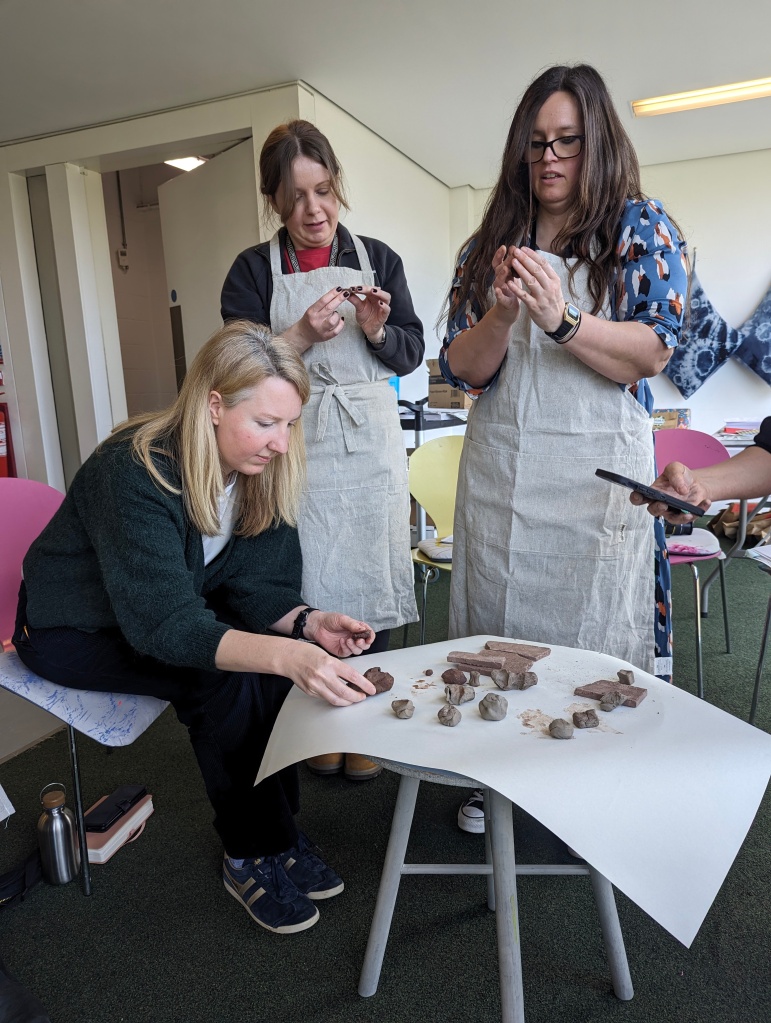
  • an in-person pottery handling session with the curatorial team
  • my attendance at a workshop about de-colonializing ceramics curation, again with the staff team (see the slideshow above)
  • several days of writing and editing poems in response to handling pots
  • delivering a creative writing workshop with exercises inspired by the ceramics
  • making film-poems from participants’ work in Reels
  • delivering a round-table discussion about residencies for TWP members who would like to apply for future opportunities
  • learning how to make kinetic typography digital poems in Canva
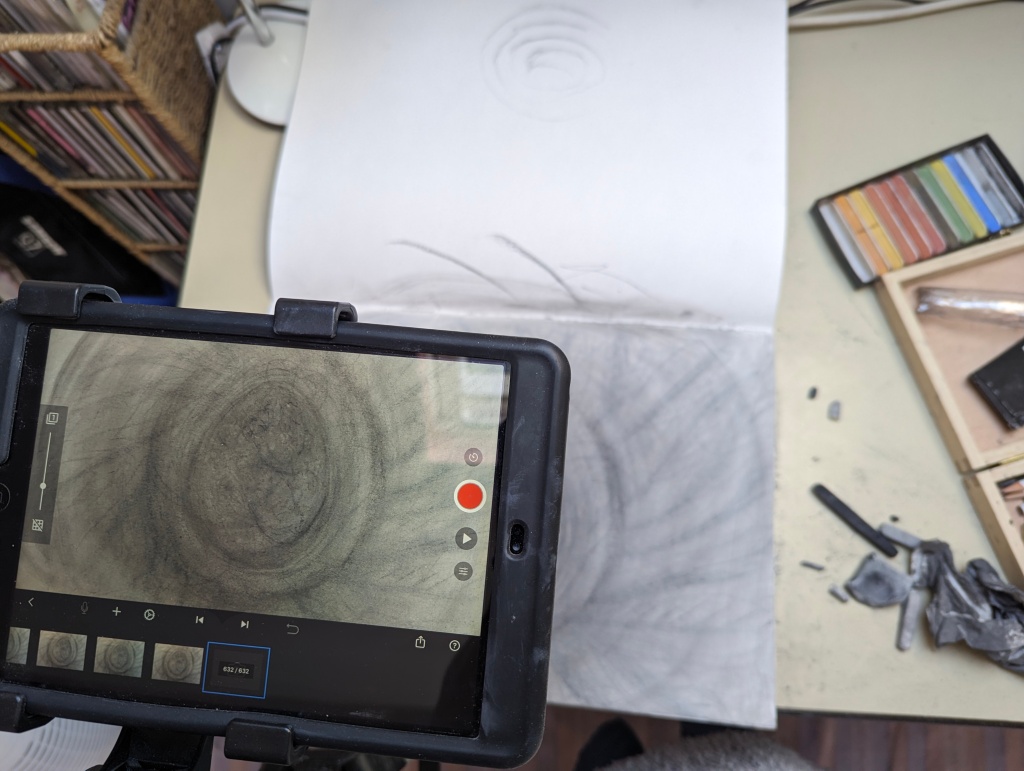
  • learning how to make charcoal animations
  • experimenting with AI-generated voice-overs
  • learning how to create soundtracks in Audacity
  • the creation of four digital poems ready to reveal in June.

To find out more about my process and poems, please come to MIMA Art Social #17 on Thursday 20th June, 5.30-8pm at MIMA, and I’ll reveal all!!

Fiddling on with film

Hey hey, how’s it going?

I have a new filmpoem for you to look at – it’s VERY amateurish, hooray. I filmed my shadow at Hartlepool station when waiting for a train one morning. (Pretty soon I’m going to have a collection of work entirely created at Hartlepool station while waiting for trains). There are two soundtracks overlaid; one is a free download of wind chimes, the other is my annoying voice being much more boring-intoning-typical-poet than I’d like. Anyhoo, give it a look if you’d like 🙂

Even Though I Looked, Even Though I Listened

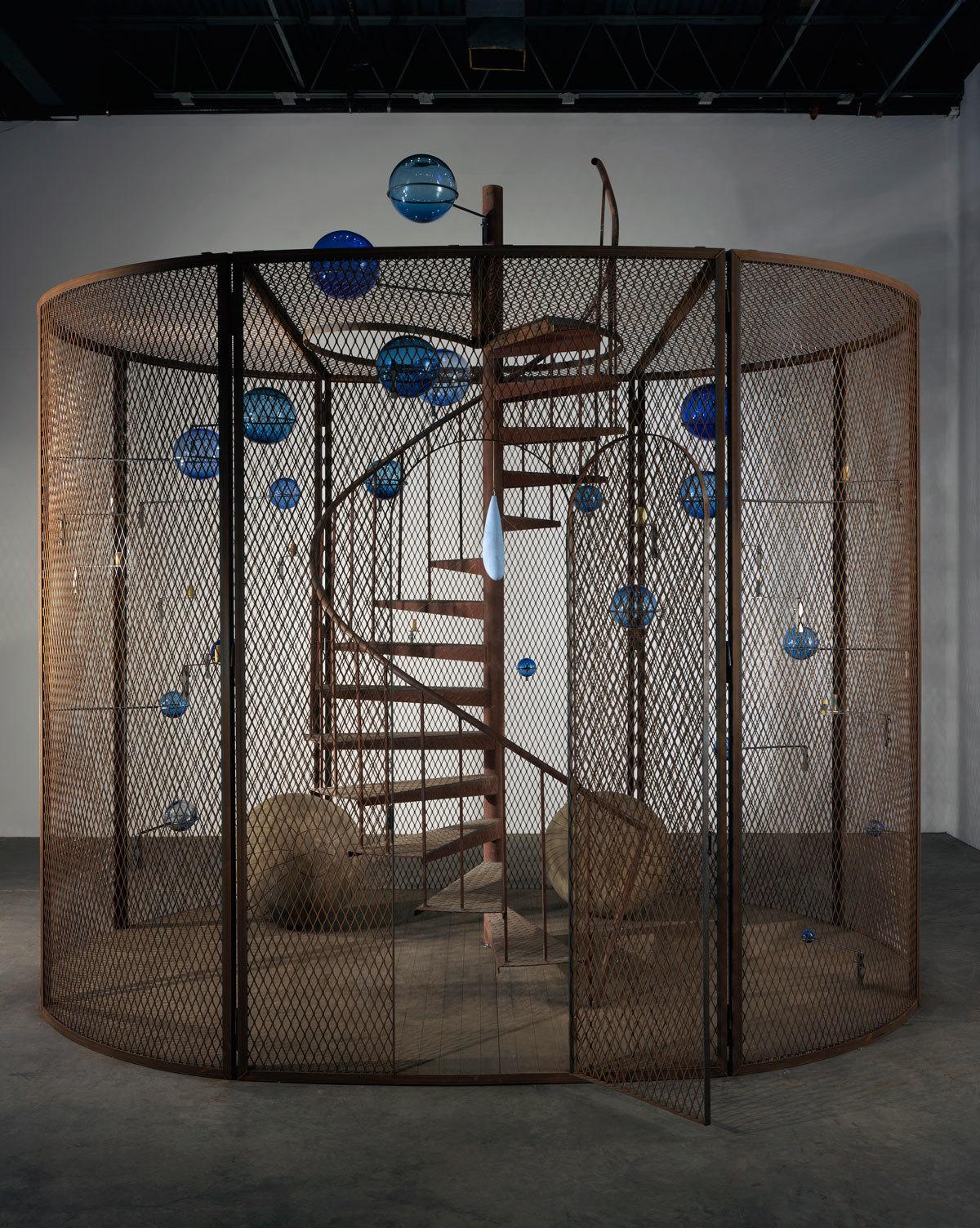
Oh, and the poem itself was written in response to work by Louise Bourgeois, during a workshop led by the rather super Lisa Matthews.

louise-bourgeois-art-is-a-guarantee-of-sanity-body-image-1459766804

For Holocaust Memorial Day

anselm-kiefer-ash-flower-1983-97.jpg

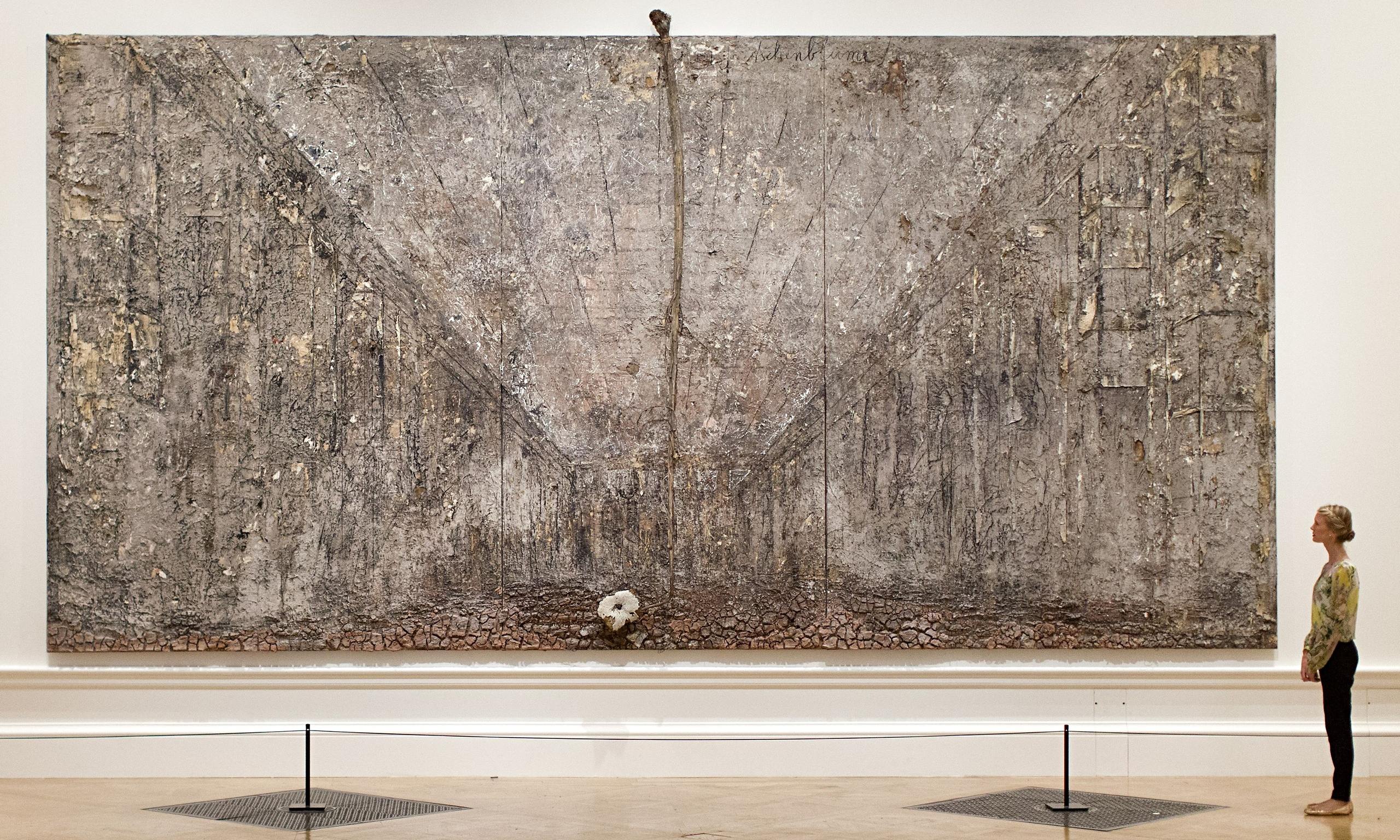
Ash Flower  (after Anselm Keifer)

The dead, who are thinner than gas,
might fit comfortably in their millions
in a simple cardboard box.

So why this desolate hangar?
Ankle-deep in guano and plaster-dust,
quiet as a sick forest –

(was Buchenwald once really a forest?)
Trees, acid-stripped and skeletal,
grow down out of a broken pane of sky.

Why has he painted such a mighty space?
Must we fit in there with them?
The millions whose last words

were a scrabbled cunieform on the inside
of the heavy chamber doors,
thickest where the handle should have been?


Ekphrastic – Agglomerations by Chun Kwang Young

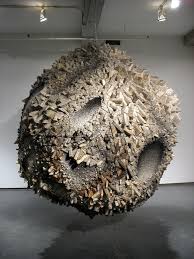
images-1When the madness of the Edinburgh Fringe gets too much for me each August, I pop into art galleries to rest my brain from words. I especially like Dovecot Studios on Infirmary Street, which this year was hosting an exhibition of incredible mixed-media constructions by Korean artist Chun Kwang Young. Here’s a sort of prose-poem response to the exhibition – because you can run from words, but you can’t hide…

images

The master works on a cosmic scale. For brushstrokes read boxes, that are not boxes, but triangles of polystyrene clothed in paper. Mulberry fibre, mulberry twine, twisted by assistants, legions wrapping landfill in nostalgia. Medicine packages, tincture of indigo, tinted taupe, dappled with the boxy characters of Korea, swaddled by the acolytes. He chooses the ones whose half-moon nail-beds please him, clean and cool-fingered even in August, blotchlessly cornerfolding crisp, crisp yet downy, the myriad boxes crawl, large and small and smaller, stutter over canvases, mothsoft rubbleheaps, rust-bled stains on the pre-silk, charred impact craters in among the chorus of paper-bandaged apices. In the master’s mind, immense moons of ice revolve in the open space of international galleries. What does it matter, the boys bickering girlsoft at the trestles, but the amiable static of the atelier? Their fingers are white moths, opening and closing. They all eat kimchi with their plain white rice. Their beauty depends on such interlaced tensions.

Ekphrastic project – James Cowie’s ‘The Yellow Glove’

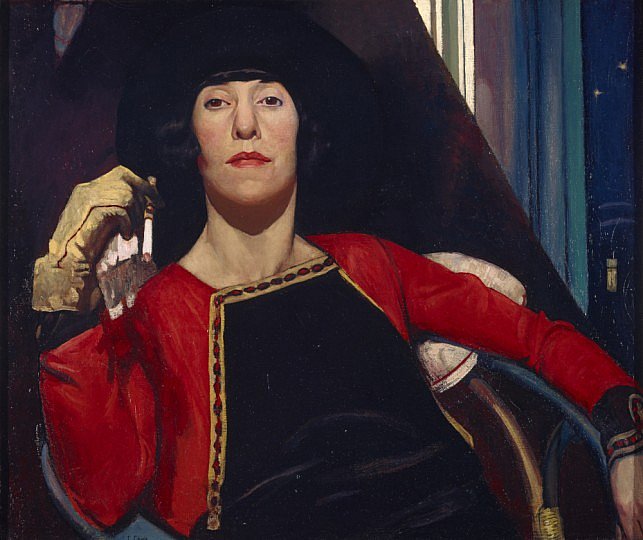
2012AA41357

Oh my dear, it was too, too dreadful!

Mortal mind can scarce conceive –

At least, not yours, darling Vi,

Yours would have shrunk. Violets do shrink,

It’s an immutable law, like death, or gravity,

Or who sits to the left of the Bishop.

“Bother immutability” that silly boy would say,

And therein lies the drastic horror of the thing,

For Pongo positively pushed it this time!

Doubtless the dear old Duchess toot sweet

Snipped him merrily from the Will, singing

“Cold porridge to primogeniture!” So you see,

I simply had to pop back the jolly old ring

And hoof it hotfoot before the bean began blubbing.

It’s a rotten sausage, but there it is.

Now, do try one of mine – they’re Turkish.

Ekphrastic project – Conflict and Conscience

The second of my poems for art crit magazine Corridor 8 went live a couple of weeks ago, but I’d like to bring it back to your attention now. Why? Because it’s a response to the exhibition ‘Conflict and Conscience : British Artists and the Spanish Civil War‘, running at the Laing Gallery until 7th June, and May Day weekend seems an appropriate time to nod in the direction of socialist struggles past and present.

I’d really just like to encourage you to see the exhibition if you can. Not only are there some really strong works, including Picasso’s ‘Weeping Woman’, but it is full of inspirational women. Women artists who fought and died, women who served the rebel camps and fed the insurgents, women who were passionate political and military leaders, women who sewed vast celebratory tapestries in remembrance of their comrades, women who made the heart-wrenching posters that ensured aid went to the victims of the conflict, women who got off their arses and started charitable foundations to secure the safety of orphans when our pathetic government of men refused to take in refugees, women who learned how to run ambulance services in blitzed cities, women, women, women…

Atlas was a woman…