I Love The World – conversation and poetry

I confess, sometimes I forget that conversation with strangers is part of my creative practice. It sounds odd to put it like that, but it’s true – one of the ways I make art is to start by talking.

So for example, when I made and toured a spoken word theatre show to accompany the release of my first collection, The Trouble With Compassion, I spoke to groups of people about what compassion meant to them and incorporated their definitions into an audience-participation section of the show. I also spent some time with individuals, actively listening to them describe their perfect day, and then describing it back to them as a visualisation-meditation, which I recorded for them to use as a relaxation tape. On several other occasions, I’ve been commission to write poems based on group conversations about things like climate change; poems which have included verbatim phrases, or have been recorded, sampled, and turned into soundscapes.

So having my own ‘conversation bench’ at Middlesbrough Art Week was a natural addition to this practice. I spent a day inviting people to sit with me and choose a slip of paper from my bowl. On it they’d find a quote from a poem (mostly Mary Oliver poems) with something to say about loving this world. That would be our conversation prompt. The conversations themselves *were* the art, as far as MAW was concerned – but of course, I wrote small poems for them anyway, and here they are.

Beth Loves The World
“What do I eat and who do I stain?” – from Blackberries, by Mary Oliver

She knows the viscous crimson slime of viscera in the hand;
The tough tug of the knife from anus to silver throat, she knows.
She learned survival in the wild; but after that gutting she struck camp,
got hooked on videos of battery farms, and changed.
Nowadays when she comfort-eats, the lasagna is veggie.
Her kitchen is stocked with the fruit of family labours
on allotments, those scrappy remnants of the commons.
True sovereignty may well look like brambles – it would be good
if it were easy for everyone to live this way, if profit’s pressure
hadn’t uprooted us from a wholesome normality.
There must be something she can say in all this noise?
So many battles to pick, but one truth to hold tight –
she doesn’t want to stain this world with blood.
Asha Loves The World
“I had wanted an easy way out: decision on high, co-ordinated war effort: not how an ecosystem works” – from Cassandra: The Second End by Sasha West

Her feet hurt, and she has no words in my tongue to tell me
if the world will get better, or if this is as good as it gets;
a bench on which to rest in the flat white light of a Saturday mall,
easing the ache, surrounded by all the numb abundance.

For a while we try to open up single words like portholes
to call through, one world to another. Mum-dad-sister-wife-shopping.
Her ankles over her Sketchers are puffy as her winter jacket,
shapeless and durable as coats I’ve seen worn by rickshaw drivers
high up in the freezing villages above Manali. India? I try.

She spreads her stubby hands, to show each ashy knuckle
flashes garnets and coils of yellow Indian gold,
extravagant and bright as galaxies. She has no words
that I can understand to tell me about what she’s seen,
and if I could follow her, would I even believe it?
Katharine Loves The World
“Look, I want to love this world
as though it’s the last change I’m ever going to get
to be alive
and know it”
		from October by Mary Oliver

there is this world, and also
He has prepared a world to come

in that world there is gold and light
pure spirit and praise

in this world there are pangolins
and recycling bins

the daily effort to choose, to decide
living by His word

at the pulpits a call is rising
for all to be stewards of Creation

by reducing
single use plastics

not spiritual enough! 
some are disappointed by the mundane

but if God speaks through the light of stained glass
why not also through glass milk bottles?

what else is stewardship if not the constancy
of small actions?

what is this world but the choices we make, not waiting
but hoping for the next world?
Caroline Loves The World
“What does barbed wire feel like when you grip it, as though it were a loaf of bread, or a pair of shoes?” – from Rain by Mary Oliver

In one way, the world is a wild openness
where weather, danger and even death may spring an ambush on her
but so too may vivid joy come to her blood and breath.
On balance, it’s worth the bus ride,
or calling out the lifeboat when the current is surprising.

In another way, the world is brick-built and she can read it,
scanning plate glass for usage, the centre for footfall, testing edges
of stone steps for skateboarder damage
like some folk check houseplants for stress and pests.

In both spaces she sticks to her own two feet,
alive to risk but undeterred, her body and her wits
moving the wire away from any blocked stile, on any path
where she knows she has the right to roam.
Claire and Rowan Love The World
“And therefore I look upon everything
as a brotherhood and a sisterhood”

- from When Death Comes by Mary Oliver

and a siblinghood, for those of us as apart from the binary as a tree,
served by our own folklore, and containing our own spirit -
be it anxious, or be it puckish, it is our magic

we ourselves are miles away from our siblings, and have let go our children.
in this turning season of our lives, we are choosing
new ways to know ourselves, and change our worlds

we’ve beach-combed nail-paring plastic wrack and nurdles the size of lentils,
collaged them in a making that re-makes us as artists,
invoked S.I.C.K. as a slogan-sigil that explains it all, inner and outer

and we say

identifying winter buds is just like being a wizard, so we’re filling
emptied hours with learning trees; remembering our family
called us Blossom in the pink spring of our life

remembering how we all climbed that tree in the nearby woods,
how one summer we found it felled for some planner's ring-roaded future,
our friend and all their siblings. How their deaths changed our world.

The ballad of the benches

“If a tree falls in a forest and no one is around to hear it, does it make a sound?” Yes, yes, interesting thought experiment, but more to the point – if a tree falls on a housing estate in Norton, does it get chipped for mulch, OR….does it get carved into stunning benches for the community????

Well obviously, the latter! I found out about it when the Tees Valley Wildlife Trust asked me to write a celebratory poem for the unveiling of the benches on May of this year. What was only intended as a short piece to be spoken at the end of the launch day turned into a full-on performance presented in stages as a huge retinue of school children, TVWT staff, community members, and the mayor of Stockton all processed from bench to bench across the length of Roseworth Estate.

The story of the tree felt absolutely like a folk tale to me, one that should be made into a rhyming story that people could learn or set to music if they wanted – a tale of how a huge loss was turned into beauty, utility, and community pride through the actions of passionate, creative people. So what shape of poem should I use?

The tree itself was an elm, once the iconic shape of the English natural landscape, but now rare due to the ravages of Dutch Elm Disease. And the traditional English poetry form for folk poems, and folk songs, is the ballad – it’s what most people use when they start to write poetry, it’s the form behind most nursery rhymes and rhyming kid’s books too. You’ll know it – diddle de diddle de diddle de DUM, diddle de diddle de DEE?

So the choice was easy – I needed a ballad to tell the tale…

Two elms stood at the heart of the Roseworth Estate in Norton, Stockton-on-Tees. When one was severely damaged by Storm Arwen, local people, councilors, and the Tees Valley Wildlife Trust stepped in to make sure the wood was kept in the community. A Big Local grant allowed them to commission artist Steve Iredale to carve the fallen wood into benches and play structures for two local primary schools, and SEN school, and a local church.

Each bench has its own motif – dragonfly, angel wings, mythical serpent-dragon, and acorn. Steve also carved a standing stump at the Kiora Hall North-East Autism Society school into a matching sculpture of barn owls. It was impossible not to give each piece its own verse!

Here is the poem as it appears in the latest members’ magazine from the Tees Valley Wildlife Trust. If you would like to support their work bringing nature to people and people to nature, if you would enjoy a regular magazine full of information about the wildlife on our doorsteps, then why not become a member now?

Threat level – intense

More from Seaton Carew’s little tern colony

Horus, the Egyptian god of sun and sky, is depicted as a falcon. Sometimes he is almost a man, but bird-headed, and sometimes he is fully bird. In his hieroglyph he is a falcon perched in profile, but in decorative icons he takes on the silhouette of a hovering raptor, wings outspread. I never understood the awe and terror this shape could inspire – not until the kestrel came.

It had been two days since my first stint with the little tern wardens at Seaton Carew, and I was looking forward to another afternoon of watching fluffy chicks bimble on their wibbly legs, and chatting to the passing public. I’d muted the warden WhatsApp group for a bit, so I’d missed the first avalanche of notifications. Kestrel attack. Chick taken. Kestrel attack. Chick taken. Kestrel attack. Adult taken. Kestrel attack, attack, attack.

Attempts had been coming around every twenty minutes all through the long hours of June sunlight. With chicks of his own to feed, the male kestrel had been taking advantage of perfect visibility and a concentrated population of chicks at their most vulnerable stage, hatchlings mostly unable to take cover under the pipes and pallets provided. The sheer speed of the predation was shocking to witness, and the decision was made in the warden chat group to stop the blow-by-blow reports of loss in favour of a slightly less traumatising end-of-day round-up. But as the numbers mounted, it was difficult not to think darkly – if this rate of attrition were to continue, would any chicks survive to fledge and escape along their migration route to Africa?

Wardens are well aware of all the ways these little birds can be taken. Gulls can smash and gobble eggs, dogs can chase and catch fledglings when they first head to the water’s edge. By night, foxes try their luck and are seen off with laser pens, as is the little white cat that night warden Dean has nicknamed Ghost. Even hedgehogs get in on the action, swimming through shallow tidal pools to get to the prize of an egg. But nothing is quite like the kestrel.

All wardens are trained in the use of this laser pointer, which deters night predators like foxes without causing any damage to them. This image and featured image of mother with chicks both by Steve Lindsay.

Other threats can be seen coming and counteracted by the human guardians with laser and air horn, or with screeching and mobbing by the feisty little terns. Although as the UK’s smallest seabird they seldom land any pecking blows, clouds of dozens of birds are usually successful in bothering the lumbering herring gulls away. But nothing is quite like the kestrel!

A little tern mobs a herring gull, which turns its head in mid-air to scream at the smaller bird
Image by Matthew Livsey

As soon as I get out of the car, I can hear the absence of bird chatter. Anyone who’s seen a sparrowhawk strike in their garden will know the stunned hush that follows it, often for days, as the survivors hunker away in fear. For the little terns there is nowhere to hide, and a real air of exhaustion and despair has washed over the colony. Whatever they do to deflect the kestrel, he simply ignores them, swinging round again and again with indestructible focus for the hunt. The raids have been so frequent that the mobs of defenders, small and intimidated in the first place, have now dwindled into desultory attempts by half a dozen or less against an undeflected foe.

Three little terns mob an unconcerned kestrel against a pink clouded sky at dusk
Image by Matthew Livsey

The kestrel watches from a distant roof, unseen as a sniper. The kestrel moves neither gaze nor intent. The kestrel circles higher and higher until it is a dot, and then a trick of the eye a blue mile above. The kestrel slides in front of the sun; and I see it then! How Horus came into the minds of people a millennia ago, majesty and death and the blinding brightness of a god! But I can no longer see the real bird.

We are still craning upwards in fear, lost in the heat-thin clouds, when he strafes in low over the perimeter fence. It’s a split second, but by the time we turn and cry out, he is already making the horrifying grip-and-yank gesture of feeding. Another chick is lost, and there are five more hours of daylight left. More hours again tomorrow as the year builds to its solstice. No respite from the intensity of this threat.

Can the colony rally? Will any chicks make it to adulthood? The next few days will prove critical, as fledging begins…

More to come soon!

You can support the work of the Tees Valley Wildlife Trust by subscribing as a member here, or perhaps by volunteering your time to the little tern crew – or one of the many other conservation projects the Trust runs. Not in Teesside? Wildlife Trusts exist across the UK, have a look for your local opportunities!

Life on Mars

I saw this post and thought of Elon and all the tech-bro would-be-kings of the next frontier, spending all the wealth they’ve harvested from environmental death here on earth on big little boy rockets zoom-zoom-zooming them away from us whining plebs to all the new, empty planets they’d like to fuck…

I have a pamphlet coming out on 20th February with The Braag. It’s called Offworld and it’s full of weird little sci-fi flash fic poems that came out of a 2019 residency at MIMA.

All the titles are deliberate mistranslations of Portuguese exhibition and artwork titles I found in the archive folder for Brazilian artist Brigida Baltar, whose large photographic piece Cloud Collecting is in the Middlesbrough Collection. From this starting point, I prompted myself to create writing that embraced experimentation and narrative – a story of sorts emerged, about a girl and her friend Sai, and how they ended up drifting through the dustbowl dregs of a collapsing galactic empire, witnessing the slow degradation of endeavour and intention from utopian to authoritarian…

Wherever we go, there we are.

It should be available for pre-order soon, and there will be a launch at the Lit & Phil in Newcastle on 20th February, followed I hope by a Teesside launch, and online launch, and a bunch of readings around the country if I can get my shit together. I’ll keep you posted.

Plastic passions are hard to handle

Christmas blinking manically all around me, polyester charity-shop Shein-retrieval billowing brightly on my back, pen pausing in my hand mid-migration to its landfill destiny, clingy flutter of the Lotus wrapper tipping my thumb, toothed hoop holding my hair back like a best mate in the late-night ladies’ loos, keyboard carrying my mind to yours, boot soles carrying my body past window-gluts of tat in all shades of desperation and desire, blister-packs of ease for my symptoms, fugitive molecules circulate in my plumbing and the beading of my blood vessels, micro, macro, plastic, factual.

Plastic is oil. The international treaty on reducing plastic waste has failed to reach an agreement, with oil-producing nations pushing against the most stringent restrictions. It figures.

Figures. 400 million tonnes of plastic waste per year, 109 million in rivers, 30 million in the oceans. Predicted to treble by 2060 if we don’t stop now.

Trying to find a decent poem out there (finding lots of bad ones). Somewhere there’s Cindy Botha’s prize-winning poem about a hermit crab in a doll’s head. Somewhere in me there must be things to say, but what is there unsaid?

Teesside has the world’s first recycling facility capable of turning formerly end-of-life and unrecyclable plastics into liquid hydrocarbons. They employ 50 people. Teesside is a major manufacturing hub for Sabic, a global firm who produce over a third of all the polyethylene needed to make single-use plastics. They employ 800+ and bring £400m into our local economy. Some staff occasionally do voluntary beach cleans. The UK wanted the plastics treaty to work at it’s strongest; Saudi Arabia not so much. Sabic is a Saudi-owned company.

I can’t make the pieces fit. I’m a shucked crab, calling a dolls-head ‘home’. A pair of ragged claws.

The World Counts plastic ocean dump figures – real-time counter.

Ocean plastic tracker – where might your plastic end up if it reaches the sea?

Stories of Stuff – watch and share feature length and animated shorts showing the lifecycles of plastics, recycling, microfibres, microbeads

Plastic Count – see how much the UK wastes and take part in this annual citizen-science project monitoring plastic use and waste in UK households and schools

PlanetCare – install a microfibre filter on your washing machine outlet and reduce micro-plastic pollution in the water cycle

Bird-shaped holes in the world

Why declare climate emergency? Because of the absences I see everywhere.

The five sparrows on the wall when two years ago there were twenty .

The way the starling murmurations reduced from an abstract flash mob to sad little squiggles the year after their roosting site was knocked down for housing development.

How long it’s been since I cringed at an evening influx of daddy-long-legs, creepy-crawly bane of all childhood camping trips – I saw one on a bus stop this summer and stopped to take a photo, it had been so long. Bad luck for the bats, dunlins, plovers, choughs and crows and others that feed on them.

I’ve lived long enough and been watching, idly but enough to see baselines shift and biodiversity plummet, and I can’t even really look closely at the true numbers without wanting to scream. I’m taking a different road to my mum’s these days so I don’t have to look at the wrenched-up hedges and ravaged fields of another fucking housing estate going up. Hedgehog corridors gone, berries for the migrating flocks gone, everything gone, for brick-loads of mortgage debt and two-car driveways in an unwalkable development without amenities or green infrastructure, built with extractive materials we have no carbon budget for – my mind rants on and on!

Does anyone else get this clutching panic just looking at how many of us there are? And thinking about how much consumption and destruction we seem to find normal?

Does anyone else look out over the incredible skies of Teesside and imagine walking the marshes as a pre-historic hunter-gatherer, seeing not this era’s scratty gap-toothed off-cut skeins of geese but endless sashiko stitches of bird-flocks?

Lynn Pederson does something like this in her prose-poem ‘A Brief History of the Passenger Pigeon’, and I’m so glad to find it. I hope you enjoy it too.

A Brief History of the Passenger Pigeon

Not to be confused with messenger pigeons, birds sent behind enemy lines in war, but think passengers as in birds carrying suitcases, sharing a berth on a train, or traveling in bamboo cages on a ship, always migrating on a one-way to extinction. How would extinction look on a graph? A steady climb, or a plateau, then a precipitous cliff at the dawn of humans?

Nesting grounds eight hundred square miles in area. Skies swollen with darkening multitudes. Days and days of unbroken flocks passing over. Ectopistes migratorius.

And the last of the species, Martha, named for Martha Washington, dies in a cage in 1914 at the Cincinnati Zoo.

Forget clemency. We are the worst kind of predator, not even deliberate in our destruction. Our killing happens à la carte, on the side (side of Dodo?).

And because the nineteenth century did not enlist a battlefield artist for extinctions, there are no official witnesses to the slaughter, just participants. If you could somehow travel back to this scene, through the would-be canvas, you would run flailing your arms toward the hardwood forests and the men with sticks and guns and boiling sulphur pots to bring birds out of the trees, as if you could deliver 50,000 individual warnings, or throw yourself prostrate on the ground, as if your one body could hold sway.

So maybe this is the point of poets and poetry in the context of declaring climate emergency. To imagine forward and backward through out own lifetimes and beyond, to paint a picture of biodiversity as it was and should be, to keep alerting new generations to the baseline shift so they don’t unthinkingly accept the new normal of silent dead-scape.

I’m going to share one of my own poems as well, this one published in Passerine (where all the poems are called Dear Sophie)

9 October

Dear Sophie,

The clouds today are the blue-black of eye bags.

The trees blaze against them, rebels to a sapling.
Pointillist berries transport the green shadows with scarlet.
The haws are set, thumb-prick carmine, and the sloes are blue as ravens.

Along the old embankment, crowds of rosebay have withered
to a froth of seed-split pods swaying on rattles of madder leaves.

The grey wind.

Long-vacated, you melt into the arms of the earth, sockets deep as inkwells.
In twelve years, the scientists say, the damage will be irreversible.
Your son’s lifespan, again.

A break in the clouds reveals the trees
are full of fluttering shadow-puppets, telling folktales
about the beginnings and ends of worlds.

A tendency to elegy: climate walk-and-talk with poets

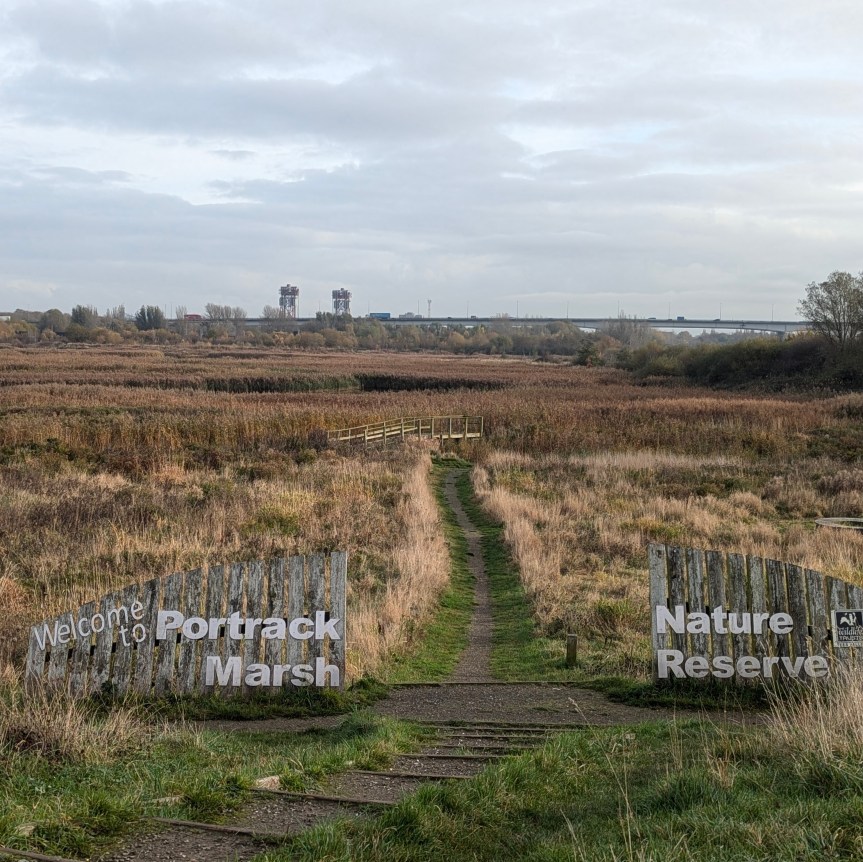
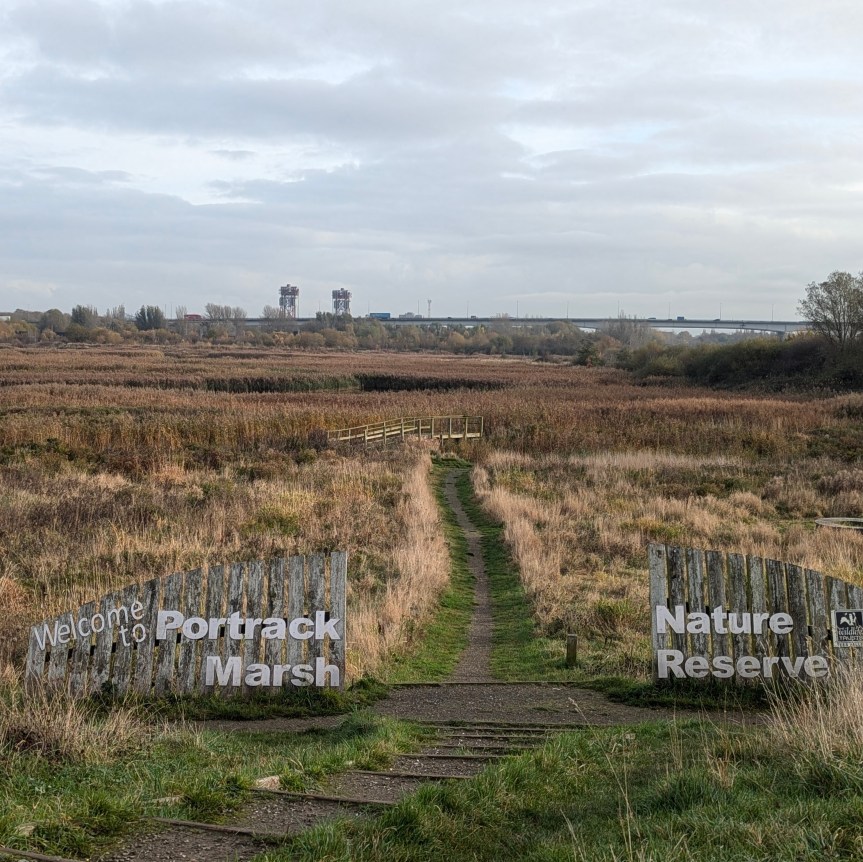
Last week I was joined in my climate emergency drop-in by my wonderful friend and fellow poet Jo Colley. Together we explored Portrack Marshes managed by the Tees Wildlife Trust, an area of crucial reedbeds and open water just the other side of the embankment from the manicured whitewater runs and jogging paths of the Tees Barrage.

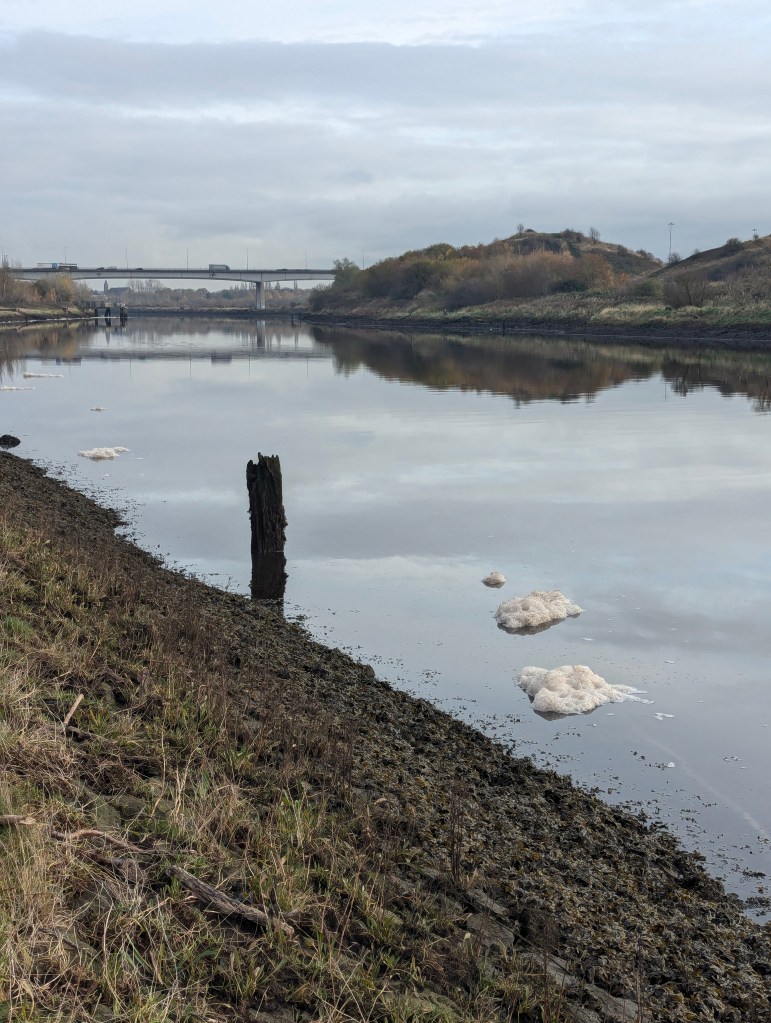
Reedbeds and marshes, along with salt creeks like the one that has been restored at Greatham, are essential to the flood resilience of the Tees riverway as extreme weather events become the norm and sea levels push upwards from Teesmouth. I was conference poet at the launch of the Tidelands partnership last year, a multi-agency project to protect and restore habitats like these which provide a place for flooding to run off safely, to be reabsorbed into the river system with minimal damage to human infrastructure – and preserve biodiversity in the meantime.

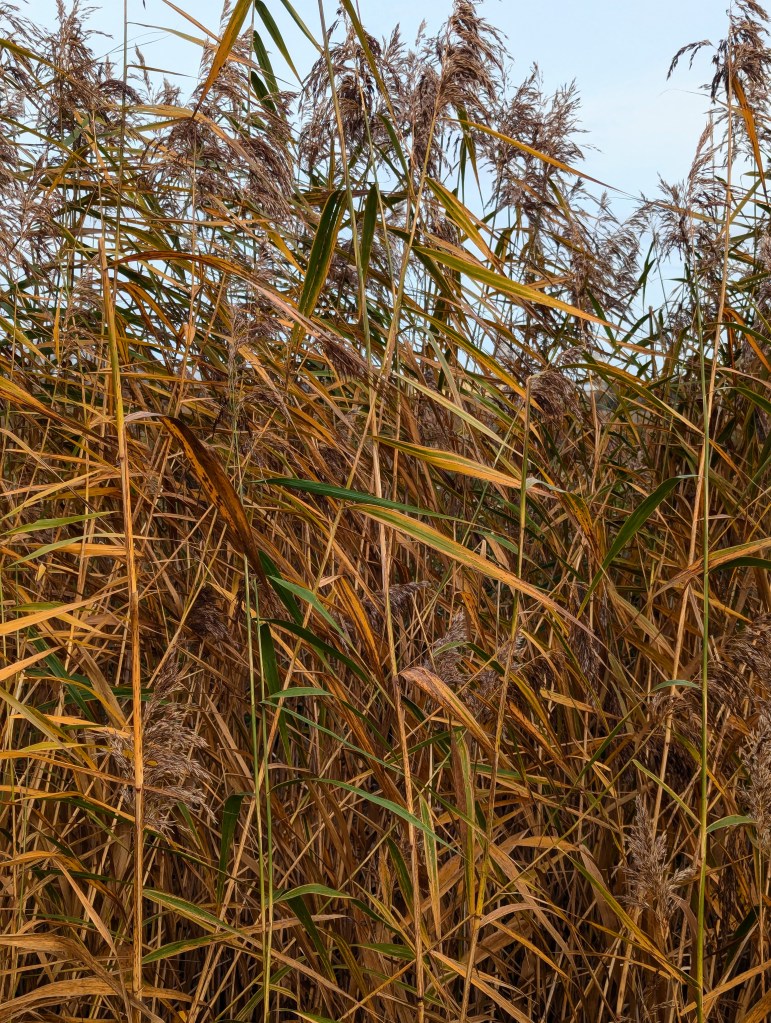
Susurrating marsh soughs seed-head rush-hush
shiver-silver the open pannes of water standing
shining among the signing stems of Portrack’s
sun-struck panoply with its scattering of warblers.

You can read my full conference poem at the end of this blog…

Jo and I have spoken before about climate collapse and our feelings around it, which are often feelings of grief, panic, anger and impotence. As poets we realised we have something of a tendency to elegy! We’ve both lived long enough to notice the absences, the gaps where the birds should be flitting, the silences where the insects should be humming. People growing up now won’t notice there’s anything out of the ordinary, they have nothing to compare it with, any more that we can fully credit C19th accounts of the mouth of the Tees literally boiling with the abundance of fish. It’s called a shifting baseline, and its one way in which we collectively forget, deny, or protect ourselves from the truth of ecological erosion.

Because the truth of it is overwhelming, and extremely hard to handle without sinking under the weight of it or else disconnecting into distraction and denial. As Jo and I walked, our conversation ranged from thoughts about how genocide and ecocide are dark twins born from the worst human drives; how political systems are stacked against urgent, rapid, change; how the free market will kill us all; how Trump really is The Last Trump for all kinds of hopes.

We also saw white egrets and serene herons, families of long-tailed tits and winter sun backlighting frothy reed-heads and exploded bullrushes. We saw pollution, but praised the “ugly” edgelands where we leave nature alone rather than spend effort and money on “improving” it. We tried to imagine what the genius loci of this place would look and sound like, and what it would take for us to be motivated for the fight by a sacred relationship with our land the way indigenous land-defenders are. We moved in the sunlight, enjoying the rightness of the chill in the November air, and as we moved our thoughts and emotions flowed with us.

Helpful thoughts and commitments to ourselves:

  1. When we think deeply about nature, we will walk in nature – movement helps us process, and being outside gives us a floodplain to contain unexpectedly big emotions.
  2. We will notice beauty – anywhere it appears, in however small a detail or embattled a location, and we will praise it.
  3. We will take strength from what we’ve already done – when looking for more ways to help the planet and adapt to climate change, we will not start by berating ourselves and nagging ourselves and others into despair; instead we will acknowledge and share the choices we’ve made to green our lives, in the hopes it will inspire others and lend energy to our resolve. A low-consumption lifestyle is not actually a hardship!
  4. We will practice hopefulness – and we will persist in making sustainable changes to behaviours and choices that are within our gift.

Some things we and our loved ones already do – how about you? Give me more ideas in the comments!

  1. Eating veggie/vegan – all the time, or increasing to most of the time
  2. Only buying second-hand clothes
  3. Only buying reconditioned electronic devices
  4. Buying dry groceries from refill shops whenever possible
  5. Repairing rather than replacing laptops – I use Kingfisher in Hartlepool
  6. Freecycle – and sometimes skip-diving 🙂
  7. Walking and cycling everywhere locally – on second-hand and refurbished bikes!
  8. Sharing a car
  9. Taking public transport whenever possible
  10. Slow travel for holidays abroad – no more flying
  11. Not buying food with lots of plastic packaging, especially veg
  12. Buying from farmers’ markets (seasonal veg, low food miles)
  13. Subscription donations to Tees Wildlife Trust, RSPB, WWF and Greenpeace
  14. Joining beach cleans and local pond conservation groups
  15. Investing in a forever-pen, a refillable fountain pen to replace all those disposable biros
  16. Switching to coconut fibre pan scourers
  17. Making my own recycled paper and junk journals for notebooks
  18. Being a “tree-mother” raising saplings for re-foresting initiatives
  19. Becoming a Futurenaut for DigVentures, a citizen scientist helping to map habitats for baseline surveys
  20. Making a Declaration of Climate Emergency with Culture Declares

Our next action – Cloud Cleanse:

A common thread in my last two drop-ins have been conversations around the environmental impact of server farms, AI, and the ecological weight of the internet generally. We don’t want to use fossil-fuel-generated electricity and precious water just to keep a bunch of random photos alive on the Cloud. So our next small, sustainable change is:

Setting a monthly standing appointment to download and/or delete our videos, photos, and old emails.

I’ll be spending some of my time at this Thursday’s drop-in doing a digital clear-out, and if you’d like to join me for a chat while we clean the Cloud please do! I’ll be downstairs in ARC Stockton cafe from 2-4pm.

Tidelands
Written for the launch of the Tees Tidelands Partnership, 9/11/23

Prologue

Those of us who live at the edge, we know
how water breathes, hour to hour and moon to moon,
how the sea drags her swollen belly around the clock, around the planet,
how she presses it into the river’s mouth.
Season to season, we watch as placid sapphire
is chased away by furious greys, and we say
those are winter waves
as storms spit the wrack line up on to the coast road
and take another chomp out of the Prom.
We know the sea will come.

Humans, when we feel a push, our instinct is – resist!
Blockade, force, and dominate whatever suits itself ahead of us.
(The shadow of bold conquerors hides fear and disgust -
unruly nature! Disobedient water!)
200 years, we’ve broken these “waste-lands” to industry’s bridle.
Drain, constrain, reclaim; always a tussle for territory,
a concept so entrenched that barricades once seemed common sense -
build high and hard the flood defense!
What we can’t control must be a threat,
lace tight the river’s corset, never let loose the tourniquet!

Stand your ground – but estuarine grounds should not stay still.
Better that silts should shift than baselines -
our new normals, denatured and denuded,
squeezing memories of abundance back in time
until true tales of delta waters boiling with fish
appear to us as fantastical myths.

200 years under carbonized, tatterdemalion smokestack skies,
fingers deep in money pies, and pride, and livelihoods
prospering without heed for the need of carbon sequestering snugly in the mud
of Greatham’s meanders…
Well, we raised that Lazarus creek.
We’ve turned back toxic tides before.
We can and must do more…

1. Restore

From the Amoco pipeline to Majuba Road
Wildflowers grow in their poor, perfect homes restharrow, black medick
Their names a natural poem
spike rush, milkwort, melitot
Enough forgotten to sound now arcane
creeping thistle, biting stonecrop,
Tenacity. Vulnerability, What’s in a name?

We call them for their colours red clover, white campion
yellow rattle, that root-starves

the bullying grass holds space
for even smaller jewels sea mouse-ear – miniscule!

So many speak of animals cats-ear, toadflax, fleabane

So many speak of niche marsh orchid, hedge bedstraw

Flora-fauna-habitat a tangle of vivid nomenclature
given when we knew their characters,
observed affinities.

We must restore ourselves
to patient knowledge passed on in a chain un-sundered
forged in fresh air, away from desk and test sun, wind, rain
a schooling spoken shown
and known as children’s stories are heart-known
We must restore paths connect
our unhindered spaces, and walk green corridors
with our eyes open together

2. Reconnect

Susurrating marsh soughs seed-head rush-hush
shiver-silver the open pannes of water standing
shining among the signing stems of Portrack’s
sun-struck panoply with its scattering of warblers.

White flames the egret,
scarlet flares the dragonfly,

and shhhhh – shhhhhh

Underneath the reed-roots sleep, holding fast
to the memory of sea, like a dream they once had
of their mother.

part salt part sweet part water part land

This is an orphaned place.

When century storms surge and inundate
the surface rises, a spectacular drowning,
becomes a kettled lake, denied egress –

Long ago, we cut the umbilicus.

And so it saturates under circumstances
that can only keep repeating, until
all becomes brackish beyond the bounds of life,
but for we
who can see where withered tributaries
may be honoured into revival
may be connected to our own survival.

3. Realign

We’re all trying for a win-win
Tide goes out, tide comes in

Is welcomed into arms of marsh
The wash, the swash, the back and forth

Resistance is – pretty useless
To be soft is true resilience

Praise the hawthorn saplings, they promise rebalance
But please don’t nick our coir rolls, thanks

We’re going for 20:80 effort to result – smart!
Looks like 80% science, 20% weird land art

I’m here for it! Never too late
to breed breakwaters that self-replicate

It’s polytunnels now for future forests of seagrass
It’s threading more salmon through a better fish-pass

It’s keyhole surgery, it’s controlled breaches
It’s a river running freely to its natural reaches

On haul-outs grey seals dream of more eels
Ghost islands lurk inside our fields

Stand now, shoulder to shoulder to shoulder
This project’s new – the flood plain’s older…

Epilogue

And we know, those of us here at the edge,
we know the sea is coming,
and climate change won’t listen to a cabinet of Canutes.
But we will not stand mute.
We are not a lone voice, and this is not wilderness but treasure –
the tidelands are our lands.
It will be the work of our hands
to bring them back to fullness, together.

White House, Orange Peril, Green Future?

With the world’s biggest climate change denier strutting back into power over at the world’s second-biggest carbon emitting nation, it’s a grey day to be thinking about the very niche impact of poetry as climate activism. Or so I thought, as I took my lunchtime walk around the wintery streets of Stockton, preparing for my second weekly Declaration drop-in.

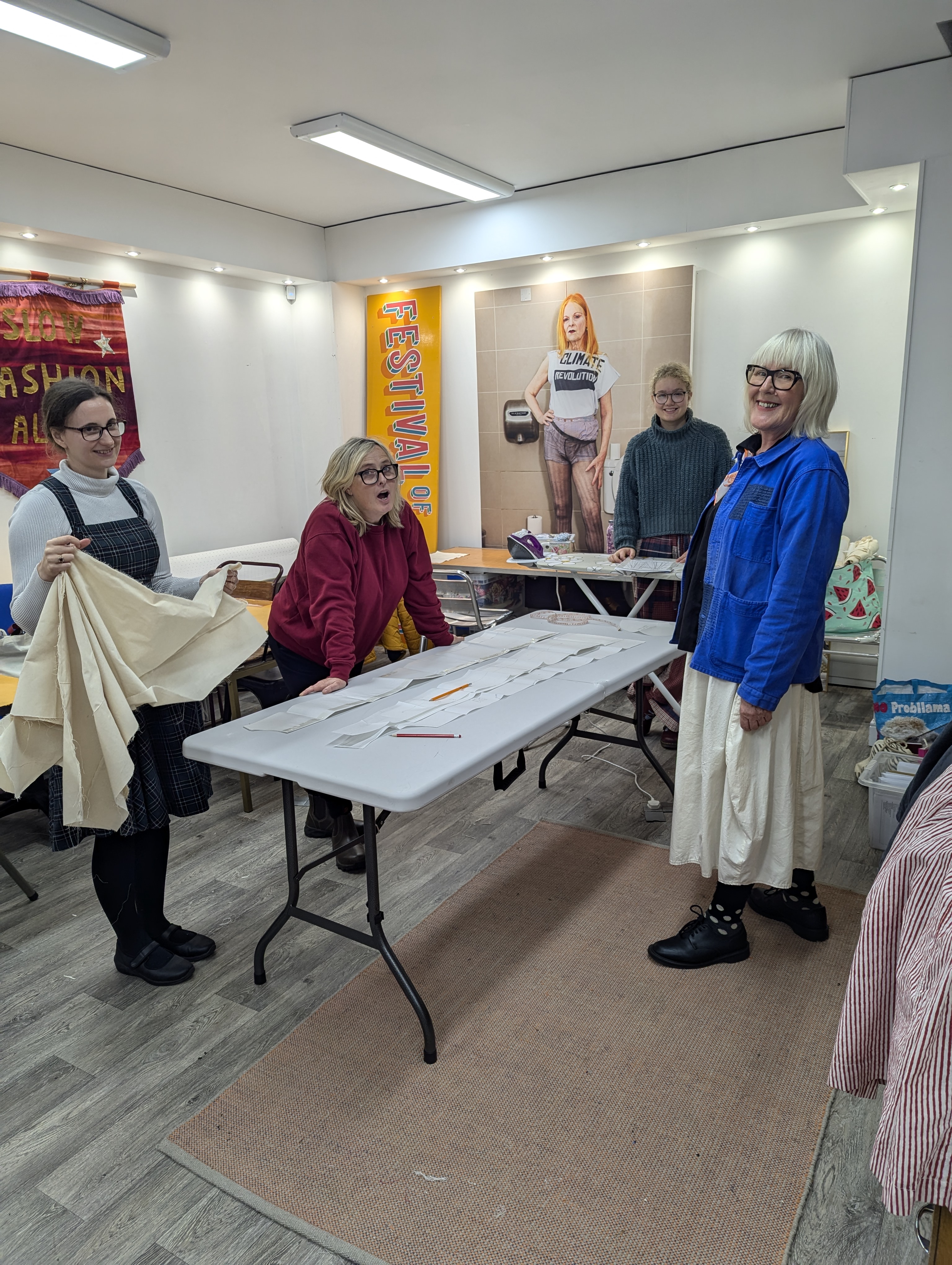
Wandering down Silver Street, I saw that there were people doing exciting things with sewing machines and pattern-cutting in the gorgeous yellow Institute of Thrifty Ideas, the activities hub of Festival of Thrift. Popping in to say hi to tutor Lindsay and her group, I learned something that made me so happy – poetry was exactly the comfort some people sought when the news of Trump’s re-election hit!

What was the poem they sent each other to express solidarity, to offer solace, to remind each other of the need for renewed hope and commitment to nature? This one, of course…

The Peace of Wild Things by Wendell Berry

When despair for the world grows in me
and I wake in the night at the least sound
in fear of what my life and my children’s lives may be,
I go and lie down where the wood drake
rests in his beauty on the water, and the great heron feeds.
I come into the peace of wild things
who do not tax their lives with forethought
of grief. I come into the presence of still water.
And I feel above me the day-blind stars
waiting with their light. For a time
I rest in the grace of the world, and am free.

Later that afternoon I was joined by the lovely Amy Lord – author, blogger and digital marketer. We had a fascinating chat about the carbon footprint of digital work now that AI is everywhere, sucking up lakefuls of coolant. How can she mitigate against this in her work as a freelance marketer? With a Declaration, might she use her own stated climate ethics as a way to connect with clients who share her values? Can she use her marketing powers to tell the good stories of organisations who are embedding sustainability? As an author and blogger, will she lend her weight to the cause of Fossil Free Books in the wake of the Baillie Gifford litfest-funding kerfuffle? All brilliant thoughts and questions, which Amy has taken away to ponder further…

And for myself, I finally made a Declaration, one which will serve to connect me to the CDE community while I work on a larger creative response and continue to audit my practice. Its a start!

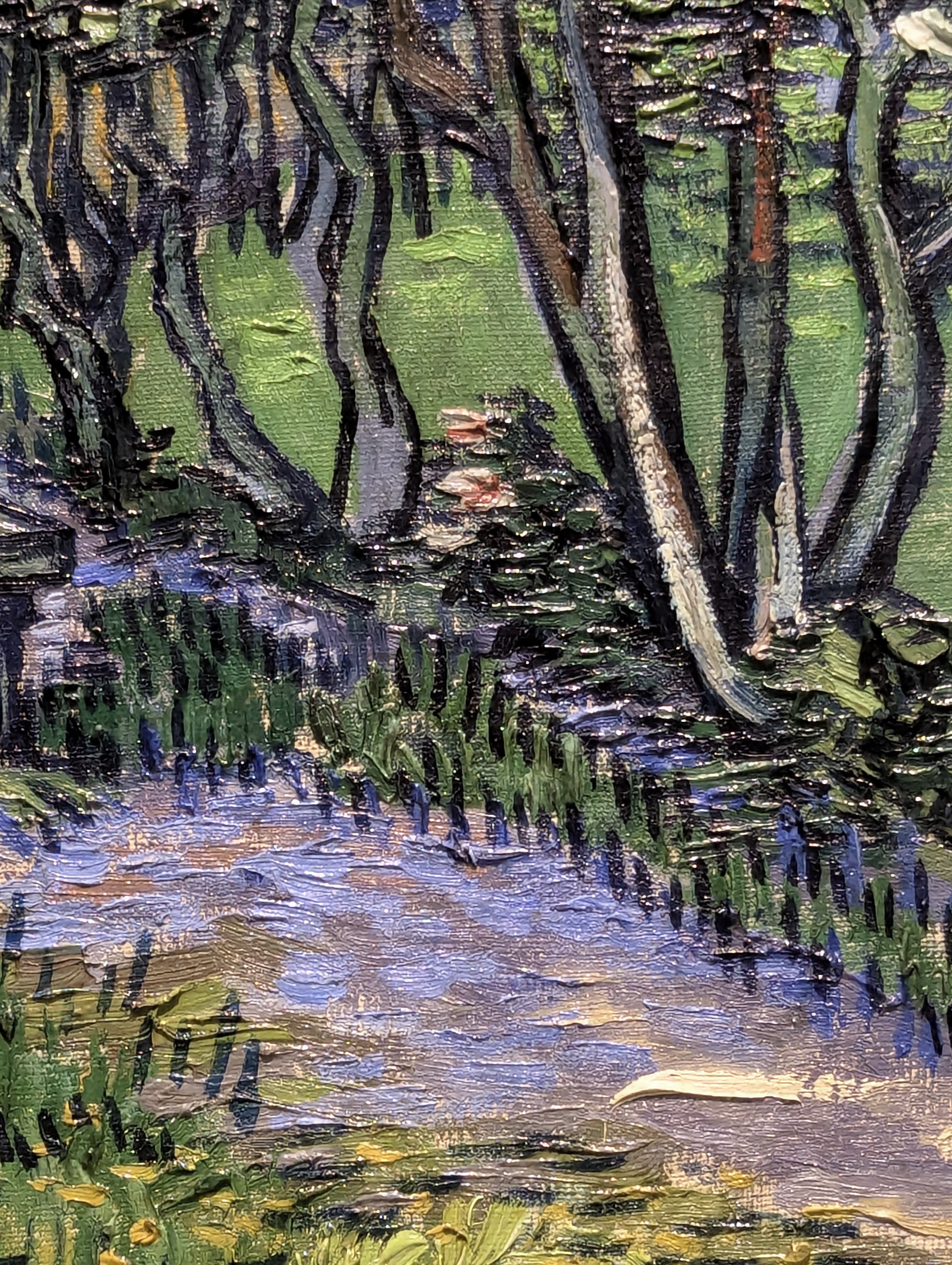
For you – a drawing in progress inspired by Klimt’s forests; looking for the peace of wild things at Billingham Beck nature reserve; close-up of a Van Gogh seen at the National Gallery this weekend.

My next Declaration drop-in will be a walk-and-talk on Tuesday 12th November, meeting 10.00am at the Whitewater Way car park for Portrack Marsh Nature Reserve – location and parking info here.

Want to be in touch about Teesside climate stuff for creatives and cultural practitioners? Email me

AI and poetry – a weird flirtation

Over at the Tees Women Poets, there have been some fascinating recent experiments with the relationship between AI, poetry, and ways to describe women. I’d like to share one of my experiments here.

The following poem is one I wrote for a TWP performance at Drake the Bookshop, for Feminist Book Fortnight. It is inspired by the non-fiction book Going with the Boys by Judith Mackrell, an account of six of the very first official female war correspondents, many of them from privileged yet problematic backgrounds, some of them trading on personal and sexual relationships (e.g. with Hemingway) to get their big breaks, and at least one of them ending up spying and smuggling people out of Nazi-held territories. All of them using femininity as a tool and a disguise, to divert danger and obtain information.

How To Get Ahead As A Female War Correspondent, 1930

So, daddy left mommy?
Daddy beat mommy?
Daddy didn’t love you?
Daddy loved you too much? – whatever,
Heiress, It Girl, bluestocking, black sheep,
Hitch your long legs around a brand new Daddy and make the wild leap.
You’re a bright girl, and you’re restless, so choose your ride judiciously –
Aristocrat? Diplomat? Editor? Author?
Who do you have to screw around here for the chance to prove
you are more than a gossip reporter?

Outrage them.
Hook Hemingway in Florida, and before you can say ‘exclusive’
you could be reporting the war in Spain, dancing
around the rubble and each morning’s wet and sudden stains,
your gold bangles clinking and your fox-fur neat.
Ignore the hacks and hounds who scoff no matter what
you wear on your pretty little feet.

Outdrink them, and outcharm them
in beleaguered Barcelona, in Berlin’s cellar bars,
at country house shoots and by candlelight
in Libya, Moscow, Bechtesgarten; play nice
with generalissimos of every stripe -
Hitler, Stalin, William Randolph Hearst,
some men are all the same, hungry for the bloodbath
that will make their name.

Feed their vainglory. Smile, darling, and they won’t refuse -
You’d look great if you made a little effort!
You gotta schmooze to get the news!
just don’t mention that your relatives are Jews –
that’s when the shadow men slide after you in their quiet cars
that’s when you feel your nape prick at the telephone’s flat click -

Outwit them.
They underestimate your brains, your bravery –
Pretty little polyglot
Cub reporter, trot, trot, trot
In the embassy limo, finesse your way through border lines
Bat your eyes, a shopping trip, too blonde for spies,
Just can’t get Schiaparelli in a city prepped for siege,
Just happen to glimpse the Panzer ranks, the massed Blitzkrieg,
Stash that in your boutique bags, quick
Glitz and ditz your way back ‘home’ to the last hotel open,
the one international phone, and –

Scoop! Outwrite them!
When they say you’re getting reckless, threaten to quit.
Forge exit visas for thousands, hold your nerve, get away with it,
You could not have covered society pages for one more minute!

So
When adrenalin gets you pumping,
When your mean heart’s bomb-blast-thumping,
When ambition gets you jumping to catastrophe’s rhythm, say
you don’t know where the boys are going
but by god you’re going with them.

I fed the poem into craiyon.com with the prompt “Create a photo based on this poem”. I tried the entire piece, and then experimented with using it in sections. Our hypothesis was that the first words were likely to influence the overall composition, like an ingredient list on a food packet showing you the highest percentage ingredient first.

What do you think of these images?

I wondered where some of the people of colour have come from, was the mention of Libya enough to get some of the North African vibes in the first slide? It’s much more than I expected. Why is the AI weighted in that direction? Where is Moscow, or Florida?

I was unsurprised to see that the bot is a leg man and a foot fetishist!

I was most irritated that I didn’t know to save screenshots, so was clicking the Save To Collection button only to lose everything several times. The very first results were incredible in their Paula Rego-esque looming dark surrealism, I felt like they absolutely captured the atmosphere of threat and danger I tried to portray in the poem. Each subsequent attempt got weaker results. Alas, you will have to take my word for it – that the long legs were flung higher and stranger, and there were orphanage-camps full of sheep-headed babies and women with slits in their feet…

My conclusions?

Still pending, but I know I’m not interested in generating sweet, neat, pretty and complete images, therefore I’m actually quite taken with these. I am still haunted by the images lost (the literally upholstered society lady, her eight hands caressing the limousine door, the slutty nurse with the several legs). What if I tried now to draw these images and the ones I remember, using charcoal perhaps? Is this essentially a good way of making preparatory sketches?

One thing I have learned – with the image-stream of AI, you really never can step into the same river twice.

Voyager -for a ‘poem bowl’ by Rupert Spira – and all four digital poems!

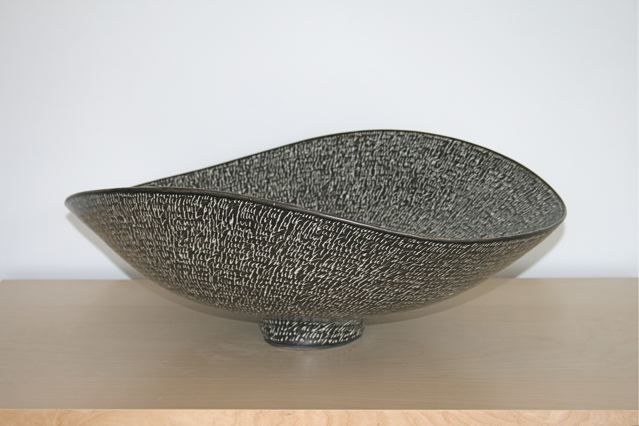
The fourth and final digital poem I made for my MIMA/Tees Women Poets residency was Voyager, written for Poem Bowl by potter, writer and philosopher Rupert Spira (b.1960). A vast black dish, it is decorated inside and out with a mostly illegible hand-written text that has been incised through the black glaze. Certain words can be made out, and these have been incorporated into the poem.

My inspirations for the imagery in the poem comes from the way the dish reminded me of both a warped vinyl record and a radio dish. Combined with the only partial legibility of the decoration, it led me to play with ideas of decaying signals and transmissions through space. The audio accompanying the digital poem features a short sample from “I’ll Be Seeing You” by Billie Holliday, which was the last message sent by NASA to the Mars Rover Opportunity before it ‘died’ in 2019.

The sound track for this poem was the most complicated, featuring free samples of for example vinyl record clicks and Cold War numbers stations alongside my own voice pushed through echo and distortion effects, and the poem text run through AI voice generators. All of this was put together using free Audacity software, which also allows you to create blocks of static interference.

The digital poem was also the most complex in terms of the kinetic typography, even though it was made in Canva in exactly the same way at 79AD and Origin Story. Drawing on the circular nature of the bowl, and all the images of records, radio dishes etc that are in the poem, I made the typography follow arcing pathways. The sections of text overlap and ‘degrade’, just like the audio. To make the effect of degradation I reduced the transparency of the text by degrees, sometimes in arcs that were offset so the faded echoes can still be read; and once in a fully-aligned circle with text blacked out except for certain selected letters.

I’m really proud of these digital poems! Here’s a reminder of the ceramics that inspired them – a leaning neck vase by Betty Blandino (Origin Story); a tazza by Annette Fuchs (79AD); a bowl by Deirdre Burnett (Egg Fiction); and a poem bowl by Rupert Spira (Voyager).

  • A rough and rusty-looking vase with a neck that is bent to the left.

And here are the finished digital poems in the loop as it appeared at MIMA. Headphones on!

For those that are interested in the sounds, here’s a list of all the sound clips I used – see if you can tell which poems they appeared in!

  • Volcano lava
  • Dripping cave
  • Message 4
  • Chickens
  • Seagull flock
  • Vinyl scratch skip loop
  • Cave music
  • Chucks Egg classic arcade game
  • Little chicken
  • Needle drop
  • Numbers station 332241
  • Seagull short
  • Vinyl scraped
  • Vinyl crackle 33rpm