I Love The World – conversation and poetry

I confess, sometimes I forget that conversation with strangers is part of my creative practice. It sounds odd to put it like that, but it’s true – one of the ways I make art is to start by talking.

So for example, when I made and toured a spoken word theatre show to accompany the release of my first collection, The Trouble With Compassion, I spoke to groups of people about what compassion meant to them and incorporated their definitions into an audience-participation section of the show. I also spent some time with individuals, actively listening to them describe their perfect day, and then describing it back to them as a visualisation-meditation, which I recorded for them to use as a relaxation tape. On several other occasions, I’ve been commission to write poems based on group conversations about things like climate change; poems which have included verbatim phrases, or have been recorded, sampled, and turned into soundscapes.

So having my own ‘conversation bench’ at Middlesbrough Art Week was a natural addition to this practice. I spent a day inviting people to sit with me and choose a slip of paper from my bowl. On it they’d find a quote from a poem (mostly Mary Oliver poems) with something to say about loving this world. That would be our conversation prompt. The conversations themselves *were* the art, as far as MAW was concerned – but of course, I wrote small poems for them anyway, and here they are.

Beth Loves The World
“What do I eat and who do I stain?” – from Blackberries, by Mary Oliver

She knows the viscous crimson slime of viscera in the hand;
The tough tug of the knife from anus to silver throat, she knows.
She learned survival in the wild; but after that gutting she struck camp,
got hooked on videos of battery farms, and changed.
Nowadays when she comfort-eats, the lasagna is veggie.
Her kitchen is stocked with the fruit of family labours
on allotments, those scrappy remnants of the commons.
True sovereignty may well look like brambles – it would be good
if it were easy for everyone to live this way, if profit’s pressure
hadn’t uprooted us from a wholesome normality.
There must be something she can say in all this noise?
So many battles to pick, but one truth to hold tight –
she doesn’t want to stain this world with blood.
Asha Loves The World
“I had wanted an easy way out: decision on high, co-ordinated war effort: not how an ecosystem works” – from Cassandra: The Second End by Sasha West

Her feet hurt, and she has no words in my tongue to tell me
if the world will get better, or if this is as good as it gets;
a bench on which to rest in the flat white light of a Saturday mall,
easing the ache, surrounded by all the numb abundance.

For a while we try to open up single words like portholes
to call through, one world to another. Mum-dad-sister-wife-shopping.
Her ankles over her Sketchers are puffy as her winter jacket,
shapeless and durable as coats I’ve seen worn by rickshaw drivers
high up in the freezing villages above Manali. India? I try.

She spreads her stubby hands, to show each ashy knuckle
flashes garnets and coils of yellow Indian gold,
extravagant and bright as galaxies. She has no words
that I can understand to tell me about what she’s seen,
and if I could follow her, would I even believe it?
Katharine Loves The World
“Look, I want to love this world
as though it’s the last change I’m ever going to get
to be alive
and know it”
		from October by Mary Oliver

there is this world, and also
He has prepared a world to come

in that world there is gold and light
pure spirit and praise

in this world there are pangolins
and recycling bins

the daily effort to choose, to decide
living by His word

at the pulpits a call is rising
for all to be stewards of Creation

by reducing
single use plastics

not spiritual enough! 
some are disappointed by the mundane

but if God speaks through the light of stained glass
why not also through glass milk bottles?

what else is stewardship if not the constancy
of small actions?

what is this world but the choices we make, not waiting
but hoping for the next world?
Caroline Loves The World
“What does barbed wire feel like when you grip it, as though it were a loaf of bread, or a pair of shoes?” – from Rain by Mary Oliver

In one way, the world is a wild openness
where weather, danger and even death may spring an ambush on her
but so too may vivid joy come to her blood and breath.
On balance, it’s worth the bus ride,
or calling out the lifeboat when the current is surprising.

In another way, the world is brick-built and she can read it,
scanning plate glass for usage, the centre for footfall, testing edges
of stone steps for skateboarder damage
like some folk check houseplants for stress and pests.

In both spaces she sticks to her own two feet,
alive to risk but undeterred, her body and her wits
moving the wire away from any blocked stile, on any path
where she knows she has the right to roam.
Claire and Rowan Love The World
“And therefore I look upon everything
as a brotherhood and a sisterhood”

- from When Death Comes by Mary Oliver

and a siblinghood, for those of us as apart from the binary as a tree,
served by our own folklore, and containing our own spirit -
be it anxious, or be it puckish, it is our magic

we ourselves are miles away from our siblings, and have let go our children.
in this turning season of our lives, we are choosing
new ways to know ourselves, and change our worlds

we’ve beach-combed nail-paring plastic wrack and nurdles the size of lentils,
collaged them in a making that re-makes us as artists,
invoked S.I.C.K. as a slogan-sigil that explains it all, inner and outer

and we say

identifying winter buds is just like being a wizard, so we’re filling
emptied hours with learning trees; remembering our family
called us Blossom in the pink spring of our life

remembering how we all climbed that tree in the nearby woods,
how one summer we found it felled for some planner's ring-roaded future,
our friend and all their siblings. How their deaths changed our world.

The ballad of the benches

“If a tree falls in a forest and no one is around to hear it, does it make a sound?” Yes, yes, interesting thought experiment, but more to the point – if a tree falls on a housing estate in Norton, does it get chipped for mulch, OR….does it get carved into stunning benches for the community????

Well obviously, the latter! I found out about it when the Tees Valley Wildlife Trust asked me to write a celebratory poem for the unveiling of the benches on May of this year. What was only intended as a short piece to be spoken at the end of the launch day turned into a full-on performance presented in stages as a huge retinue of school children, TVWT staff, community members, and the mayor of Stockton all processed from bench to bench across the length of Roseworth Estate.

The story of the tree felt absolutely like a folk tale to me, one that should be made into a rhyming story that people could learn or set to music if they wanted – a tale of how a huge loss was turned into beauty, utility, and community pride through the actions of passionate, creative people. So what shape of poem should I use?

The tree itself was an elm, once the iconic shape of the English natural landscape, but now rare due to the ravages of Dutch Elm Disease. And the traditional English poetry form for folk poems, and folk songs, is the ballad – it’s what most people use when they start to write poetry, it’s the form behind most nursery rhymes and rhyming kid’s books too. You’ll know it – diddle de diddle de diddle de DUM, diddle de diddle de DEE?

So the choice was easy – I needed a ballad to tell the tale…

Two elms stood at the heart of the Roseworth Estate in Norton, Stockton-on-Tees. When one was severely damaged by Storm Arwen, local people, councilors, and the Tees Valley Wildlife Trust stepped in to make sure the wood was kept in the community. A Big Local grant allowed them to commission artist Steve Iredale to carve the fallen wood into benches and play structures for two local primary schools, and SEN school, and a local church.

Each bench has its own motif – dragonfly, angel wings, mythical serpent-dragon, and acorn. Steve also carved a standing stump at the Kiora Hall North-East Autism Society school into a matching sculpture of barn owls. It was impossible not to give each piece its own verse!

Here is the poem as it appears in the latest members’ magazine from the Tees Valley Wildlife Trust. If you would like to support their work bringing nature to people and people to nature, if you would enjoy a regular magazine full of information about the wildlife on our doorsteps, then why not become a member now?

Quiet skies over Seaton

One last log from the little tern nesting site at Seaton Carew…

“It just took a skitter-flight!”

I wasn’t surprised that it was Tony who saw the fledgling’s first meaningful attempt at flight. A daily presence on the volunteer warden team, his deep affection for these birds and his hundreds of hours of experience have heightened his attention to their shapes, movements and behaviours. He and warden Emma had been conducting one the the regular sector-by-sector counts of adults and chicks, moving methodically from marker post to marker post, surveying the intervening ground in both directions to cover all angles. I had been tagging along beside them, observing, and had still barely noticed the fledgling testing its wings.

All three of us immediately searched it out; and found it, wings spread, catching the edge of the wind like a child’s kite seeking uplift from the sand. A raise, a rise, and suddenly – a full lift! In just one second it was airborne, angling a low slicing flight over the top of the protective fence and away to the shore beyond. The definitive change from vulnerable fledgling to self-sufficient juvenile adult had happened right before our eyes, a moment that felt so miraculous that tears came to us all. In this difficult breeding season, plagued by kestrel predation, every one of these flights becomes more precious than ever…and to see a first flight happen is an unbelievable moment of grace.

Juvenile little tern in flight by Matthew Livesey

I wrote that journal entry just over two weeks ago, after a visit to touch base with the terns before I went away for a week. I was scheduled to volunteer three more times this month and was looking forward to seeing more juveniles take to the skies, but by the time I returned the entire colony had fledged and begun its beach-hopping journey back to Africa. Accelerated by the kestrel attacks, chicks had gained their independence as quickly as possible, some exiting the breeding ground to take their chances further along the shingle outside what had become something of a raptor buffet. By the end of the season, a hungry and entitled kestrel had taken to walking through the half-pipes intended as chick shelters, looking confused when their ready-meals proved absent.

“Clever girl…” – velociraptor levels of cunning from the (male) kestrel, captured by Matthew Livesey

But although the predation was persistent, it did not continue at the same shocking levels seen by the team in those first few dreadful days. After the initial terrified paralysis had worn off the flock, the little terns rallied their defenses and once again took after their attacker in huge shrieking mobs. Attempts by the kestrel became less frequent, and less certain of a result, thanks to the heroic and exhausting efforts of these tiny birds. Where once there seemed a possibility of total chick loss, there now is the probability that around 70 new fledglings are out there in the world.

I say probability because exact numbers, never 100% certain, were harder to come by this year than usual. Ringing chicks involves entering the breeding ground and disturbing the brooding mothers, and although it doesn’t physically harm them it does cause alarm, stress, and defensive flying. With stress levels already so high among the birds because of the continued predation, ringing was kept to a minimum this year. Numbers were taken through heat-camera spot counts at night, and daytime observation with numbers extrapolated across sectors. These extrapolated numbers suggest 211 chicks hatched, with only 67 achieving adulthood. We know that one of ‘our’ ringed juveniles was spotted at Spurn Head, a shingle peninsula and nature reserve at the mouth of the Humber, but there are a good few birds that can’t be tracked and are now flying ringless into their precarious futures.

Ringing a little tern chick by Chris Brown

By the time I returned, the only bird visible on site was one ringed plover on her fifth week brooding evidently dead eggs. I watched her fuss and shuffle around her scrape, and by the following day she too was gone. The cedar fence now squares off nothing, the air above it is still and silent. Their departure has come even sooner than it did last year, which was also counted as an early farewell. The fence will remain until early August, but for now all that remains is to litter-pick the site, celebrate seventy beautiful new birds in the world, and wait for April to come again so we can see – will the terns return for a seventh year?

Support the work of your local Wildlife Trust by becoming a subscribed member or volunteering, and protect nature today.

One good (little) tern deserves another, and another, and another…

How did Teesside’s little tern colony go from 3 successful fledglings in 2021, to 141 survivors in 2024? A case study in positive human intervention, dedication and persistence…

“That’s a nice lift” says Tony, as the adult slice upwards from their invisible nests among the sandy shingle at the southernmost end of Seaton Carew beach. A regular volunteer watching over the terns, he loves the way they barrel roll so their bellies catch the sun bright white, then suddenly flip their pale grey backs towards us so that against the blue-grey haze of the horizon the birds disappear.

They are a constant magic trick. Although I can hear their little raspy screeches before I even get out of the car, they are only easily visible when in motion, and they drop into rest on their nests like flipping the switch on a cloaking mechanism.

Today is a finer day than when I last came, bundled up against a sudden wind-harried drop in May’s temperature. On that day everything was grey, and the male terns were spending every ounce of their energy on constant forays to the tide for sand eels. For a courting tern, nothing says “have chicks with me” like a beakful of silvery sand eel. The warden that day, Emma, told me that the eel numbers seemed good and that mating was taking place all over the strand. Occasional flappings of raised wings like little white flares in all the grey showed me where breeding pairs were getting down to business. A month later and the same brief flashings of wing-white erupt where birds land and settle on their shallow scrapes – an estimated 80 nests – where both eggs and chicks are now present.

Colin volunteers to show me a chick through the huge tripod scope set up on the promenade for curious passers-by to learn more about this protected site. I’m looking at the fluffball for a good 20 seconds before I even see it, the speckled, sandy camouflage markings are so successful. More chicks hunker under one of the half-pipe ridge tiles laid out across the site as emergency shelters, looking like a clumpy sand-drift. Only movement gives them away; living as they do under a panopticon sky full of predatory larger gulls and hungry kestrels, their natural instinct is to stay very, very still.

The Tees Valley Wildlife Trust looks after this site, working together with Durham Wildlife Trust, which protected this tern colony when it was breeding north of here at Crimdon. Tony tells me how they migrate here in April from the Gambia, looking for shingle beaches and spits to inhabit. He waits for their arrival, and feel properly ’empty nest’ when they leave again.

Tidal activity being what it is, those shingles the terns seek can change their topography year on year, or disappear completely, and even during the course of a breeding season the colony can get washed out by high tides and storms – so the birds are flexible about where exactly they settle. When the colony started to fail in Crimdon, they moved south to Seaton. This year’s colony has been joined later in the season by birds believed to have been washed out of their first nests at Long Nanny near Beadnell.

The warden on duty today, Derek, tells me that in the six years this site has been active, the local people have taken it to heart. Teessiders have always pitched in to help protect the terns, whose eggs are so vulnerable to predators and accidental damage, and who will simply leave their nests to die if disturbed by humans. In volunteering to go on watch, I’m following in my mother’s footsteps – she watched them at weekends in the 1980s, when their breeding site was over the other side of the Tees mouth in South Gare.

Having a warden and volunteers is a huge part of the success story that has seen fledgings increase exponentially at Seaton. From 2021 to 2022, the jump in chick numbers surviving to migration stage was 3 to 89! What changed? The Trust got funding for a fence. A simple fence. Split cedar pales hammered into the sand to warn off dog-walkers, information signage, and paid wardens with the back up of dedicated and knowledgeable volunteers who can explain and engage. The global population of little terns is classified by the IUCN as ‘of least concern’, despite their acknowledgement of a 30% decrease in overall populations in the last decade – like every species, they definitely need protecting now, as rising sea levels and increased storm severity will undoubtedly make their survival difficult in the decades to come.

As I’m standing at the promenade wall, sketching the scene, a young lad jumps up onto the wall and is quickly warned down by Derek. But it’s not Derek’s style to be punitive, that gets you nowhere. Instead he always makes a point to talk with people encroaching on to the site, and in no time he has the whole family chatting, observing nests, and checking out the chicks through the scope. I talk to the mother and the younger sister, who are entranced by the fluffy babies and had no idea the birds came here every year. It’s excellent to pass on the little bit of information I’ve learned, tentatively trying to forge another link in the chain of connection between humans and nature. It’s a small start towards finding my own way to act as a custodian and a good ancestor.

If you’d like to do something positive, meaningful and sustainable about nature, biodiversity and climate, you should absolutely start by giving what you can (membership, donations, volunteering) to the organisations already on the ground, doing the work. That could be a global charity or your local wildlife trust.

For my fellow Teesside readers, please if you can, become a member of the Tees Valley Wildlife Trust and consider becoming a volunteer warden. If that’s not possible right now, check out other ways you can benefit from the Trust’s amazing work, for example by visiting one of their reserves or taking part in their 30 Days Wild challenge with the family.

White House, Orange Peril, Green Future?

With the world’s biggest climate change denier strutting back into power over at the world’s second-biggest carbon emitting nation, it’s a grey day to be thinking about the very niche impact of poetry as climate activism. Or so I thought, as I took my lunchtime walk around the wintery streets of Stockton, preparing for my second weekly Declaration drop-in.

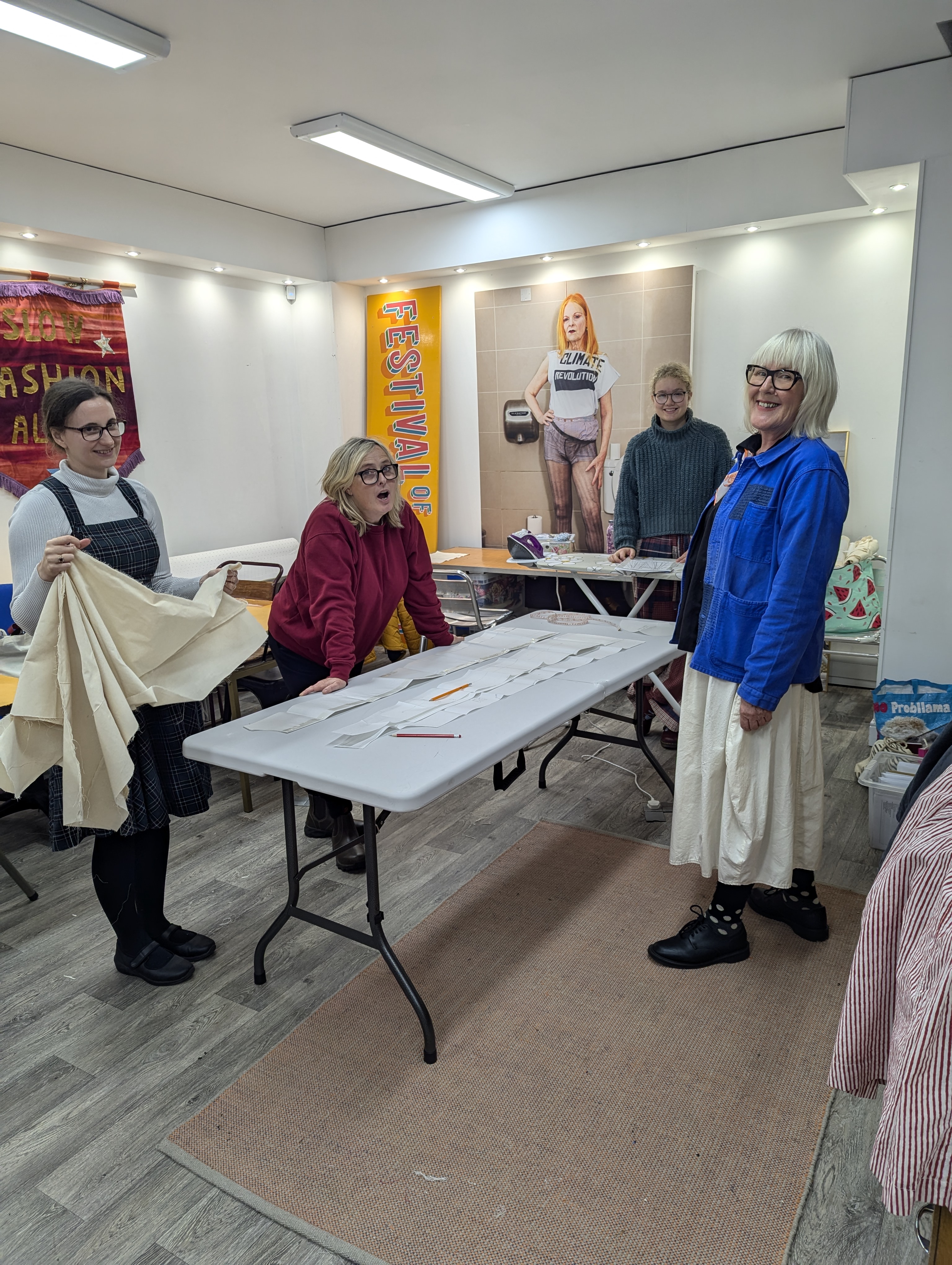
Wandering down Silver Street, I saw that there were people doing exciting things with sewing machines and pattern-cutting in the gorgeous yellow Institute of Thrifty Ideas, the activities hub of Festival of Thrift. Popping in to say hi to tutor Lindsay and her group, I learned something that made me so happy – poetry was exactly the comfort some people sought when the news of Trump’s re-election hit!

What was the poem they sent each other to express solidarity, to offer solace, to remind each other of the need for renewed hope and commitment to nature? This one, of course…

The Peace of Wild Things by Wendell Berry

When despair for the world grows in me
and I wake in the night at the least sound
in fear of what my life and my children’s lives may be,
I go and lie down where the wood drake
rests in his beauty on the water, and the great heron feeds.
I come into the peace of wild things
who do not tax their lives with forethought
of grief. I come into the presence of still water.
And I feel above me the day-blind stars
waiting with their light. For a time
I rest in the grace of the world, and am free.

Later that afternoon I was joined by the lovely Amy Lord – author, blogger and digital marketer. We had a fascinating chat about the carbon footprint of digital work now that AI is everywhere, sucking up lakefuls of coolant. How can she mitigate against this in her work as a freelance marketer? With a Declaration, might she use her own stated climate ethics as a way to connect with clients who share her values? Can she use her marketing powers to tell the good stories of organisations who are embedding sustainability? As an author and blogger, will she lend her weight to the cause of Fossil Free Books in the wake of the Baillie Gifford litfest-funding kerfuffle? All brilliant thoughts and questions, which Amy has taken away to ponder further…

And for myself, I finally made a Declaration, one which will serve to connect me to the CDE community while I work on a larger creative response and continue to audit my practice. Its a start!

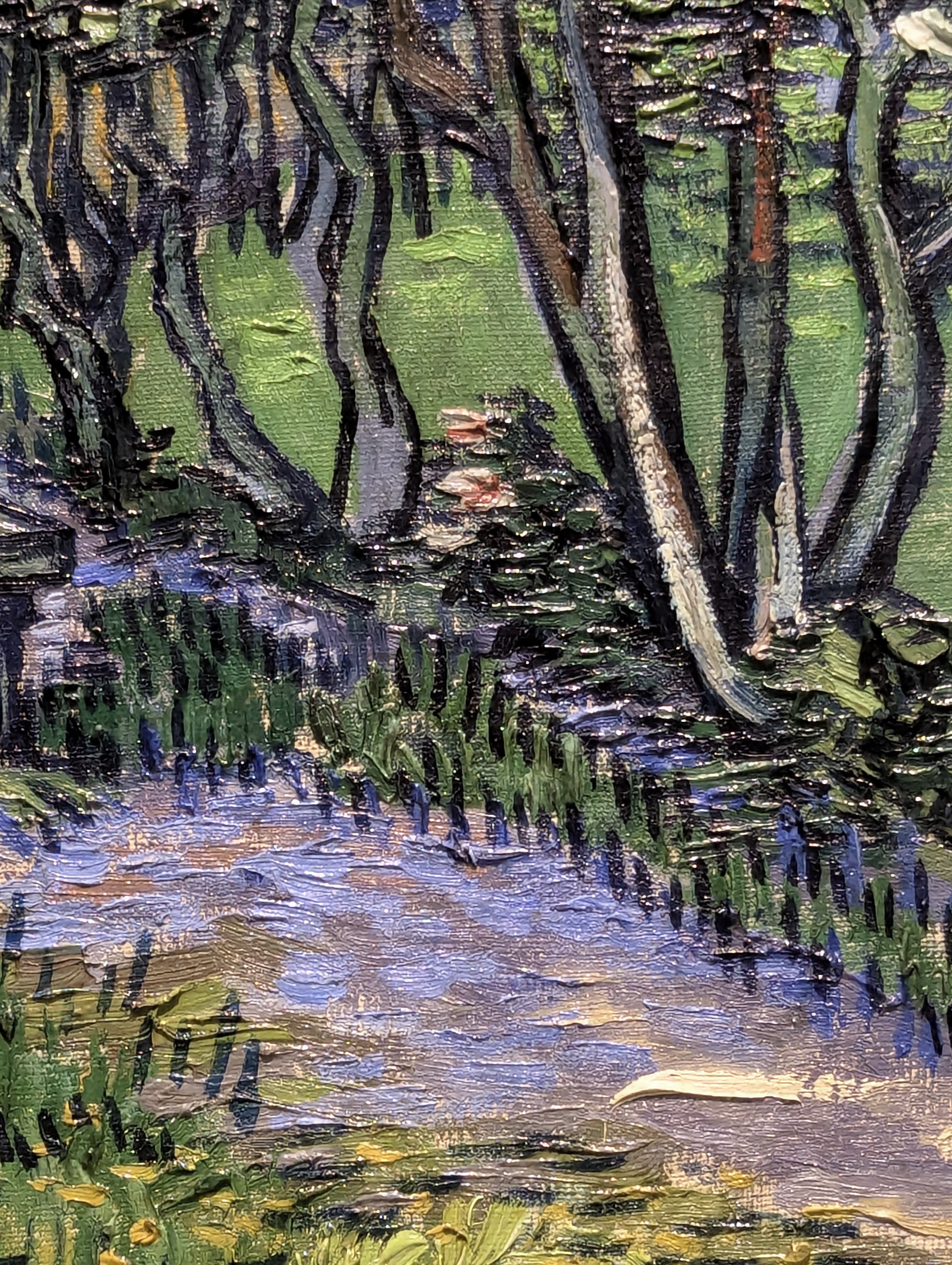
For you – a drawing in progress inspired by Klimt’s forests; looking for the peace of wild things at Billingham Beck nature reserve; close-up of a Van Gogh seen at the National Gallery this weekend.

My next Declaration drop-in will be a walk-and-talk on Tuesday 12th November, meeting 10.00am at the Whitewater Way car park for Portrack Marsh Nature Reserve – location and parking info here.

Want to be in touch about Teesside climate stuff for creatives and cultural practitioners? Email me

Egg Fiction – for a bowl by Deirdre Burnett

Unbelievably, I didn’t take a decent photo of the third ceramic piece to become a poem in my Tees Women Poets @ MIMA residency, but here are some examples of Deirdre Burnett’s other work to give you a flavour. The one on the right is closest in colour and finish, but imagine it looking much more like an eggshell. The porcelain is also eggshell-thin, and quite small (ostrich egg?)

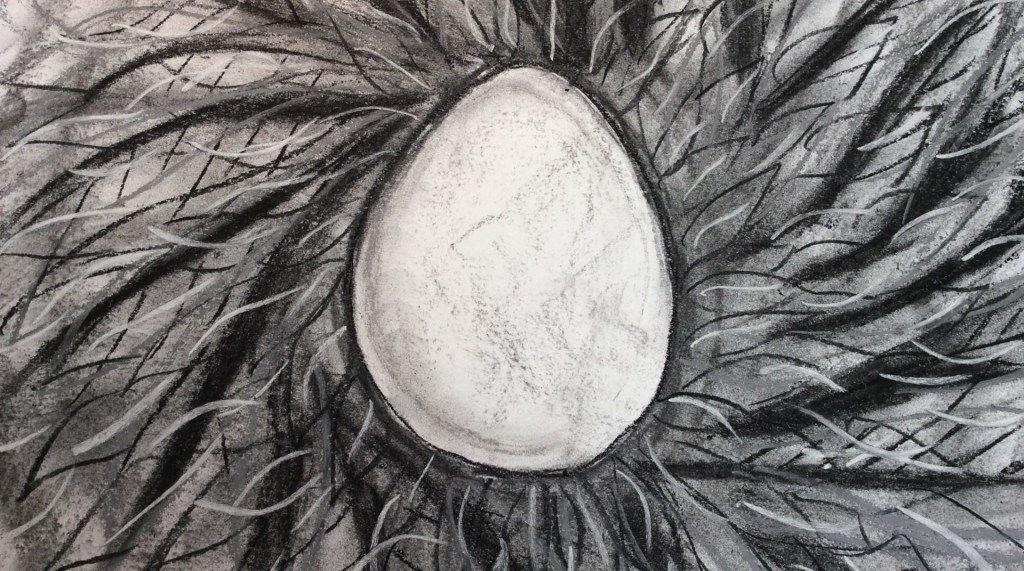
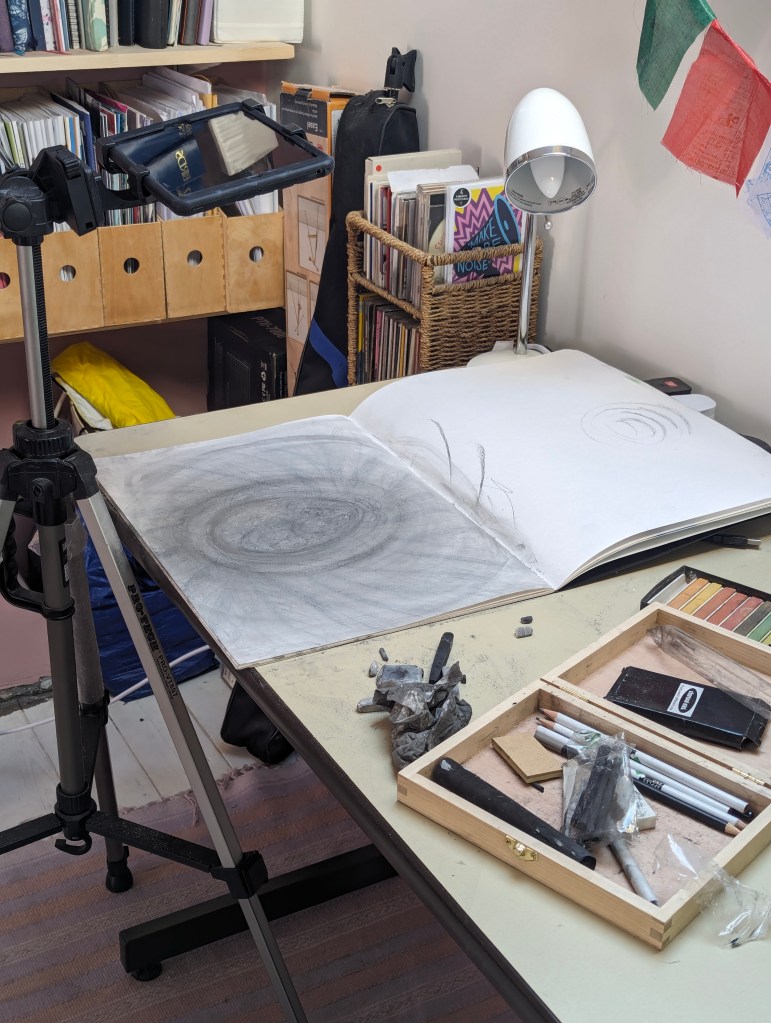
Egg Fiction draws on my own memories of collecting eggs and family folklore about witches’ boats. I learned charcoal animation for the resulting digital poem, and tried to keep a childlike feeling to the flow of images. I named the poem Egg Fiction because it is in no way an actual biography of Burnett’s route into ceramics.

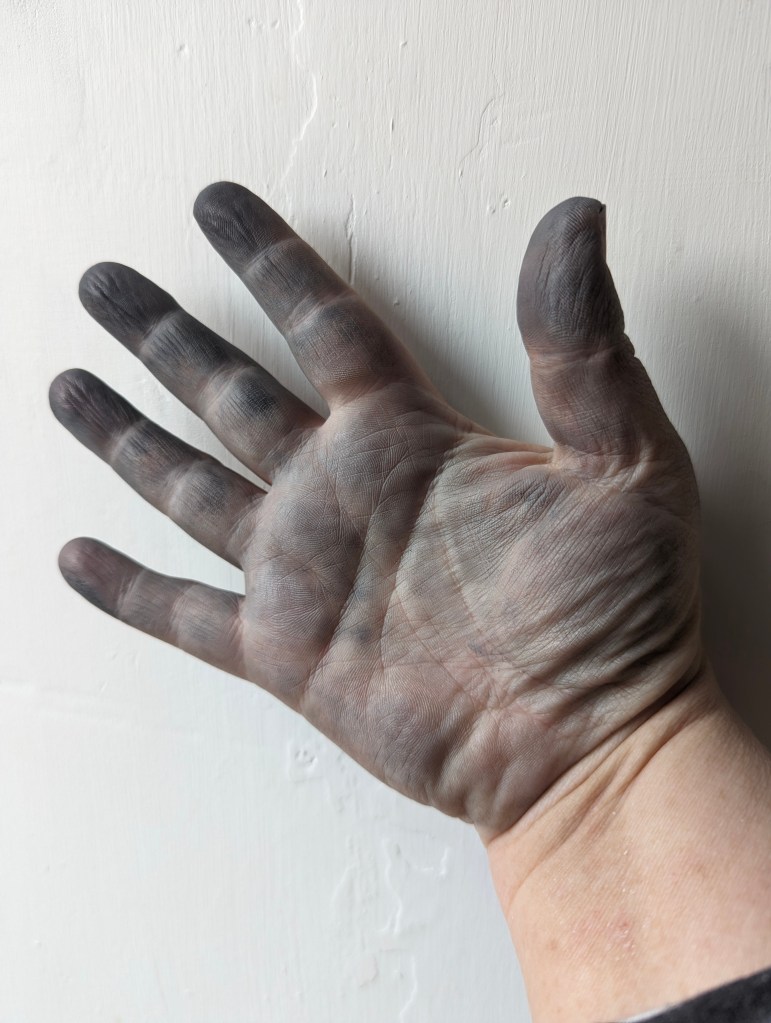
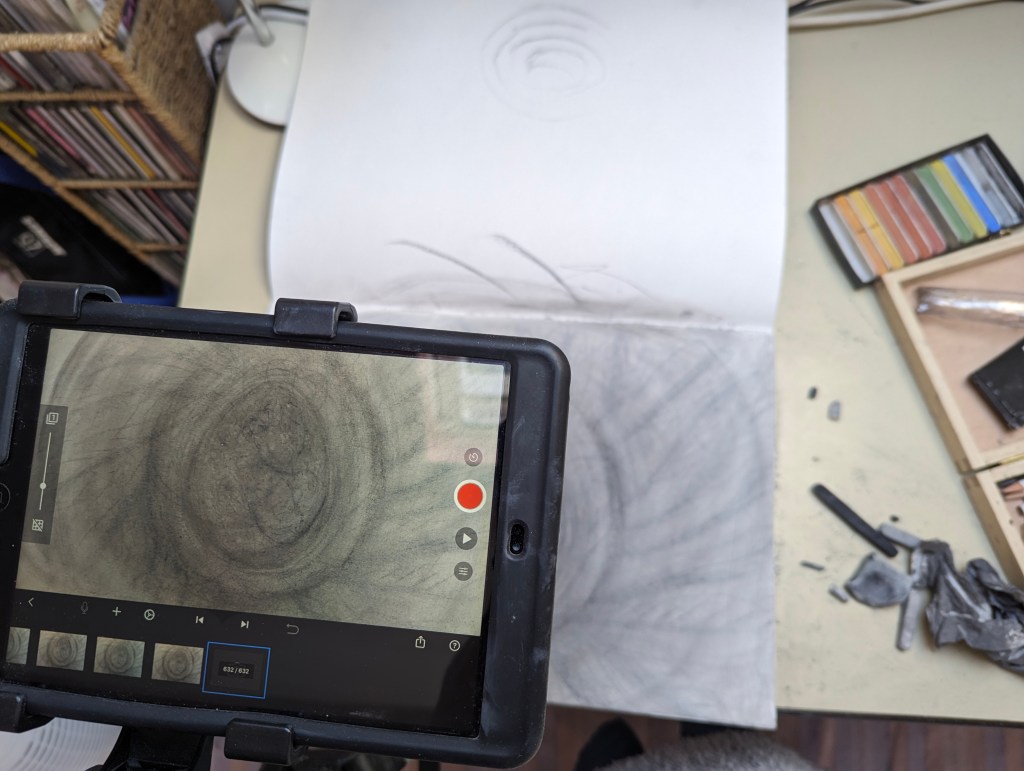
The animation was entirely unplanned and freeform. I used a central egg motif, and simply kept doodling in and around it using charcoal and chalk, taking 2 shots every couple of marks made, using the free app StopMotion on my ancient reconditioned iPad mini. I didn’t do separate drawings frame by frame, every frame was drawn on the same piece of paper. Rubbing in, sweeping off dust, erasing, chalking over, layer upon layer over a combined total of around 8 hours, until my desk was grey and grubby! Completely backbreaking, utterly obsessive…

1500 frames later, having made a whole 58 seconds of film, I recorded the voice track for the poem and was devastated to see it come in at nearly 3 minutes long! Nooooo!!!! Radical editing of words ensued, but I was still only half way with the visuals. Physically unable to continue with hand-drawn animation, I came up with an ingenious solution to triple the length of the film. Importing the original animation into iMovies, I duplicated and layered the sequence over itself, using the editing app’s greenscreen feature to set first the darkest parts and then the lightest parts of each frame as a greenscreen. In this way, the rapidly metamorphing egg began to ghost itself…

Here’s the text for this most challenging and enjoyable piece. When I show you all four finished films in my next blog, you’ll hear that the voiceover for this poem is not me speaking. In fact, I had my first foray into AI-generation by using a text-to-voice app. There were many accents to choose from, and male and female voices of different age profiles. When you read the poem below, what voice can you ‘hear’ in your head? What accent would you have chosen in my place?

Egg Fiction

nanna sent her to steal an egg
fresh from the straw
the darkness clucked

it was the end of the world
it was a rite of passage
don’t trip!
don’t smash it!

don’t smash it too soon
soft-boiled children must learn
the tap the crack the dip the scoop

now smash the empties!
scuttle the coracles
so witches can’t sail to sea
with their wicked, wicked storms

but that warm, smooth weight
had ordained her palm

it’s enough to make her grow up a potter
throwing porcelain
not to shatter, but
to release the paradox-
strength and fragility are twins
this is the earth whose yolk brews wings

this is the earth that knows fire
in the kiln it turns into a little sun
little pitchers become themselves
or smithereen…

look, this bowl has hatched a dragon!
half-shell with a scorched equator

and in the bottom
freckle-speckles
like the memory
of a hen’s egg

The Tees Women Poets are currently open to applications for their autumn residency at MIMA’s Towards New Worlds exhibition. If you’re a woman poet in Teesside, especially if you identify as disabled or neurodiverse, take a look at the info and apply here.

79 AD – for a Fuchs tazza

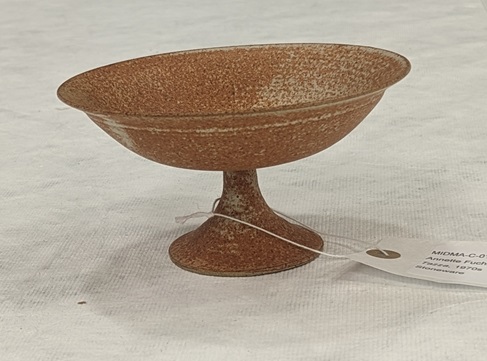
It’s small, about 18cm high maybe? Just looking at it, there is a classical, visual beauty in the proportions and the terracotta. But when you pick it up, the perfection of its balanced weight is breathtaking.

The second of my four digital poems for ceramic pieces in MIMA was written for a tazza, or serving dish on a pedestal and foot, wheel-turned out of earthenware by ceramicist Annette Fuchs. It made me imagine Roman society and murals, which in turn led me to think about Pompeii and Herculaneum. Pliny the Younger described the cloud of smoke that preceded the eruption of Vesuvius in 79AD as “a pine tree, for it shot up to a great height in the form of a very tall trunk, which spread itself out at the top”, a description which reminded me of the tazza shape. On this tazza, a pale razor-blade-shaped void has been left in the red surface, perhaps deliberately, as superstitious people will sometimes add a smudge to their make-up so the gods don’t get jealous…

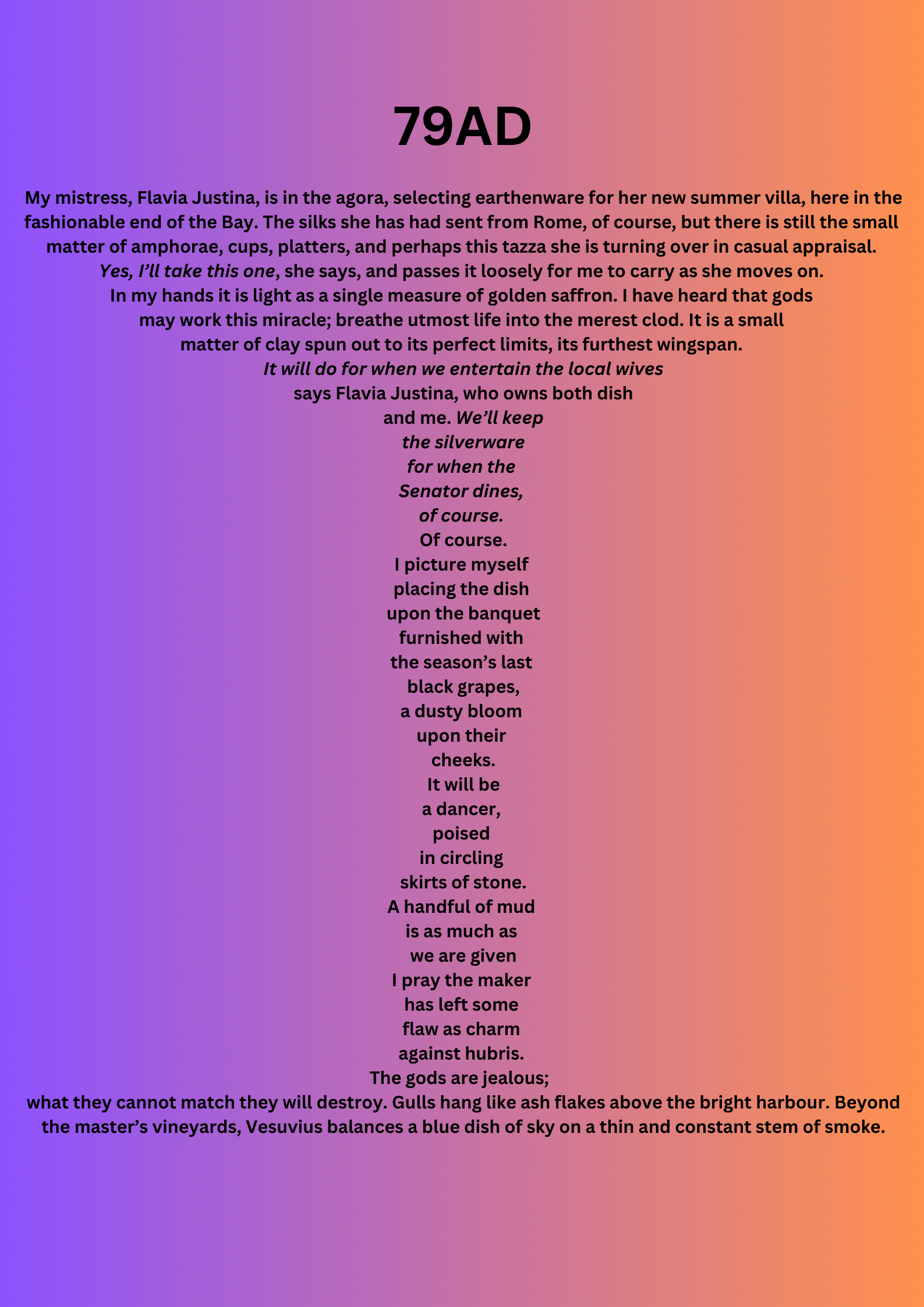
This poem has had a couple of concrete incarnations – the one above, which I made especially for this blog post, and the version in the micro-pamphlet handout produced by MIMA to accompany the exhibition, which had eight stanzas each shaped like a tazza. Can you guess where the stanza- and line-breaks came?

This extract from the visuals of the digital poem should give you a clue!

This is again made in Canva videos, using a textured background duplicated and flipped mirror-image along a vertical axis to enhance the tazza-shape of the stanzas. I then overlaid the texture with a free clip of a puff of smoke, to foreshadow the eruption of the volcano. The film clip was actually in a long, thin, landscape orientation. I have enlarged it, flipped it the portrait orientation, mirrored it along the same midline of the frame, and dialed down the transparency so it is a ghost of its former self…

What sounds would you choose to accompany this digital poem?

I’ll post all four completed pieces, with soundtracks, in my fourth blog. Watch this space for curved kinetic typography, charcoal animation, and weird adventures in Audacity and AI…

If you’re a woman, a poet, and you live in Teesside, then why not apply to be the next TWP poet-in-residence at MIMA’s Towards New Worlds exhibition this autumn? Information and application form here.

Long time, no me!

Forgive me, for I have sinned, it’s been FOUR YEARS since my last blog! (Really? Really??)

Sorry to keep you waiting. I know you must have been desperate to hear from me. How am I? Yeah, good thanks, you? What have I been up to? Oh wow. How long have you got? …well, I set up a national network for women poets for the Rebecca Swift Foundation, did a big bunch of community art commissions, set up a new literature organisation for Teesside women during pandemic, ummm, what else? Wrote my first libretto, for Tall Ships, that was…yeah, words to music…mmhmm. Got longlisted for an eco-poetry prize, that was – what? no, didn’t win, but… oh yeah but I did I just literally just win a competition for the first ever ClassicsFest…a response to Ovid’s Heroides…yeah Ovid? Greek myth. Mmm. Old. But still relevah…what? He-row-id-ease. Mmm. And what else, let me see…ah…Oh, you’re just on your way to…oh yeah, sorry, Yep, yep, sure, okay well I’ll let you get off then…sure…sure…let’s do a proper catch-up soon…absolutely! Nice one.

Might be time to keep tabs on myself, what do you reckon? Re-committing to meeting myself and my professional practice here is something I’ve been struggling to do, but I see amazing women, poets, people putting their thoughts out there into the world and I’d like to be among them. So, give me a steer – what would you most like to read?

What to do with a blank page, and why?

Creativity is always a leap of faith. You’re faced with a blank page, blank easel, or empty stage. – Julia Cameron, author of The Artist’s Way

I’m currently a writer-in-residence at mima, Middlesbrough’s Institute of Modern Art. Well, so what? I hear you say. Congrats and custard to you, I bet you’re very happy with yourself. But, BUT, friends – there are no terms to this residency! I have to decide for myself what to do and when to do it by. This is quite different from when I was poet-in-residence at Hartlepool History Then And Now, gathering and re-telling WW1 maritime tales. This is a teensy bit terrifying. What on earth am I going to do?

WeBelieveAnything

Some background? Ok. Last year I was accepted on to the Writers Block North East novel-writing bootcamp, a year-long programme during which, if participants so choose, they may supplement their frantic novel-writing with a self-generated side hustle at mima. My side hustle is this –

I will use archive documents relating to artworks in the Middlesbrough collection as source material to inspire blackout, erasure and found poetry, plus a load of other digital and multimedia approaches like stop-motion films and collage.

If you follow my Insta, you’ll know that these are all things I do for fun. They’re not my ‘real’ writing. (Whatever that means, imposter-critic-head-voice) I mean, writing is writing and I’m a writer, right? (WHATEVER THAT MEANS, IMPOSTER-CRITIC-HEAD-VOICE!) So why do I do them in the first place? And why choose to do them more?

I do them
1. To keep myself creatively active through times of block and mental exhaustion
2. To retain playfulness as a creative principle
3. To get some wiggle-room into the idea of ‘writing’ by crossing disciplines and media
4. To activate my subconscious and surprise myself
5. To activate my subconscious and recognize patterns of thought, association, values

So, by making techniques the focus of this residency, I hope to
1. Make work on a broad and unexpected range of subjects
2. Make work whose forms and materials are influenced by both the source texts and the artworks to which they refer
3. Experiment with a really wide range of techniques, and fail as interestingly as possible
4. Learn to use new equipment and digital methods
5. Say hi to a new bunch of people via the mima Insta account

PoemsHelpDriverlessVehiclesBut YOU lovely lot are going to get more than just an Insta post. I’m going to take you with me while I work out what the heckitty-heck to do, and if you have had any similar experiences of setting up your own residency in any artform at all, you’d better believe I’d LOVE to hear about it. Have you blogged about it? Send me links! I’ll quote you! What’s your process, your practise, your advice?

Tune in next week-ish for some Gold/Yellow collage, a process video in which my belly features far too prominently, and me fangirling somewhat about Lubaina Himid. And follow @mimauseful on Insta, please and thank you.

Blackout Poetry Workshops

Hi folks! I just remembered I have a personal blog where I can tell you things!

I’m doing blackout poetry workshops for Crossing the Tees Festival this month, and I’d love to see a few more faces as I fly about Teesside with my trundle case full of dismembered library books, watercolours, Sharpies, glitter tape, star stickers, crayons and frames…

Book via ARC – dates include TODAY 11th June 2pm in Redcar; Wednesday 13th June 5pm at Cockerton Library in Darlington; and 10.30am Saturday 23rd June in Hartlepool Community Hub (the library on York Road)

Workshops costs a fiver, and you’ll go home with your own piece of text-poetry-art, in either a clip frame or a mount (depending on how much glitter glue you use, I swear that stuff NEVER dries…)