Behind the scenes at a workshop

IMG_0148Last Wednesday I gave a workshop to the writers’ group at Hartlepool Library, as part of my role as poet-in-residence at the Heroism & Heartbreak WW1 project, (latest poem now available here) which was a lot of fun to plan and research. So I thought I’d tell you what I did, in case it’s useful for anyone.

I knew that the group were split between poetry and prose writers, with some of the prosers habitually reluctant to try verse (which can seem daunting even to those of us who are poets by temperament). So I thought I’d trick them all by doing a session on prose poetry!!! Mwahahaha!!! This entailed me researching what the hell prose poetry is, which I did by reading stuff online and an anthology about The Great American Prose Poem (thank you Degna Stone for the loan). About four hours of this, on and off, on trains, et cetera, and I had selected four prose poems that I thought were accessible, memorable, full of interesting formal devices, and related to themes of war. The poems I chose were The 12 O’Clock News by Elizabeth Bishop, Monument by Mary Ruefle, No Sorry by Catherine Bowman and The Most Beautiful Word by Linh Dinh.

The workshop featured an intro to prose poetry, where I went off on a bit of a passionate rant about how they are fired by a similar impulse towards documenting the subjective experience of modernity as also powers many early twentieth-century visual movements like Dada, Cubism, Vorticism, and how the fragmentation and re-configuration of form, and therefore meaning, is common to all of them, and I may have totally made all that up…

Then we played a game I made up called ‘The Prose-Poetry Venn Test’, where I had made a load of cards saying things like ‘humour’, ‘formal rhyme structures’, and ‘true stories’ and everyone had to decide if they were features exclusive to prose, to poetry OR…..wait for it….could be used by both! In this way we laid the foundations for a world where poetry and prose were almost entirely overlapped.

After that, we read the four poems out loud and discussed them, which was GREAT, love a bit of controversy! At this point I was massively over-running my lesson plan, and everyone’s brains were dribbling out of their ears, so we had some tea and came back for two short free-writing exercises. In the first one, I read out Carl Sandburg’s WW1 poem ‘Iron‘, but line by line, with each line acting as a prompt for 45 seconds of free-write, which rolled on line by line to a full time of about 10 minutes. Then we immediately did 5 minutes free write in response to a variety of prompt questions inspired by my looking through the online archive. Then we had another 8 minutes to edit one or both of our source writes into a prose poem, which I assigned the arbitrary ‘rule’ of a 100-word limit.

I pushed them hard, really hard, but the final pieces when we shared back were uniformly excellent. As usual, I just have to remember that what I tend to plan for a 2-hour session is invariably 3 hours-worth of activity….

A Teensy News Round-Up

IMG_0024Hello everyone! I haven’t said anything for a while, even though I’ve been thinking Thoughts. So here is just a bit of humblebragging about places you can check out my work…

So I have a poem in The Fat Damsel #4. This is a great online magazine set up by the very talented Jane Burn, with guest editors. You should absolutely follow them, they’re fellow WordPressers. This is ‘my’ edition.

I also have a poem about to appear in Magma #63, which has the theme of ‘Conversation’. I’d never submitted anything to Magma before, as it’s One Of The Biggies, but I happened to have three poems that fit in with the theme, so I gave it a go. I’m extraordinarily proud not only to have got in (with only a minor editorial cut of one line), but to have also been asked to read at the launch. I will be one of many contributors doing a quick 2-poem set, in an evening that features headline poets Jane Draycott and Daljit Nagra – HUGE! If you’d like to come, it’s at 7pm on Friday 30th October at the LRB Bookshop, 14 Bury Place, London WC1A 2JL

Other gigs coming up are wildly varied! I have been asked by the lovely Jeff Price of Radikal Words if I would enter the Great North Slam at Northern Stage on Thursday 5th November, which is swiftly followed by me zipping down to the immensely posh Stowe School to deliver a private performance of my show, The Moon Cannot Be Stolen, to their sixth form English students. (Preceded by a three-course meal, not sure if that’s going to work in my favour…) Sorry, no public admittance to that one! But you can come and see me as one of eleven ‘alumni’ of the fabulous Free As A Bard nights in a big celebration gig happening on Sunday 29th November at The Jam Jar Cinema in Whitley Bay. Many thanks for the invitation to fellow WordPresser Elaine Cusack, who co-programmes the night with Pete Mortimer of Iron Press.

Work continues in my voluntary role as Poet-In-Residence at ‘Heartbreak & Heroism’, the current project from the Hartlepool History Then And Now online community archive. I’m attending their library roadshow, listening to people recounting their family’s connection with military and merchant naval activity during WW1. The next roadshow is coming up on Friday 9th October at Seaton Carew library, 10am – 1pm. I hope we get some stories as good as the last one, all about a lighthouse keeper who had his leg torn off by a dredger, and who sent his 10-year old son into the Merchant Navy as an apprentice just 2 years before war broke out. Watch this space for the poem, when it gets posted up!

The other huge project is the finalisation of the manuscript for my first full collection, coming out with Burning Eye early next year. We have an internal structure, we have some choices for cover design (beautiful circular motifs designed by my talented father-in-law, and coloured in the best clashing style by designer Monica Tuffs), and we have some amazingly generous big-up quotes from my fellow poets for the back cover. What I also have is a growing idea for a residency + show tour, which yesterday I pitched to some likely venues at the very helpful biannual Meet the Programmers event. I am very excited to say that I have definite interest from The Witham in Barnard Castle and Jabberwocky Market Festival in Darlington, so yes, you guessed it, I can feel another Arts Council bid coming on…

Heroism and Heartbreak

I’m very, very pleased to say that I am officially poet-in-residence (NAY! for I shall capitalise it in my joy! Poet-In-Residence!) at the wonderful online community archive for Hartlepool.

I am featured in the very specific WW1 section, which is excellent because it lets me continue on with writing and research I started last year for the Heugh Battery Bombardment project led by poet Martin Malone. My first poem is now live – called ‘Unspeakable’, it’s inspired by a conversation I had with a contributor to the archive at an open day held at Hartlepool Library in May. You can read it here!

The next open day is at Headland Library at 10am – 1pm on Saturday 10th July, so anyone with maritime links to Hartlepool, especially Merchant Navy, should drop in and chat to Gary and the team. And to me, you never know, I might put your story in a poem…

Some Advice On Editing Poems

None of the advice below is written by me – it was given to me at last week’s Wolf At The Door retreat, by one of the retreat leaders. I have no idea if Vishvantara wrote these points herself, but if she did she’s a genius. I hope and trust that she won’t mind my sharing them on.

IMG_0059

Fifteen Ways Of Working On A Poem

  1. Take an unfinished poem of twenty-five to forty lines or more. Remove half of the lines (whichever hand-picked lines you choose). Now cut it in half again. Scream as loudly as you like.
  2. Take a poem of ten or twenty lines and make it forty or fifty. Stretch it, milk it, pad it, free-associate, spider-diagram it and repeat things in Spanish if you have to.
  3. Find the energetic points. Where are the ‘hot’ areas? Put one as your first line. Put another as your last line. Rearrange the other lines or verses in between.
  4. Divide your imagery into ‘heart’ and ‘head’ and cut out everything not heart-felt. Where there used to be ‘head’ imagery, try using simple language that doesn’t compare anything to anything else.
  5. Make sure you consider cutting your last line and the few above it as well. Where does the poem itself want to end? (Beware of the ‘it’s not over until the fat lady sings’ feeling). The end must come as a surprise to you as you write, not be the one you started out thinking you must have. Have you strained the poem into finishing where you want it to go? Poems often delight in stopping midstream, taking off, drizzling away or turning around and biting us playfully. Only rarely do they delight by ‘the moral of the story is’ or ‘so this is how it all ended up’.
  6. Find a phrase or a line or two that you are a bit complacent about, a bit of writing you think is quite good, and rephrase it noticing how attached you are to the previous version. Ask a friend which is the better option.
  7. If you are writing from or about a memory, insert a detail from you present experience. If writing from or about the present, include a memory.
  8. Imagine that at a certain point you rose a hundred feet into the air and looked down at the tableau vivant of the poem. What is its gesture? Can you somehow include this in the poem?
  9. Imagine that at a certain point in the poem you became very tiny and sat within a phrase that you had just written. Write what you see around you.
  10. If you have too many little prosy words, articles or linking words, try re-writing those phrases with fewer small words.
  11. The word ‘of’ is a poetic cliche, so delete the ‘of the’s, e.g. ‘the gate of the mind’. It should be ‘the mind’s gate’. Also beware of any words you wouldn’t use in conversation – e.g. ‘aplenty’.
  12. Try translating your poem for the benefit of someone with limited knowledge of your language.
  13. Try explaining your poem to a philosopher. Add some of this explanation to the poem.
  14. Always keep you original draft – that’s very important.
  15. Put your poem in a drawer for three months and start something else.

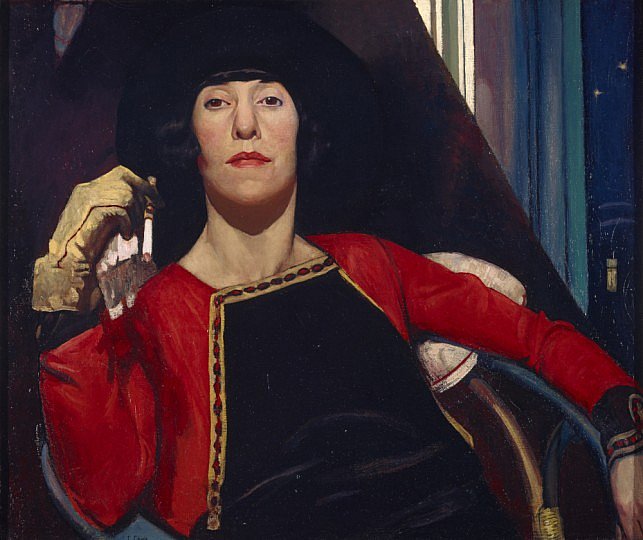
Ekphrastic project – James Cowie’s ‘The Yellow Glove’

2012AA41357

Oh my dear, it was too, too dreadful!

Mortal mind can scarce conceive –

At least, not yours, darling Vi,

Yours would have shrunk. Violets do shrink,

It’s an immutable law, like death, or gravity,

Or who sits to the left of the Bishop.

“Bother immutability” that silly boy would say,

And therein lies the drastic horror of the thing,

For Pongo positively pushed it this time!

Doubtless the dear old Duchess toot sweet

Snipped him merrily from the Will, singing

“Cold porridge to primogeniture!” So you see,

I simply had to pop back the jolly old ring

And hoof it hotfoot before the bean began blubbing.

It’s a rotten sausage, but there it is.

Now, do try one of mine – they’re Turkish.

Deseeded

I’m very happy indeed to have a poem selected for Deseeded, an online magazine edited by Degna Stone, founder member of the Butcher’s Dog editing team. The call-out asked for work written in response to a prompt from the late Julia Darling, published as a Guardian masterclass in 2005, shortly before her death. It was a lovely prompt, all about instructional poems, which are some of the most fun things to write because they really do ‘tell the truth but tell it slant.’

The overall selection is beautifully curated, and not over-long, so I urge you to just gorge yourself on the whole lot right now.

If you’d like to try writing an instructional poem yourself, here is the prompt , and if you are in the Newcastle area you could go to Live Theatre for workshops and new plays all responding to, and celebrating, the life and work of Julia Darling.

I also strongly recommend you subscribe to the amazing Butcher’s Dog magazine, which will come to you in hard copy twice a year and fill your life with beauty.

Basketball poetry? Really?

Got a small new poem for you, written from a workshop with the prolifically superduper Jacob SamLa Rose at ARC Stockton last week. The workshop was part of Fuel Theatre’s outreach activities for their new touring spoken word show, The Spalding Suite, a physically spectacular piece built around a series of poems by Inua Ellams and other poets, and all about basketball. I wrote a review of the show, which I’m now keeping with all my other reviews from here on, at Tumblr.

there is a ball in your hand

grey as fingernail gunk

red as old blood

a severed head in a lizard’s crop

scrape the raised grain

use one hand to balance

to contain

the curvature

feel the horizon with your furthest whorls

it is the size of Jupiter

you are on alien land

coloured tape parcelling pitches

foreign scripts, hieroglyphics

there is a ball in your hand

it wants to fall

drop it and the planet throws it back

your dumb hand back-turned to the slap-back

elastic transit surprises when the core is so, so black

it is denser than physics

it want to eats the earth

it wants to bounce

keep a short leash and run after, child

it is a wolfhound, shoulder high

it is a steeplechaser, where is your bridle

when it leaps?

you knew it would unseat you

there is a ball in your hand

and you have neither the arms

nor the legs

nor the heart

for everything it wants

of you

Ekphrastic project – Conflict and Conscience

The second of my poems for art crit magazine Corridor 8 went live a couple of weeks ago, but I’d like to bring it back to your attention now. Why? Because it’s a response to the exhibition ‘Conflict and Conscience : British Artists and the Spanish Civil War‘, running at the Laing Gallery until 7th June, and May Day weekend seems an appropriate time to nod in the direction of socialist struggles past and present.

I’d really just like to encourage you to see the exhibition if you can. Not only are there some really strong works, including Picasso’s ‘Weeping Woman’, but it is full of inspirational women. Women artists who fought and died, women who served the rebel camps and fed the insurgents, women who were passionate political and military leaders, women who sewed vast celebratory tapestries in remembrance of their comrades, women who made the heart-wrenching posters that ensured aid went to the victims of the conflict, women who got off their arses and started charitable foundations to secure the safety of orphans when our pathetic government of men refused to take in refugees, women who learned how to run ambulance services in blitzed cities, women, women, women…

Atlas was a woman…

Live Theatre residency for Demeter In Winter – day 3

IMG_0021Whoosh! That went by quickly!

So today I read back the whole thing so far to Gez Casey from Live, who was kindly giving me the benefit of his considerable dramaturgical experience, and Matt Cummins, who directed my first show. And then they told me what they thought. Terrifying. The upshot is, it’s worth me continuing with it, and I have a set of very interesting questions to attempt answering when I’m in residence at ARC next month.

Matt thought you might be interested to know what I did each day, so if you have a nerdy kind of desire to neb about in my ‘process’, here’s what my To Do lists looked like…


Day One, 10am – 5pm

  1. Set up different writing zones/locations around the room for different scenes/characters I want to explore
  2. Physical and vocal warm-up
  3. 30 minutes solo improv exercises – I used these ones – filming them
  4. Do I know my characters and their back stories? Talk about it to camera
  5. Free write Marian and Vic, their stories, bodies, and attitudes to rape – on large paper at the “M’ and ‘V’ writing zones
  6. Free write monologue each for M and V, in notebook
  7. Read monologues out loud to camera
  8. Film myself doing V monologue on-page, but moving, finding her body
  9. Film myself improvising V monologue off-page
  10. Type up dialogue I had written on the train up from Hartlepool
  11. Walk around the room, stopping and free writing on large paper at several different writing zones, for different scenes
  12. Create a series of scene cards using old Rolodex lined cards
  13. Upload video and write blog

Day Two, 10am – 4pm

  1. Physical and vocal warm-ups
  2. 30 minutes solo improv exercises
  3. Read whole script out loud to camera
  4. Type up yesterday’s improvised Vic monologue by watching the video back
  5. Transfer large paper free-write notes to notebook, continue to expand on them in a loose way
  6. Look into open source field recordings of birdsong
  7. Annotate scene cards with sound effects needed
  8. Research peonies for a poem in Marian’s voice, do some writing towards it
  9. Write blog

Day Three, 10am – 3pm

  1. Physical and vocal warm-ups
  2. 30 minutes solo improv exercises
  3. Re-read script
  4. Annotate scene cards with research needed
  5. Lay out scene cards in the right order, identify gaps
  6. Type up new dialogue created from V and M monologues
  7. Tweaking and formatting script
  8. Read-back and take notes
  9. Write blog


Live Theatre residency for Demeter In Winter – day 2

No more video, no, no, nevermore!  (Turns corvid, flies off).

If you’re interested, mostly today I have been putting into practice some advice from Nick Field about generating material when the blank page of the empty studio fills you with an atavistic urge to curl up and catch up on whatever sleep you should have been having last night, when you were in fact fighting your husband for the duvet and mumbling something about cities under tree roots.

The technique is simple – take a bunch of disparate things you’re trying to write about (in my case, three scenes of dialogue and two poems). Put them as headings on big pieces of paper. Put big pieces of paper around room in various places (in my case, four walls and a desk). Walk/run around between them, jotting thoughts and moving on whenever the train of thought dries up (in my case, after a maximum of two sentences). Did this for a couple of one-hour sessions, it really helped me keep my energy up. And got me started with the ‘proper’ job of writing.

Then I capitulated to extreme brain-drain, and spent quite a bit of time researching birdsong field recordings, in case this turns out to be a radio play. Found this fab resource from the British Library – enjoy!