Not Everyone Likes Otters

Many of my poet friends have been digging deep inside their psyches for today’s NaPoWriMo prompt to write something that feels scary or uncomfortable to say. I, however, have been digging deep inside the (imagined) psyche of someone who finds otters scary or uncomfortable to be around. For some reason it sounds like a very bad pastiche of Wordsworth in there. Who knew.

454610057
Otter with a huge smile

The Lutraphobia Of The Wild Swimmer

I have oft-times swum delighted in the Tyne’s electric cool

and wild waters, in the summer eves by Corbridge. I have

eschewed pools municipal, those crowded echo-chambers,

named them no better than aquaria, where captive mustelids

might twirl in Perspex tanks, to the cooing of the crowd,

their stank spray festering the public air as rank as rotten fish.

Those same aquatic weasels now have barred me from my bliss,

ruined all my joy in open water. I cannot quite say when

the fear of them first grew upon me, cannot pinch the moment

their smiling faces first shaded with malice in my eyes,

but now the chance whisk of waterweed at my floating wrist

casts trembles through my traitor limbs as, unbidden,

images of hairy muzzles poised to claim my fingers,

to crunch needle-sharp through knuckles, darkens my vision.

Too often I have seen, or thought I saw, these denizens

slink from their sandy caves in the twilight, so now, alas!

the o’ershadowing doom descends upon me, and I seek

in swelling terror for paw print or foul spraint here

upon my favoured shore, as a man obsessed by contagion,

and though my mouth forms, faint-hearted, a continual ‘O’,

never can I bring myself to audibly utter the now-abhorred

name of my tormentor, the dreadful title – OTTER!


Every Girl’s Crazy ‘Bout A Sharp-Dressed Otter

When I read the NaPoWriMo prompt today, I thought I’d had it – otters haven’t much use for flowers. Can’t eat them, can’t play with them, can’t slide down them. But I hadn’t factored in the glory of random googling. “Otter flower” brought me a link to this delightful young man, The Modern Otter, a fashion blogger who has had some things to say about floral prints over the past couple of years, oh yes. He proved most inspirational.

otter_flower_by_socialsplash-d6zvljh.jpg

The Modern Otter

The modern otter is not afraid of florals.

The modern otter has thrown away his plaid.

An avid consumer of articles sartorial,

He is nine parts hipster to one part lad.


The modern otter tries some unexpected chinos,

Balancing the flower print with simple chambray.

He dreams of days in Paris sipping stylish cappuccinos.

The modern otter wants to stroll along the Seine.


Transitioning to spring wear in optimistic camel,

Paired with indigo, or black, or dusty blues,

He folds a turn-up into his nether apparel.

Naked ankles shiver over waterproof dress shoes.


The modern otter favours crisply pointed collars,

Wants you to notice, but he’s too safe to be seen.

The modern otter is afraid of too much colour,

Though occasionally he’ll venture out in something hunter green.


The Curse of The Korean Otter

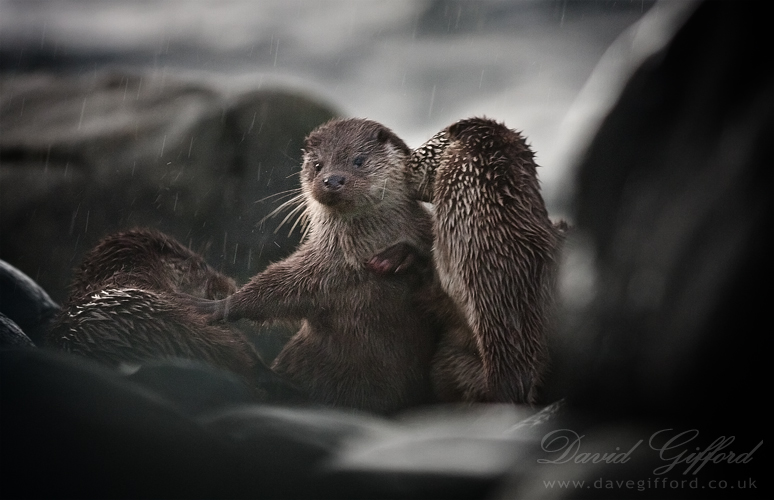
Good grief, we’ve managed a week of this nonsense! Everyone hanging in there? OK, today’s official NaPoWriMo prompt was to write a tritina, which just means I have to end my lines with the same three words, in different orders. It’s more of an instruction than a prompt, which mean I’m free! To choose whatever snippet of otterlore tickles my whiskers! So here you go – in Korea, a person who sees an otter will forever after attract rain clouds. What a fate.

otters-playing-in-the-rain-by-david-giffordI have seen an otter, and lost the sun.

From this day, I’ll always draw the clouds

to trail me, black and faithful as a dog.


I swear, at first I thought it was a dog

trotting through the long grass in the sun.

I called to it. My call became a cloud.


The callous skies are thickening with cloud,

and where I walk it’s raining cats and dogs.

At night I dream of basking in the sun,


but when the sunrise comes, I’m dogged by clouds.


Rain doesn’t seem to bother the otters much, or stop them from eating as often as hobbits, as you can see in this video.


Otters Eat As Often As Hobbits

Explore my relationship with food, NaPoWriMo? Surely you mean explore an otter’s relationship with food? But there are so many species (13), and they all eat slightly different things – should I write about Japanese otters keeping paddy fields free of crayfish? Or giant Amazonian otters being slowly poisoned by mercury from gold ore extraction accumulated in the livers of their favourite fish? Maybe later in the month. For now I am mostly distracted by a little Winnie-the-Pooh-esque ditty from the fabulous sea otter, those masters of the tummy buffet. They need to eat a quarter of their body weight every day to keep them warm in the seas off northern California. And they love abalone.

c4a0ccbf08cb65b72b968e9f67d7a0c2The Song Of The Feeding Sea Otter

Floating along on my own-e-o,

Smashing my abalone-e-o,

On my smashing stone-e-o,

I go whack! whack! whack!


Don’t ever cook it with po-tay-ter,

Celery, soy sauce, or to-may-ter,

Or gratinize it with a cheese gray-ter,

I just knock! it! back!


Rest assured that if I hear any more verses of this super-smashing happy feeding song, I will add them here.


A Day In Beadnell (virtually)

IMG_0341

There are days when I forget I enjoy writing poetry. To be honest, there are weeks, sometimes months, when I become my own administrator and my poetry gets completely
lost. That’s why it was such a joy to spend all of yesterday in the company of other poets, being led through a veritable barrage of multi-sensory prompts by Lisa Matthews and Melanie Ashby, the intrepid creative team behind the ongoing project A Year In Beadnell.


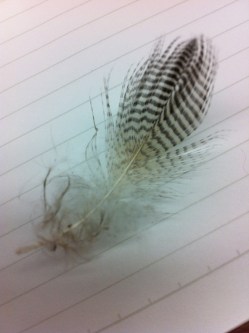
Strandling Feather

Whisht.

I’m not dead.

Shed.

I’m beak-nipped,

a preen-leaving,

winter-to-summer down-shrug,

for the fat pickings

in the glad months make

sleekitty plumage.


One feather

conjures the bird,

plumped on the nest-scrape

eggs sucked pebbles.


I’m plucked,

but still arched

from the puffling shook-out

of incubation.

Divested from the belly,

given to flight, I am

wind-bowled,

sand-skittering,

tumble-fluff,

fast flick of a soft brush,

my own

wing.


Some Advice On Editing Poems

None of the advice below is written by me – it was given to me at last week’s Wolf At The Door retreat, by one of the retreat leaders. I have no idea if Vishvantara wrote these points herself, but if she did she’s a genius. I hope and trust that she won’t mind my sharing them on.

IMG_0059

Fifteen Ways Of Working On A Poem

  1. Take an unfinished poem of twenty-five to forty lines or more. Remove half of the lines (whichever hand-picked lines you choose). Now cut it in half again. Scream as loudly as you like.
  2. Take a poem of ten or twenty lines and make it forty or fifty. Stretch it, milk it, pad it, free-associate, spider-diagram it and repeat things in Spanish if you have to.
  3. Find the energetic points. Where are the ‘hot’ areas? Put one as your first line. Put another as your last line. Rearrange the other lines or verses in between.
  4. Divide your imagery into ‘heart’ and ‘head’ and cut out everything not heart-felt. Where there used to be ‘head’ imagery, try using simple language that doesn’t compare anything to anything else.
  5. Make sure you consider cutting your last line and the few above it as well. Where does the poem itself want to end? (Beware of the ‘it’s not over until the fat lady sings’ feeling). The end must come as a surprise to you as you write, not be the one you started out thinking you must have. Have you strained the poem into finishing where you want it to go? Poems often delight in stopping midstream, taking off, drizzling away or turning around and biting us playfully. Only rarely do they delight by ‘the moral of the story is’ or ‘so this is how it all ended up’.
  6. Find a phrase or a line or two that you are a bit complacent about, a bit of writing you think is quite good, and rephrase it noticing how attached you are to the previous version. Ask a friend which is the better option.
  7. If you are writing from or about a memory, insert a detail from you present experience. If writing from or about the present, include a memory.
  8. Imagine that at a certain point you rose a hundred feet into the air and looked down at the tableau vivant of the poem. What is its gesture? Can you somehow include this in the poem?
  9. Imagine that at a certain point in the poem you became very tiny and sat within a phrase that you had just written. Write what you see around you.
  10. If you have too many little prosy words, articles or linking words, try re-writing those phrases with fewer small words.
  11. The word ‘of’ is a poetic cliche, so delete the ‘of the’s, e.g. ‘the gate of the mind’. It should be ‘the mind’s gate’. Also beware of any words you wouldn’t use in conversation – e.g. ‘aplenty’.
  12. Try translating your poem for the benefit of someone with limited knowledge of your language.
  13. Try explaining your poem to a philosopher. Add some of this explanation to the poem.
  14. Always keep you original draft – that’s very important.
  15. Put your poem in a drawer for three months and start something else.

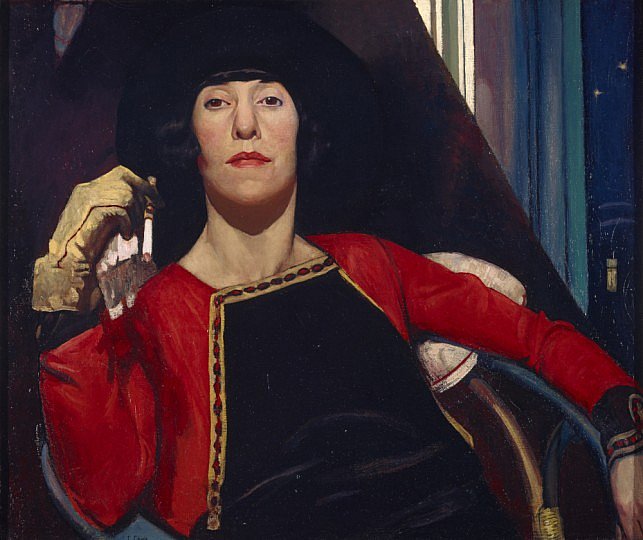
Ekphrastic project – James Cowie’s ‘The Yellow Glove’

2012AA41357

Oh my dear, it was too, too dreadful!

Mortal mind can scarce conceive –

At least, not yours, darling Vi,

Yours would have shrunk. Violets do shrink,

It’s an immutable law, like death, or gravity,

Or who sits to the left of the Bishop.

“Bother immutability” that silly boy would say,

And therein lies the drastic horror of the thing,

For Pongo positively pushed it this time!

Doubtless the dear old Duchess toot sweet

Snipped him merrily from the Will, singing

“Cold porridge to primogeniture!” So you see,

I simply had to pop back the jolly old ring

And hoof it hotfoot before the bean began blubbing.

It’s a rotten sausage, but there it is.

Now, do try one of mine – they’re Turkish.

Deseeded

I’m very happy indeed to have a poem selected for Deseeded, an online magazine edited by Degna Stone, founder member of the Butcher’s Dog editing team. The call-out asked for work written in response to a prompt from the late Julia Darling, published as a Guardian masterclass in 2005, shortly before her death. It was a lovely prompt, all about instructional poems, which are some of the most fun things to write because they really do ‘tell the truth but tell it slant.’

The overall selection is beautifully curated, and not over-long, so I urge you to just gorge yourself on the whole lot right now.

If you’d like to try writing an instructional poem yourself, here is the prompt , and if you are in the Newcastle area you could go to Live Theatre for workshops and new plays all responding to, and celebrating, the life and work of Julia Darling.

I also strongly recommend you subscribe to the amazing Butcher’s Dog magazine, which will come to you in hard copy twice a year and fill your life with beauty.

Basketball poetry? Really?

Got a small new poem for you, written from a workshop with the prolifically superduper Jacob SamLa Rose at ARC Stockton last week. The workshop was part of Fuel Theatre’s outreach activities for their new touring spoken word show, The Spalding Suite, a physically spectacular piece built around a series of poems by Inua Ellams and other poets, and all about basketball. I wrote a review of the show, which I’m now keeping with all my other reviews from here on, at Tumblr.

there is a ball in your hand

grey as fingernail gunk

red as old blood

a severed head in a lizard’s crop

scrape the raised grain

use one hand to balance

to contain

the curvature

feel the horizon with your furthest whorls

it is the size of Jupiter

you are on alien land

coloured tape parcelling pitches

foreign scripts, hieroglyphics

there is a ball in your hand

it wants to fall

drop it and the planet throws it back

your dumb hand back-turned to the slap-back

elastic transit surprises when the core is so, so black

it is denser than physics

it want to eats the earth

it wants to bounce

keep a short leash and run after, child

it is a wolfhound, shoulder high

it is a steeplechaser, where is your bridle

when it leaps?

you knew it would unseat you

there is a ball in your hand

and you have neither the arms

nor the legs

nor the heart

for everything it wants

of you

Ekphrastic project – Conflict and Conscience

The second of my poems for art crit magazine Corridor 8 went live a couple of weeks ago, but I’d like to bring it back to your attention now. Why? Because it’s a response to the exhibition ‘Conflict and Conscience : British Artists and the Spanish Civil War‘, running at the Laing Gallery until 7th June, and May Day weekend seems an appropriate time to nod in the direction of socialist struggles past and present.

I’d really just like to encourage you to see the exhibition if you can. Not only are there some really strong works, including Picasso’s ‘Weeping Woman’, but it is full of inspirational women. Women artists who fought and died, women who served the rebel camps and fed the insurgents, women who were passionate political and military leaders, women who sewed vast celebratory tapestries in remembrance of their comrades, women who made the heart-wrenching posters that ensured aid went to the victims of the conflict, women who got off their arses and started charitable foundations to secure the safety of orphans when our pathetic government of men refused to take in refugees, women who learned how to run ambulance services in blitzed cities, women, women, women…

Atlas was a woman…