Heroism and Heartbreak – the residency continues!

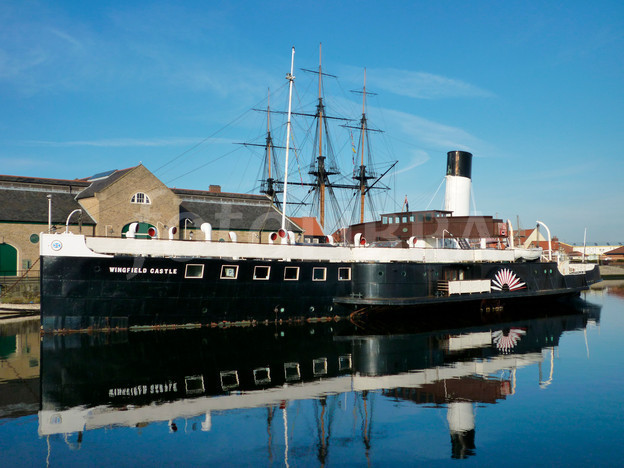
Don’t tell anyone, but I get very, very nervous about delivering workshops to school children. Who knows what they might do?! Unripe humans! But it was my sacred duty as poet-in-residence at the Hartlepool WW1 archive project to spend a morning on a boat, sorry ship, on a ship, with 25 Year Five children, on a ship, writing about the ship that we were on. This ship.

PS Wingfield Castle
PS Wingfield Castle

Luckily, mostly what these unripe humans did was to get very excited by the joys of writing poetry, especially when they find out they have the powers of Amazing Adjectives and Super Similes! (Favourite extended simile of the day – “as red as a devil, sitting on lava, eating a bloody heart, in an Arsenal strip”)

We collectively made a poem describing the ship by describing its many parts, textures, surfaces. It worked. I smoothed out the edges. It’s now online on the archive website here – give it a read? You can find some more of mine up there too.

StAnza – possibly the perfect poetry festival

I spent the weekend in St Andrews as a performer at StAnza, Scotland’s international poetry festival. Lucky, lucky, lucky me! Collected from the station, treated with unfailing courtesy and unflappability by every staff member and volunteer, fed at the poet’s buffet for free throughout the weekend, delivered back to my home-bound train in timely fashion – bliss!

This was my first time to StAnza, and even had I not received the perks of performer status I would have been bowled over by the finely-tuned balance of the programming, the range of poetic styles encompassed, and the inventiveness of the ‘extras’ such as table-side performances and hashtag poetry. (By the way, my set -collection launch went very well. There are reviews here and here, which I don’t expect anyone but my mum to actually read. Hi Mum!)

In one day you could attend: a serious breakfast talk about the concept of the body in poetry, led by a diverse panel of poets including multi-award winning Andrew McMillan and arch-innovator SJ Fowler; an intimate gathering in a graceful oval drawing room, hung with green watered silk wallpaper and garnished with immaculate white orchids, listening to Pascale Petit fill it with hummingbirds and jaguars; a lunchtime hour of sheer entertainment from a spoken word show like Jemima Foxtrot‘s Melody; an afternoon of splurge-buying beautiful small press poetry collections and chapbooks;  a double-bill main stage presentation of classic readings by Jo Shapcott right next to multi-lingual near-operatic sound poetry from Nora Gomringer (complete with jazz drummer); and then round it all off with a poetry slam hosted by current BBC Champion Scott Tyrrell.

Frankly, what this kind of programming says to me is that the team who put this festival together know their poetry, widely and deeply, and are passionate about it in all its various glories – at times to the point of fangirldom! If you have any love at for poetry, you should go. And it doesn’t hurt that a. St Andrews is charming and b. it has both gelaterias and second hand book shops. Perfect.


Collection launch!!


2012-12-13 15.56.02

Today I polish my boots, practice my poems and pack my bags, for tomorrow I’m off to StAnza, to launch my first full collection!

I could go on about it, but really I just wanted to let you know two things:

Firstly, if you happen to be going to StAnza, then please consider yourself invited to my set at their Poetry Cafe, 1pm, Byre Theatre, Friday 4th March – tickets here.

Secondly, if you fancy a copy of The Trouble With Compassion, but you’re not able to get one from me at a performance, you can buy it online from Burning Eye Books.

Thanks, that’s all really!


A Day In Beadnell (virtually)

IMG_0341

There are days when I forget I enjoy writing poetry. To be honest, there are weeks, sometimes months, when I become my own administrator and my poetry gets completely
lost. That’s why it was such a joy to spend all of yesterday in the company of other poets, being led through a veritable barrage of multi-sensory prompts by Lisa Matthews and Melanie Ashby, the intrepid creative team behind the ongoing project A Year In Beadnell.


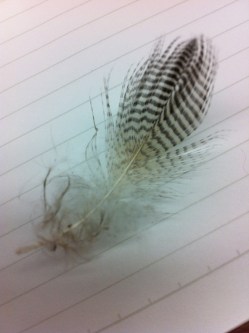
Strandling Feather

Whisht.

I’m not dead.

Shed.

I’m beak-nipped,

a preen-leaving,

winter-to-summer down-shrug,

for the fat pickings

in the glad months make

sleekitty plumage.
 

One feather

conjures the bird,

plumped on the nest-scrape

eggs sucked pebbles.


I’m plucked,

but still arched

from the puffling shook-out

of incubation.

Divested from the belly,

given to flight, I am

wind-bowled,

sand-skittering,

tumble-fluff,

fast flick of a soft brush,

my own

wing.


Future letters

2016! Yes. Hopefully it has started well for you, but for me it has been eight days of hauling myself out of a black hole. I’m not often, or ever clinically, depressed (thank heavens) – but I do get low sometimes. So it was good to finally feel like having a long over-due clearout of my so-called ‘home office’, and even better to come across this letter written by a past me to a future me! I thought I’d share it, as I seem to have been full of good advice – and it’s not a bad thing to do, stocking up encouragement for rainy days..

2012-12-25 10.44.33

15th August 2012, Dhanakosa

Hello Kirsten, hello me, hello you.

Life’s what you make it. You’ve been very hard on yourself these past few days, it’s difficult to write kindly from here to there, even though kindness is what you need most – from the inside.

Contemplating your life, of course you have come up with tons of things that you could, you should, change for the better – be a better you, right now!! it has fired you up with hope and determination and fresh clarity, and if experience holds true you will try to do too much, too quickly, become disheartened and see it all as proof of your intrinsic crappiness.

So I’m here to tell you – baby steps. Little and often. Do whatever makes your heart soft. Remember that all you really need is the beach, and it’s right there – have you been yet today? Even in the dark, the waves make noise and you can see the shipping lights.

Turn yourself gently to all the good things you have around you. You are very, very lucky – and most of the time you get it right. Other people don’t all see you as ugly or as a failure. Go and paint your toenails for the sheer joy of having feet, you daftie! And if you’re still bothered by all the things you haven’t done yet, you can always write them on slips of paper and give yourself a lucky dip instead of a never-ending to-do list. Or you could just sit for ten minutes. That’s enough.

Take care of yourself. Phone a friend. x

Review – Be Brave And Leave For The Unknown (RedCape Theatre)

imgresDo you remember those wire puzzles? The ones with all the beads at the joints, that you could push through themselves, squeezing and weaving and warping them into spheres and orbitals, bracelets and columns? That’s what it was like watching the characters in Be Brave And Leave For The Unknown at ARC last night.

In the centre of the stage there is a large table, with cunning extra functions – flaps lift, lids uncover holes, objects emerge from the hollow interior. It becomes a piano, a baby bath, a tank, a bar to dance on, a train platform to jump from, a bomb shelter. The actors thread themselves around and under and through it, and around and about one another, in a beautiful cat’s cradle of intention and interplay, constantly making and undoing and re-making their worlds.

Will Dickie plays Chris, a concert pianist with extraordinarily expressive fingers and a bad case of stage fright. Philippa Hambly plays Fleur, a war photographer adrenaline junkie who can’t sit still. We see them meet, fall in love, become a family. Then we see them fall apart under the strain of the worst tragedy that can happen to new parents. The bravery they have had to use on a daily basis to overcome the fears inherent in their professions is not sufficient to see them through – they must discover a different order of courage within themselves as individuals, and as a couple.

For me, what was most interesting was the relative absence of dialogue. This is an incredibly visual piece, made completely effective by coherent lighting and sound design. I recently saw Into Thin Air by Precious Cargo, and had been expecting this kind of physical image-painting, but on that occasion I was disappointed – the play is beautifully written by Allison Davies, but had failed to take life in the bodies of the actors. It occurs to me now, having seen Be Brave, that the key is to leave enough space in the writing for the enactment to happen (if that makes sense). The text of Into Thin Air could exist by itself as a short story, but Be Brave is absolutely a piece of theatre, reliant on the presence of actors, the story entirely expressed through their actions.

Oh, and best ever use of a glass of water. Stunning bit of visual metaphor. It’s on again tonight at ARC, and continues to tour venues in the north east through the REACH programme for new writing for theatre. You should go.

I Think Of All The Young Women To Come

Me at my lovely hotel

One of the first things that happened to me when I went to boarding school, aged sixteen, was a mysterious summons to interview by the boys of the Upper Sixth. One by one, the new girls like me were taken to some common room or other, and were solemnly quizzed by complete strangers on such arcane matters as whether we preferred ‘pork’ or ‘beef’, and how short we kept our fingernails. There was an atmosphere of barely suppressed sniggering, a definite sense that we were being judged on the basis of our sexual orientation and availability, but in a code to which we had no access. None of us refused to go. None, that I know of, refused to answer the questions. We swapped notes once we were back in our own boarding house, all of us admitting to bewilderment, but none of us sharing the lingering sense of shame, that we had been subtley violated, made to perform for male amusement, manipulated into trying to ‘get it right’ in a game where we could never know or change the rules.

Welcome to patriarchy.

Nearly thirty years later, I find myself by some random chance hired by a private school several orders of magnitude more expensive, prestigious and intimidating than the one I attended. My job is to perform my show, The Moon Cannot Be Stolen, to their sixth form , and to have a convivial dinner with the students of the Lit Soc beforehand. I speak to intelligent girls, one a scholarship student who like me was state educated until receiving a bursary to attend this vast Palladian edifice. She feels a teensy bit stunned into submission – I sympathise. I speak to a quiet, thoughtful girl who would like to write about gender politics, but is too afraid to put herself and her thoughts out there for the trolls to piss on. When I ask her if there are feminist issues to be explored at her school, she replies that the opinions of female students ‘aren’t really taken seriously’.

Hello patriarchy, you again.

I start to perform my show, amid the impeccable acoustics of the rococo Music Room, but I am distracted by the (impeccably amplified) snickering of three boys in the front row. (The front row is pretty much all boys, I have watched the girls filter in and take their seats further back.) I try to ignore them, and the rising sense of inadequacy, self-conciousness and failure that their reaction is provoking in me. It can’t be done. In an instant flash of anger so strong it is virtually an out-of-body experience, I halt mid-sentence, spin on my heel and advance forcefully on them, tell them exactly what I think of being disrespected in this way, then seamlessly return to my performance. From the mulish shock on their faces, I imagine that perhaps women don’t generally speak to them like that.

Oh patriarchy, you don’t get it, do you?

The heart of the show talks about young women and their vulnerability to attack, rape, manipulation. Usually I end the short segment by saying “and I think of all the young women to come”. This time, for the first time, I get to say “and I think of you”, looking directly at these young, bright, well-bred young women, who are in receipt of such a privileged education, but whose native fierceness has been, and is being, trained out of them. A few of them are looking at me with faces close to rapture, eyes shining, listening to my one little story about finding myself. At the end, I am surrounded by girls wanting to ask questions, and I have never felt so useful and proud in my life. May they one day rule the world.

Ekphrastic – Agglomerations by Chun Kwang Young

images-1When the madness of the Edinburgh Fringe gets too much for me each August, I pop into art galleries to rest my brain from words. I especially like Dovecot Studios on Infirmary Street, which this year was hosting an exhibition of incredible mixed-media constructions by Korean artist Chun Kwang Young. Here’s a sort of prose-poem response to the exhibition – because you can run from words, but you can’t hide…

images

The master works on a cosmic scale. For brushstrokes read boxes, that are not boxes, but triangles of polystyrene clothed in paper. Mulberry fibre, mulberry twine, twisted by assistants, legions wrapping landfill in nostalgia. Medicine packages, tincture of indigo, tinted taupe, dappled with the boxy characters of Korea, swaddled by the acolytes. He chooses the ones whose half-moon nail-beds please him, clean and cool-fingered even in August, blotchlessly cornerfolding crisp, crisp yet downy, the myriad boxes crawl, large and small and smaller, stutter over canvases, mothsoft rubbleheaps, rust-bled stains on the pre-silk, charred impact craters in among the chorus of paper-bandaged apices. In the master’s mind, immense moons of ice revolve in the open space of international galleries. What does it matter, the boys bickering girlsoft at the trestles, but the amiable static of the atelier? Their fingers are white moths, opening and closing. They all eat kimchi with their plain white rice. Their beauty depends on such interlaced tensions.

Read widely, read deeply

SunderlandHere’s a few thoughts for National Poetry Day…

In his pamphlet-essay, ’13 Ways Of Making Poetry A Spiritual Practise’, award-winning Buddhist poet Maitreyabandhu advises reading widely, from the classics to contemporary to work in translation; and also reading deeply, because “if reading is to give us genuine pleasure and fulfilment it needs to be a kind of meditation”.

Which is why I’ve been trying out three ways of deep reading lately.

Firstly, I’ve been reading Derek Walcott’s 1992 Nobel Lit Prize-winning collection, The Bounty, which starts with his return to the Caribbean for his mother’s funeral and then expands like a storm front to encompass all of European culture and his relationship to it. So much bounty – that of God, in whom his mother took refuge. The bounty of nature, the endless moods of the sea and sky and vegetation which underpin every memory of his boyhood and every turn of his grief. The bounty of his homeland, which of course was plundered. The bounty of European civilisation and literature, which he has made his own but with which he sits in a sometimes uneasy relationship, a self-aware black intellectual in a white tradition. The poems are dense, their thought processes profound, their sentences compound and folded clause over clause into oblong packages that sit on the pages like blocks. In fact, they remind me of wood-printer’s blocks, as if they were artefacts produced by Albrecht Durer, each word a clean, sharp, chisel mark, a simple enough  vocabulary creating through the intensity of focus and repetition a series of perfect complexities.

In order to read this amazing collection, I have had to read a maximum of three cantos a day, out loud, after meditation. It’s taken me over two months, allowing for gap days and repetitions. It has been utterly marvellous, and every other poem seems a bit flimsy in comparison, but I’m starting the process now with Imtiaz Dharker’s ‘I Speak For The Devil’.

Secondly, I gladly accepted an invitation to join a little, informal book group with the purpose of discussing Claudia Rankine’s collection ‘Citizen : An American Lyric’, which has just won the Forward Prize. A dazzlingly contemporary, genre-busting piece of work, it is a forthright exploration of everyday racism in America, told via a collage of prose poems, essays, free verse and photo-art. Some pieces are presented as companion texts to videos, though we weren’t sure whether those video pieces were imagined or if they exist. The visual art is taken from a number of other artists. The prose poems are incredibly similar to Facebook status updates of people I know who record daily incidents of their experiences with prejudice, while the free verse is darker, more a case of fluidity, interiority and sub-bass emotional synapses connecting across white page space.

It was great to discuss ‘Citizen’ with a group of writers, both British and American, although it was different from the kind of close textual response I was expecting. We spoke less about form than about the issues raised and our own experiences of prejudice, which was equally enjoyable but perhaps a little surprising given how formally iconoclastic the book is.

Lastly, I have signed up for an online course with The Poetry School all about close reading the work of Alice Oswald. Every week we can download a PDF of selected works, accompanied by reading notes, questions and creative prompts. So far we have looked as her sonnets, the long poem ‘Dunt’, and some works from her collection ‘The Thing In The Gap-Stone Stile’. I chose this course because I LOVE Alice Oswald, but I’ve only read the book-length poem ‘Dart’ and her collection ‘Woods, Etc’, so I wanted to expand my knowledge. She’s some kind of pantheistic dowsing-rod of a poet, channelling the music of nature and all that is immanent into poems so uniquely crafted they are like fantastical hand-blown glass bottles filled with liquid godhead.

The poems selected and the prompts to thought are good, but I feel like I haven’t yet got to grips with the idea of conversing via a chat-room. Although there are no ‘real-time’ chats, people are encouraged to post up thoughts and responses, and add comments to other people’s posts. I find I am continually behind with the work of this course, never finding the time to write my responses. Maybe this is because I am an extrovert, so I prefer to think with my mouth, and often don’t know what I think about something until I talk it through – face to face works far better for me.

So there you go. Hope this is interesting to anyone wondering how they can start thinking about the poetry they read, hope this encourages you to read some of the poets mentioned if you haven’t heard of them before.