Some Advice On Editing Poems

None of the advice below is written by me – it was given to me at last week’s Wolf At The Door retreat, by one of the retreat leaders. I have no idea if Vishvantara wrote these points herself, but if she did she’s a genius. I hope and trust that she won’t mind my sharing them on.

IMG_0059

Fifteen Ways Of Working On A Poem

  1. Take an unfinished poem of twenty-five to forty lines or more. Remove half of the lines (whichever hand-picked lines you choose). Now cut it in half again. Scream as loudly as you like.
  2. Take a poem of ten or twenty lines and make it forty or fifty. Stretch it, milk it, pad it, free-associate, spider-diagram it and repeat things in Spanish if you have to.
  3. Find the energetic points. Where are the ‘hot’ areas? Put one as your first line. Put another as your last line. Rearrange the other lines or verses in between.
  4. Divide your imagery into ‘heart’ and ‘head’ and cut out everything not heart-felt. Where there used to be ‘head’ imagery, try using simple language that doesn’t compare anything to anything else.
  5. Make sure you consider cutting your last line and the few above it as well. Where does the poem itself want to end? (Beware of the ‘it’s not over until the fat lady sings’ feeling). The end must come as a surprise to you as you write, not be the one you started out thinking you must have. Have you strained the poem into finishing where you want it to go? Poems often delight in stopping midstream, taking off, drizzling away or turning around and biting us playfully. Only rarely do they delight by ‘the moral of the story is’ or ‘so this is how it all ended up’.
  6. Find a phrase or a line or two that you are a bit complacent about, a bit of writing you think is quite good, and rephrase it noticing how attached you are to the previous version. Ask a friend which is the better option.
  7. If you are writing from or about a memory, insert a detail from you present experience. If writing from or about the present, include a memory.
  8. Imagine that at a certain point you rose a hundred feet into the air and looked down at the tableau vivant of the poem. What is its gesture? Can you somehow include this in the poem?
  9. Imagine that at a certain point in the poem you became very tiny and sat within a phrase that you had just written. Write what you see around you.
  10. If you have too many little prosy words, articles or linking words, try re-writing those phrases with fewer small words.
  11. The word ‘of’ is a poetic cliche, so delete the ‘of the’s, e.g. ‘the gate of the mind’. It should be ‘the mind’s gate’. Also beware of any words you wouldn’t use in conversation – e.g. ‘aplenty’.
  12. Try translating your poem for the benefit of someone with limited knowledge of your language.
  13. Try explaining your poem to a philosopher. Add some of this explanation to the poem.
  14. Always keep you original draft – that’s very important.
  15. Put your poem in a drawer for three months and start something else.
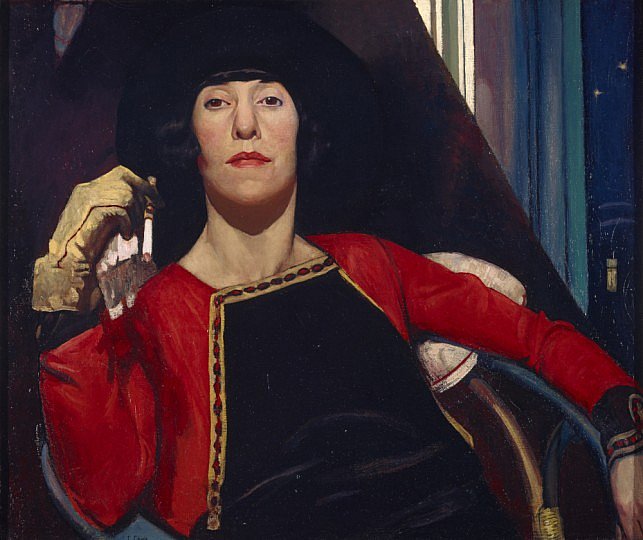
Ekphrastic project – James Cowie’s ‘The Yellow Glove’

2012AA41357

Oh my dear, it was too, too dreadful!

Mortal mind can scarce conceive –

At least, not yours, darling Vi,

Yours would have shrunk. Violets do shrink,

It’s an immutable law, like death, or gravity,

Or who sits to the left of the Bishop.

“Bother immutability” that silly boy would say,

And therein lies the drastic horror of the thing,

For Pongo positively pushed it this time!

Doubtless the dear old Duchess toot sweet

Snipped him merrily from the Will, singing

“Cold porridge to primogeniture!” So you see,

I simply had to pop back the jolly old ring

And hoof it hotfoot before the bean began blubbing.

It’s a rotten sausage, but there it is.

Now, do try one of mine – they’re Turkish.

Deseeded

I’m very happy indeed to have a poem selected for Deseeded, an online magazine edited by Degna Stone, founder member of the Butcher’s Dog editing team. The call-out asked for work written in response to a prompt from the late Julia Darling, published as a Guardian masterclass in 2005, shortly before her death. It was a lovely prompt, all about instructional poems, which are some of the most fun things to write because they really do ‘tell the truth but tell it slant.’

The overall selection is beautifully curated, and not over-long, so I urge you to just gorge yourself on the whole lot right now.

If you’d like to try writing an instructional poem yourself, here is the prompt , and if you are in the Newcastle area you could go to Live Theatre for workshops and new plays all responding to, and celebrating, the life and work of Julia Darling.

I also strongly recommend you subscribe to the amazing Butcher’s Dog magazine, which will come to you in hard copy twice a year and fill your life with beauty.

Basketball poetry? Really?

Got a small new poem for you, written from a workshop with the prolifically superduper Jacob SamLa Rose at ARC Stockton last week. The workshop was part of Fuel Theatre’s outreach activities for their new touring spoken word show, The Spalding Suite, a physically spectacular piece built around a series of poems by Inua Ellams and other poets, and all about basketball. I wrote a review of the show, which I’m now keeping with all my other reviews from here on, at Tumblr.

there is a ball in your hand

grey as fingernail gunk

red as old blood

a severed head in a lizard’s crop

scrape the raised grain

use one hand to balance

to contain

the curvature

feel the horizon with your furthest whorls

it is the size of Jupiter

you are on alien land

coloured tape parcelling pitches

foreign scripts, hieroglyphics

there is a ball in your hand

it wants to fall

drop it and the planet throws it back

your dumb hand back-turned to the slap-back

elastic transit surprises when the core is so, so black

it is denser than physics

it want to eats the earth

it wants to bounce

keep a short leash and run after, child

it is a wolfhound, shoulder high

it is a steeplechaser, where is your bridle

when it leaps?

you knew it would unseat you

there is a ball in your hand

and you have neither the arms

nor the legs

nor the heart

for everything it wants

of you

Ekphrastic project – Conflict and Conscience

The second of my poems for art crit magazine Corridor 8 went live a couple of weeks ago, but I’d like to bring it back to your attention now. Why? Because it’s a response to the exhibition ‘Conflict and Conscience : British Artists and the Spanish Civil War‘, running at the Laing Gallery until 7th June, and May Day weekend seems an appropriate time to nod in the direction of socialist struggles past and present.

I’d really just like to encourage you to see the exhibition if you can. Not only are there some really strong works, including Picasso’s ‘Weeping Woman’, but it is full of inspirational women. Women artists who fought and died, women who served the rebel camps and fed the insurgents, women who were passionate political and military leaders, women who sewed vast celebratory tapestries in remembrance of their comrades, women who made the heart-wrenching posters that ensured aid went to the victims of the conflict, women who got off their arses and started charitable foundations to secure the safety of orphans when our pathetic government of men refused to take in refugees, women who learned how to run ambulance services in blitzed cities, women, women, women…

Atlas was a woman…

Live Theatre residency for Demeter In Winter – day 3

IMG_0021Whoosh! That went by quickly!

So today I read back the whole thing so far to Gez Casey from Live, who was kindly giving me the benefit of his considerable dramaturgical experience, and Matt Cummins, who directed my first show. And then they told me what they thought. Terrifying. The upshot is, it’s worth me continuing with it, and I have a set of very interesting questions to attempt answering when I’m in residence at ARC next month.

Matt thought you might be interested to know what I did each day, so if you have a nerdy kind of desire to neb about in my ‘process’, here’s what my To Do lists looked like…


Day One, 10am – 5pm

  1. Set up different writing zones/locations around the room for different scenes/characters I want to explore
  2. Physical and vocal warm-up
  3. 30 minutes solo improv exercises – I used these ones – filming them
  4. Do I know my characters and their back stories? Talk about it to camera
  5. Free write Marian and Vic, their stories, bodies, and attitudes to rape – on large paper at the “M’ and ‘V’ writing zones
  6. Free write monologue each for M and V, in notebook
  7. Read monologues out loud to camera
  8. Film myself doing V monologue on-page, but moving, finding her body
  9. Film myself improvising V monologue off-page
  10. Type up dialogue I had written on the train up from Hartlepool
  11. Walk around the room, stopping and free writing on large paper at several different writing zones, for different scenes
  12. Create a series of scene cards using old Rolodex lined cards
  13. Upload video and write blog

Day Two, 10am – 4pm

  1. Physical and vocal warm-ups
  2. 30 minutes solo improv exercises
  3. Read whole script out loud to camera
  4. Type up yesterday’s improvised Vic monologue by watching the video back
  5. Transfer large paper free-write notes to notebook, continue to expand on them in a loose way
  6. Look into open source field recordings of birdsong
  7. Annotate scene cards with sound effects needed
  8. Research peonies for a poem in Marian’s voice, do some writing towards it
  9. Write blog

Day Three, 10am – 3pm

  1. Physical and vocal warm-ups
  2. 30 minutes solo improv exercises
  3. Re-read script
  4. Annotate scene cards with research needed
  5. Lay out scene cards in the right order, identify gaps
  6. Type up new dialogue created from V and M monologues
  7. Tweaking and formatting script
  8. Read-back and take notes
  9. Write blog


Live Theatre residency for Demeter In Winter – day 2

No more video, no, no, nevermore!  (Turns corvid, flies off).

If you’re interested, mostly today I have been putting into practice some advice from Nick Field about generating material when the blank page of the empty studio fills you with an atavistic urge to curl up and catch up on whatever sleep you should have been having last night, when you were in fact fighting your husband for the duvet and mumbling something about cities under tree roots.

The technique is simple – take a bunch of disparate things you’re trying to write about (in my case, three scenes of dialogue and two poems). Put them as headings on big pieces of paper. Put big pieces of paper around room in various places (in my case, four walls and a desk). Walk/run around between them, jotting thoughts and moving on whenever the train of thought dries up (in my case, after a maximum of two sentences). Did this for a couple of one-hour sessions, it really helped me keep my energy up. And got me started with the ‘proper’ job of writing.

Then I capitulated to extreme brain-drain, and spent quite a bit of time researching birdsong field recordings, in case this turns out to be a radio play. Found this fab resource from the British Library – enjoy!

Hannah Loves Kathy and other poetic shennanigans

That thing they do to plates, that’s coolee isn’t it? At half time we had masses of cheese. Are you calling my mam trailer trash? She’s in there puking now while he’s pissing.

Yes, these are random snippets overheard on the last train back to Hartlepool on a Saturday. I can’t make them into poetry. I bet Hannah Silva could, because she’s some kind of divine alchemist. She can take the dross that is Fifty Shades of Grey and the already cut-up works of Kathy Acker and transform them into a whirlwind of terrifying beauty, where cancer and childbirth and so many species of pain are funnelled through her singular, exacting creative practice to become a confluence of meanings. Spoken words degrade and reveal their emotional core, spoken words and subtitles and BSL gestures converge and diverge in their meanings but never lose their urgent significance, often slipping apart to leave gaps where we find our own meanings growing.  What is a woman if you take away her breasts, her volition, her body? If you hear these words and you are not in a sex dungeon – “everything in this room can cause pain” – if you are sitting with your friends – what does this now mean? Stunning. See her work if it’s the last thing you do.

For the sublime to the ridiculous, as I totally fail to spend any time at the Newcastle Poetry Festival, not even to see Kei Miller, for which I will do appropriate penance at some point in the future – but really, when you live in Spoken Word Land, it’s very hard to visit Literary Establishment Land without wanting to shoot yourself in the face. So many poets who are great on page but who should never speak. So few audience members in the huge auditorium. So little palpable enthusiasm. Sigh. So for those of you who didn’t get along, like me, you will be no doubt delighted to watch my very sweary filmpoem ‘Primavera’ on the Bloodaxe Archive website, along with a couple of other poems and a re-interpretation of Hokusai’s ‘Great Wave Off Kanagawa’ rendered entirely in ink stamps saying ‘cunt’ and ‘fuck’.

I was going to write you an immensely sensitive response to Heaney’s sequence ‘The Clearings’, which I have been reading out loud after meditation every morning this week, but that may have to wait until I get to feeling a bit more pretentious. Instead, here’s a list of Poetry Wot I Have Read This Week:

The Haw Lantern; Seamus Heaney

Abstract & Delicious; Tony Lopez

Penguin Modern Poets #12; Alan Jackson, Jeff Nutall, William Wantling

Forms Of Protest; Hannah Silva

Ekphrastic project – Sabina Sallis

Love art. Love it. Let’s all hang out in galleries, they’re mint. Got a new project, hanging out in galleries and writing poems about art and then having them published by Corridor 8 magazine alongside critical reviews.

Here’s my first one, for the Sabina Sallis exhibition running at Newbridge gallery until 28 March. You can click through at the bottom to the review by Annie O’Donnell, for to marvel at our different reactions – hers so sensual, mine so political. Then you should go along and make your own mind up.

Some snippets of Demeter

This show is going very slooooooooowly….I think I may be procrastinating. But I’m due to start the first of three mini-residencies next month, so I’d better get my thinking cap back on. One idea is that I won’t actually perform it in the end, I will do a very complicated and clever thing with audio recordings and make the audience do strange things in a fully-immersive participatory theatre way. Been thinking about that a lot today, and whether people would throw pots of water or paint over each other just because I asked them to. Probably not.

Anyway, for them that are interested, here is a Soundcloud playlist featuring the poems-plus-soundscapes I did on my residency at Caedmon Hall a couple of months ago. There are four tracks, but only two poems – each poem is repeated with a different soundscape mix underneath. I know which version of each I prefer, but you could always let me know your thoughts on the matter.