White House, Orange Peril, Green Future?

With the world’s biggest climate change denier strutting back into power over at the world’s second-biggest carbon emitting nation, it’s a grey day to be thinking about the very niche impact of poetry as climate activism. Or so I thought, as I took my lunchtime walk around the wintery streets of Stockton, preparing for my second weekly Declaration drop-in.

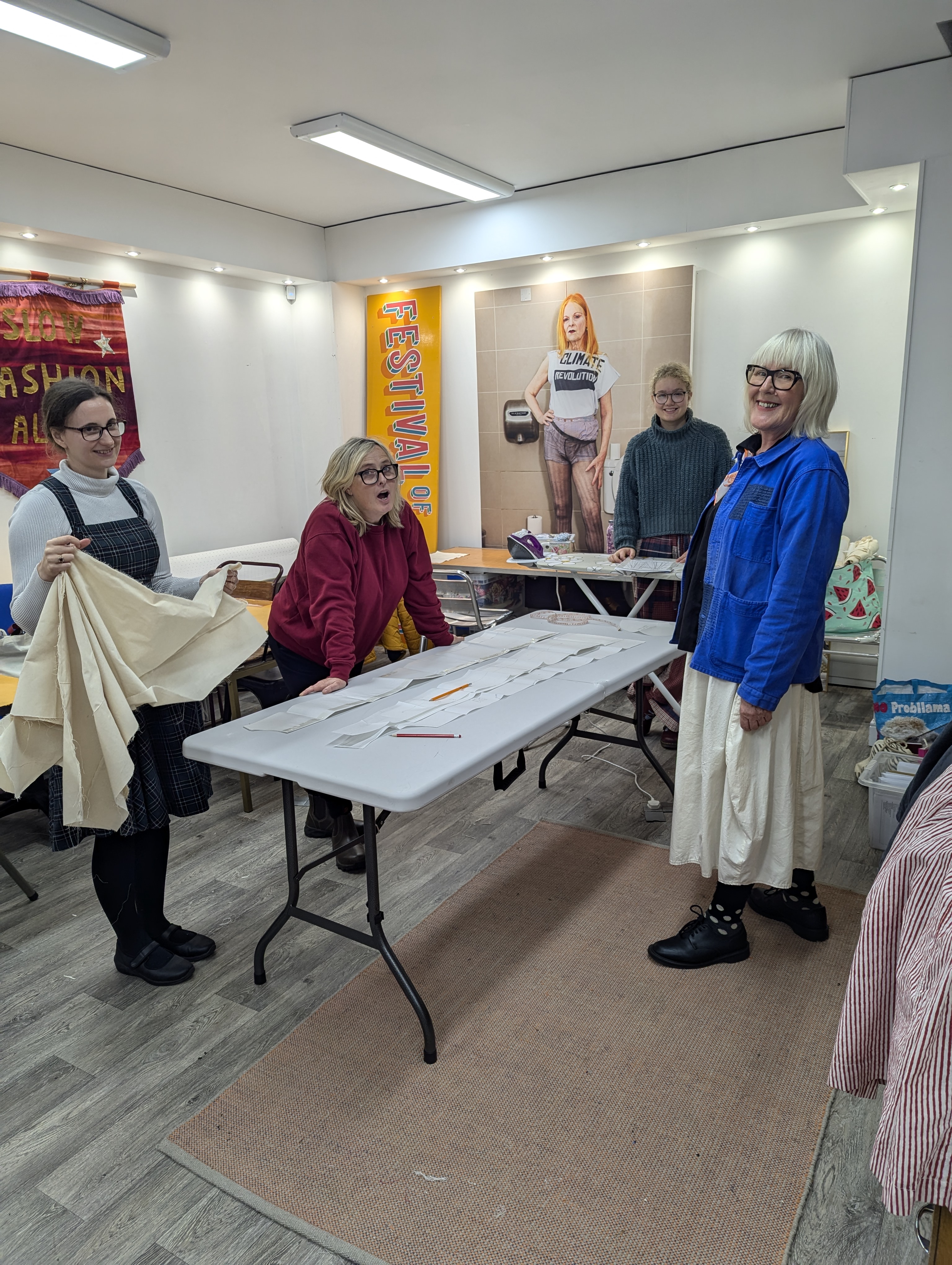
Wandering down Silver Street, I saw that there were people doing exciting things with sewing machines and pattern-cutting in the gorgeous yellow Institute of Thrifty Ideas, the activities hub of Festival of Thrift. Popping in to say hi to tutor Lindsay and her group, I learned something that made me so happy – poetry was exactly the comfort some people sought when the news of Trump’s re-election hit!

What was the poem they sent each other to express solidarity, to offer solace, to remind each other of the need for renewed hope and commitment to nature? This one, of course…

The Peace of Wild Things by Wendell Berry

When despair for the world grows in me
and I wake in the night at the least sound
in fear of what my life and my children’s lives may be,
I go and lie down where the wood drake
rests in his beauty on the water, and the great heron feeds.
I come into the peace of wild things
who do not tax their lives with forethought
of grief. I come into the presence of still water.
And I feel above me the day-blind stars
waiting with their light. For a time
I rest in the grace of the world, and am free.
Later that afternoon I was joined by the lovely Amy Lord – author, blogger and digital marketer. We had a fascinating chat about the carbon footprint of digital work now that AI is everywhere, sucking up lakefuls of coolant. How can she mitigate against this in her work as a freelance marketer? With a Declaration, might she use her own stated climate ethics as a way to connect with clients who share her values? Can she use her marketing powers to tell the good stories of organisations who are embedding sustainability? As an author and blogger, will she lend her weight to the cause of Fossil Free Books in the wake of the Baillie Gifford litfest-funding kerfuffle? All brilliant thoughts and questions, which Amy has taken away to ponder further…

And for myself, I finally made a Declaration, one which will serve to connect me to the CDE community while I work on a larger creative response and continue to audit my practice. Its a start!

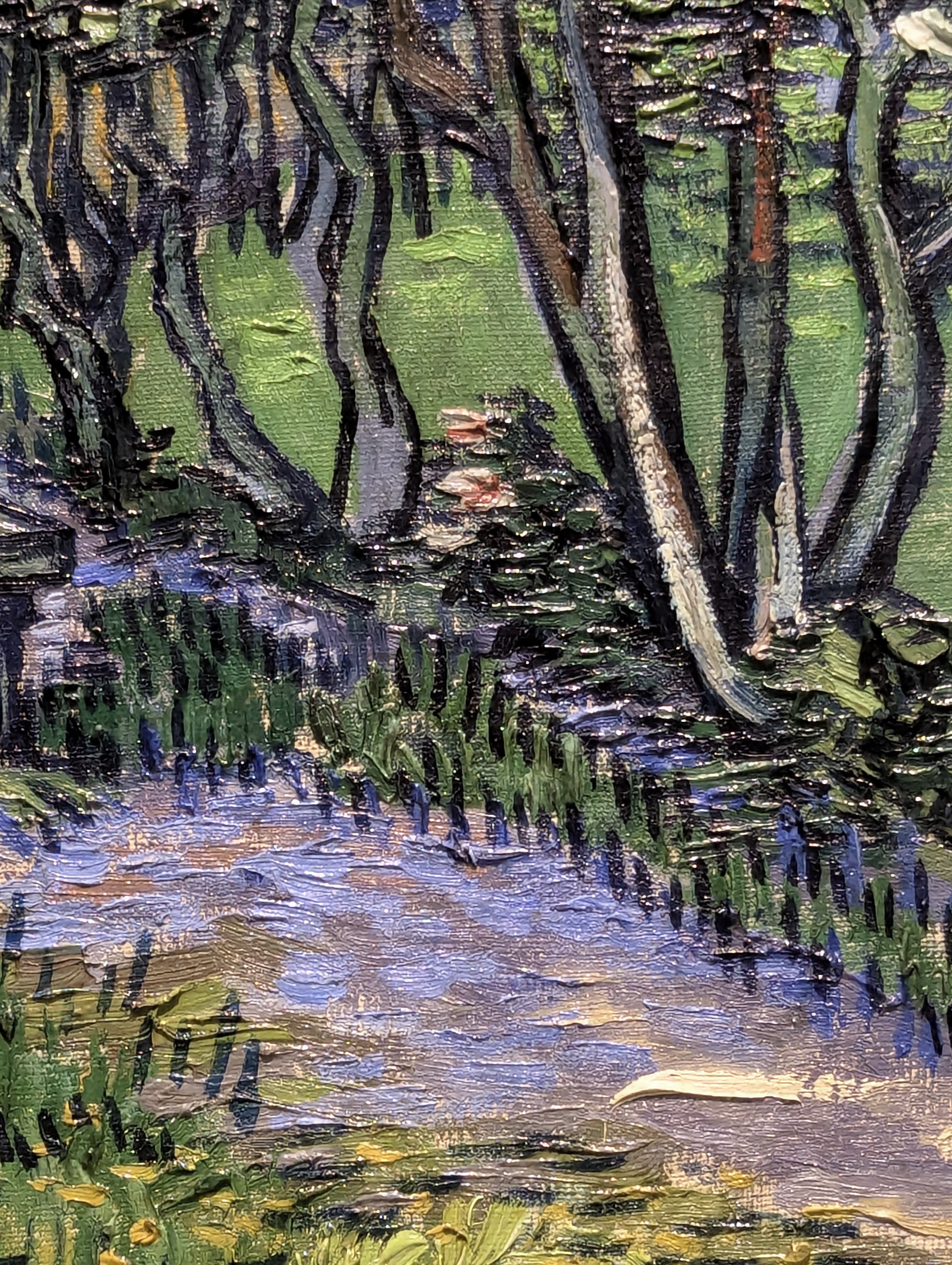
For you – a drawing in progress inspired by Klimt’s forests; looking for the peace of wild things at Billingham Beck nature reserve; close-up of a Van Gogh seen at the National Gallery this weekend.

My next Declaration drop-in will be a walk-and-talk on Tuesday 12th November, meeting 10.00am at the Whitewater Way car park for Portrack Marsh Nature Reserve – location and parking info here.

Want to be in touch about Teesside climate stuff for creatives and cultural practitioners? Email me

The plural of haiku is haiku

Every so often, I get re-smitten by haiku.

They are simple, but not easy.

They are small, but contain vast spaces – like an atom.

They are a practice.

Last Saturday I led a workshop on writing them, in which we played with fridge magnet haikus to get that old 5-7-5 syllable counting thing off our chests before going out into the world for a walk to find our seasonal signifiers, our moments of subtle intersection with (urban) nature.

Here are some thoughts from that day…

  • Really do cut out words if they’re only there to make up the syllable count. Up to 17 syllables is fine – if you do this, you will find an expansive sense of ambiguity and open up the poem to reader interpretation. The space created when you cut an unnecessary ‘is’, ‘but’, or ‘that’ is much more haiku than finger-counting the dum-dum-dum.
  • Two things that don’t go together. Put them together. Do not try to build a bridge with words. Allow the reader to make the bridge for themselves, with resonance. Two things striking each other, like wind chimes. The poem is the note; the note is the white space.
  • Of all poetics, haiku care the least about what you mean. Stop meaning. Start looking and feeling simultaneously. In a glass building, having a complicated conversation, watching pigeons fly through their own reflection.
  • I say feeling, but this is not about getting it all out on paper. How Western! Stay still a little longer, the ivy may have something to say about that.

My next workshop on 13th April is going to be a mutual exploration space looking at how to bring haiku into film, using Reels. I’ve been trying and I have no firm conclusions!

This was my favourite out of the 5 haiku I wrote myself that day – why?

Complex birdsong
Simple flowers
I don’t know

It Appeared Around The Corner

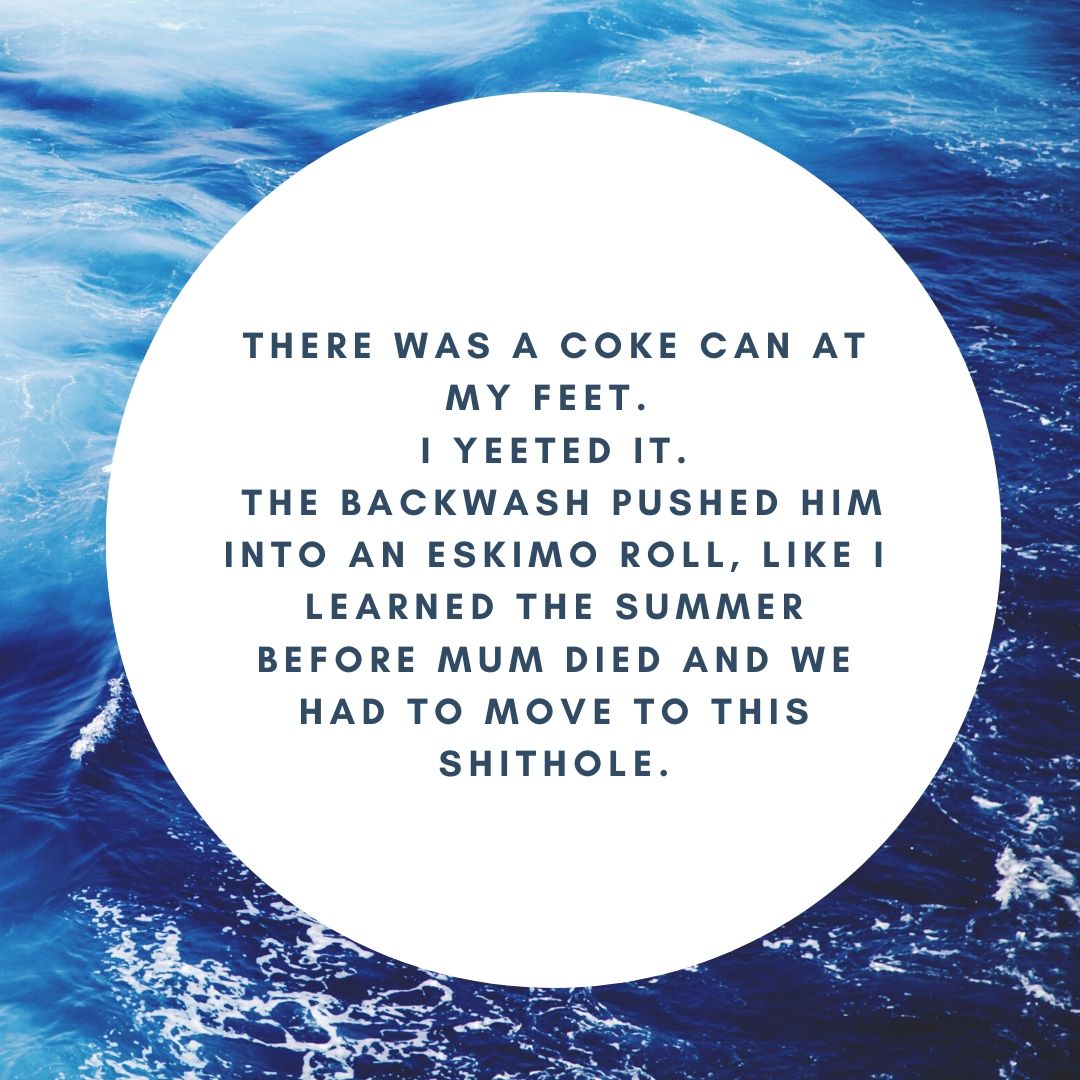
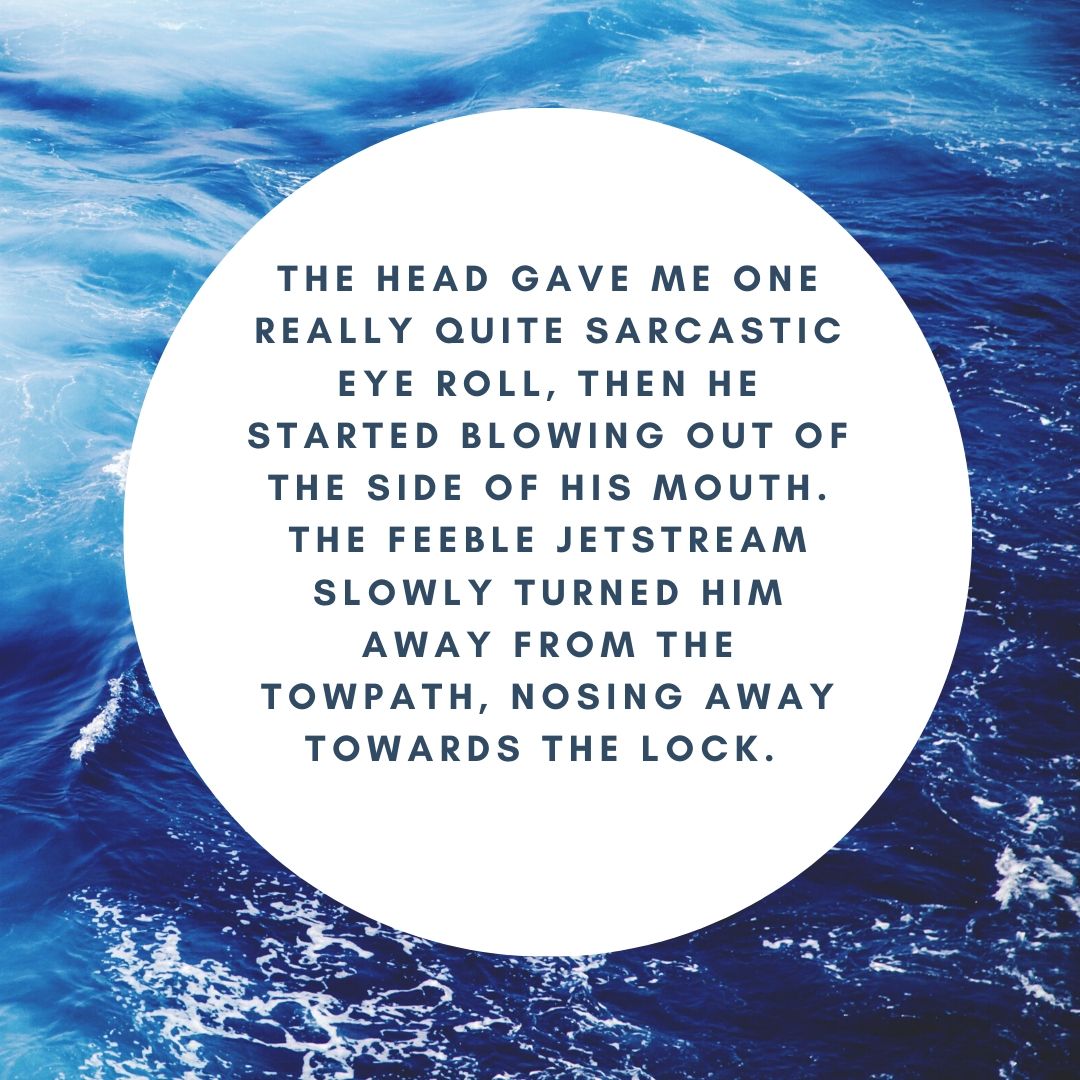
Now, I don’t really write stories. But I do like prose poems, and I’m getting into flash fiction. So maybe it’s not so surprising that one of these random thirty prompts finally made me get a bit narrative

1

2345678

I’d love to feature something you’ve written in response to the prompts – fancy sending me something? Comment below! Here’s another little bit sent in by my friend Lisette Auton

sneaking creeping,
not real not real not real
imagination
dead, gone.

Bernadette McAloon offers us this unsettling ditty

a blot on the vision
an apparition to the left
a doll like creature
a peg in a dress
a pestle in a tutu
a giant toe in tulle
a doubling, a trebling
the muse of a fool
an ocular aura
a tiny ghost in net
a premonition of pain
a commotion in the head

And Rob Walton‘s got in on the act too, with this

It appeared out of the corner
A right bloody angle
Must have been ninety degrees
If it was a minute
I tried suggesting it had been a bit obtuse
That drunken night at the geometry ball
But it was having none of it

5 Things I Learned From A Book Launch (Number 6 Will Amaze You!)

God loves an independent bookshop, yes she does, especially the self-help section. Independent bookshops are places of love and beauty, so small that thirty people assembled for an author talk is as good as a stadium crowd. (The best ones, like mine, also have a coffee machine.)

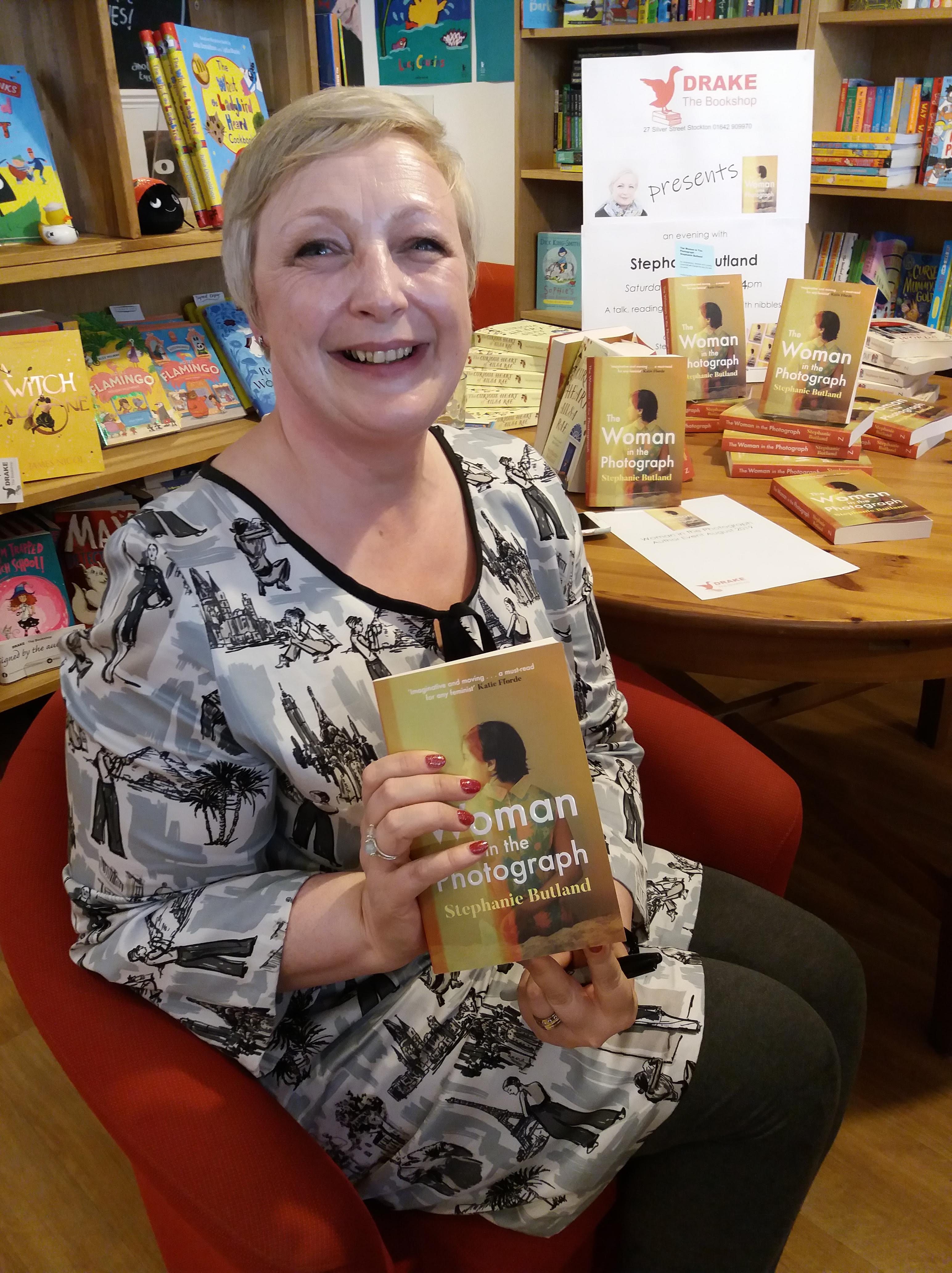
My local independent bookshop is Drake in Stockton, where I went to hear Stephanie Butland read from, and talk about, her sixth novel ‘The Woman In The Photograph‘ *

I loved the extract she read (enough to buy the book), but it was the Q&A session that delivered treasure – because, dear Reader, I am that unhappiest of creatures, a First-Time Aspiring Novelist.

20190803_165202
Stephanie Butland at Drake Bookshop

Here are the marvellous titbits of inspiration I took from Steph’s talk, all of which I will immediately try to apply to my writing life:

1. There are no RULES for the writer’s working day, only PREFERENCES 

Oh joy, you mean I’m not failing if I haven’t written 1000 words by 8am? No! Steph works when she feels most able to sit down and focus on the work. As it happens, for her that is first thing. A 2-hour morning might yield 1000 words that would take twice as long to squeeze out if she started in the afternoon. BUT – if the morning is taken up with other, unavoidable things, then a long afternoon of writing will happen. The woman has professional persistence.

2. 1000 words a day for 3 months = “a bad first draft”

I love that “bad”. If I could fixate on completion at the expense of perfection, I might be in with a shot of writing this damn thing!

3. Novels will bring their own ways of being written

Now, I’m working with a formulaic genre (cosy crime), which Steph is not, but I still found it inspiring to hear how each time she writes a novel she comes up with a different way of ‘how to write a novel’. This current book was meticulously planned using a spreadsheet. Her previous book, ‘The Curious Heart Of Ailsa Rae‘, was written in a huge outpouring and then sculpted into shape. It’s OK for me to not know exactly how to write this first book of mine. Even better, it will be OK for me not to quite know how to write the next one, and the next – better to be interested in the process than the product!

4. Don’t read inside your own genre while you’re writing

I’ve been a reading a lot of my genre, because as a first-time writer I need to spend a bit of time working out how it’s done. But now that I’m into the actual writing, I can see the sense of giving my brain some space. Should probably lay off the cosy crime TV dramas, too! Steph reads Young Adult fiction, and dystopian fiction, so this could be a great excuse for me to widen my reading landscape.

5. Editing is great, but after a while you’re not making the book better, you’re making it a different book.

I haven’t reached this stage yet, but I’m going to bear it in mind when I do…

And the bonus bit of info is this:

6. The presenter for uber-macho TV show Top Gear was actually Angela Rippon!

Proof! 

*’The Woman In The Photograph’ is a story about feminism and fierce friendship. It is out now from Zaffre Books and if you buy it online via Hive then you can nominate a local bookshop to collect it from. The bookshop receives a small fee. This is massively better for authors and booksellers than going to Amazon, but doesn’t make it any more expensive for you – please make Hive a habit!